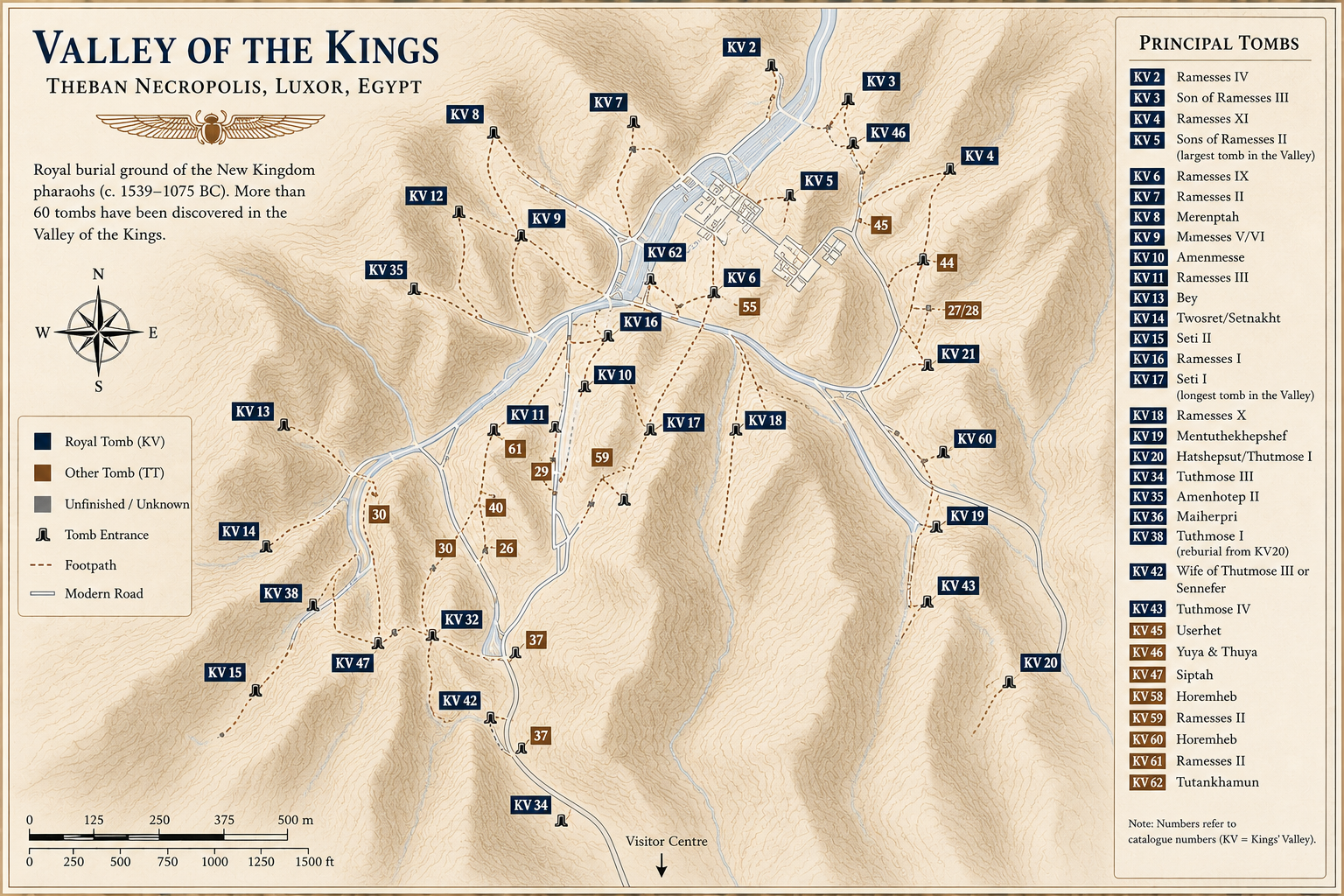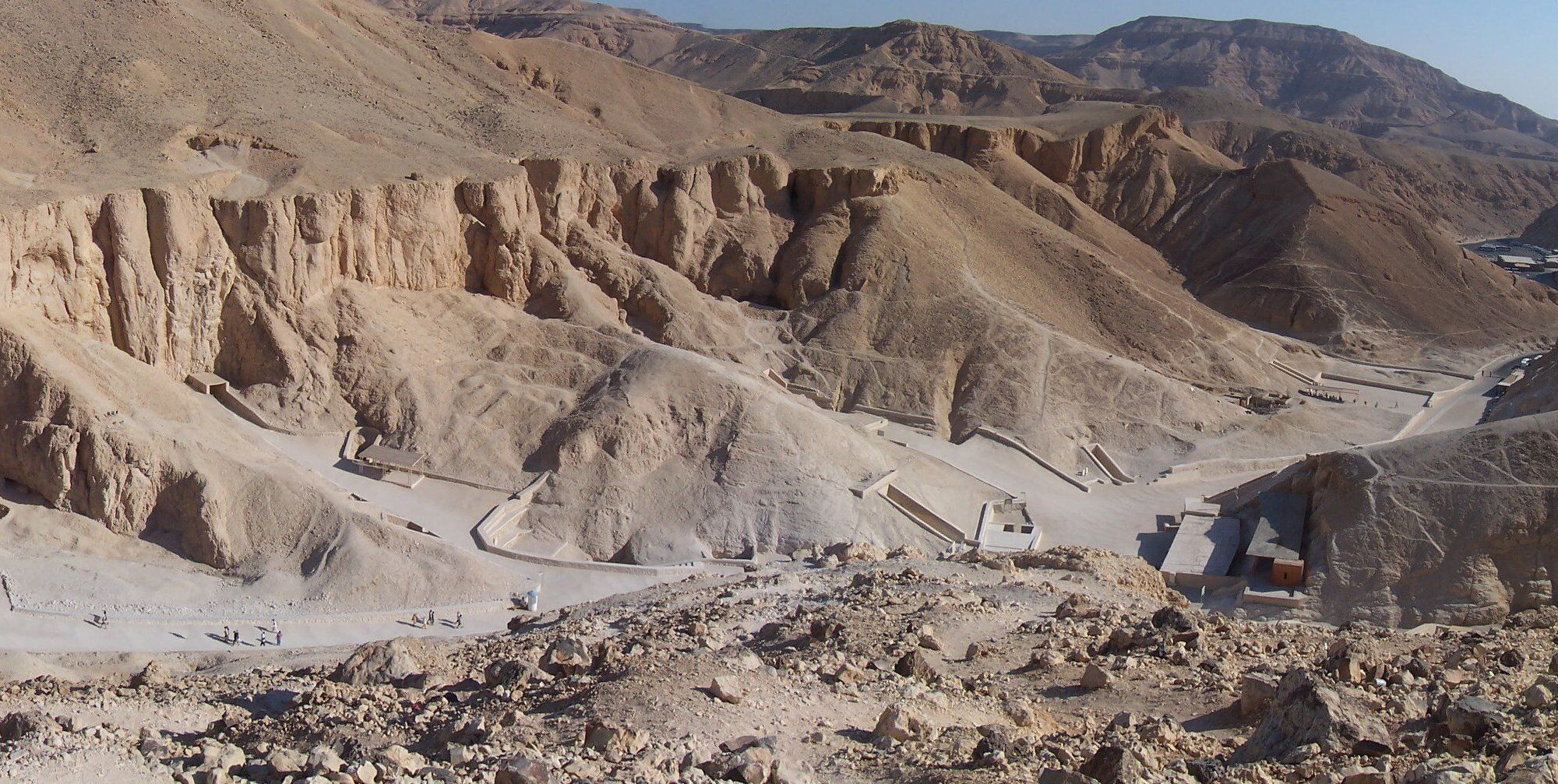
The Valley of the Kings, also known in antiquity as the Valley of the Gates of the Kings, is one of the most important archaeological sites in the world. Located in southern Egypt, the valley served as the royal burial ground for the pharaohs and powerful nobles of the New Kingdom for nearly 500 years, from approximately 1539 BC to 1075 BC.
Situated on the west bank of the Nile River opposite ancient Thebes (modern-day Luxor), the Valley of the Kings forms part of the vast Theban Necropolis. The ancient Egyptians associated the west, where the sun sets, with death and the afterlife, making it a fitting location for royal tombs. The valley itself is divided into two main branches: the East Valley, where most of the royal tombs are located, and the more isolated West Valley.
Unlike the earlier pyramids of the Old Kingdom, New Kingdom pharaohs chose to be buried in rock-cut tombs hidden deep within the desert cliffs. These tombs were designed to protect royal burials from grave robbers while also providing elaborate underground chambers decorated with religious texts, scenes of the afterlife, and magnificent artwork intended to guide the deceased king on his journey to the next world.
More than sixty tombs and chambers have been discovered in the Valley of the Kings, ranging from simple burial shafts to vast multi-room complexes. Among the most famous are the tombs of Tutankhamun (KV62), Seti I (KV17), Ramesses II (KV7), and Ramesses VI (KV9). The discovery of Tutankhamun’s largely intact tomb by archaeologist Howard Carter in 1922 brought worldwide attention to the valley and sparked enduring fascination with ancient Egypt and the legendary “curse of the pharaohs.”
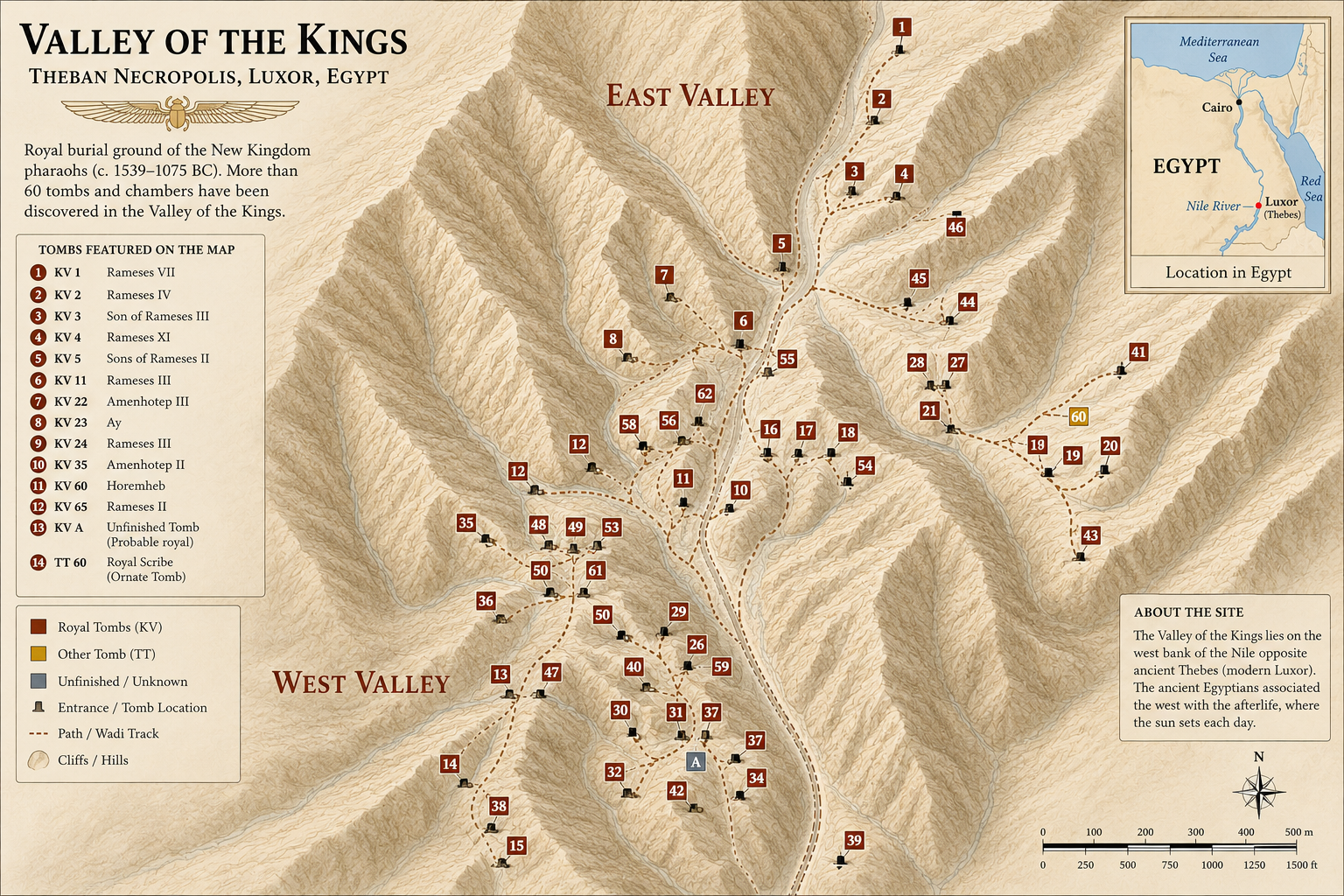
Archaeologists and Egyptologists have explored the valley since the late eighteenth century, and research continues to this day. New discoveries are still being made, shedding light on the lives, beliefs, and burial practices of ancient Egyptian royalty. Ongoing conservation efforts aim to preserve the fragile wall paintings and architecture for future generations.
In recognition of its outstanding historical and cultural importance, the Valley of the Kings, together with the rest of the Theban Necropolis, was designated a UNESCO World Heritage Site in 1979. Today, it remains one of Egypt’s most visited tourist destinations and one of the most significant sources of knowledge about ancient Egyptian civilization.
The Valley of the Kings