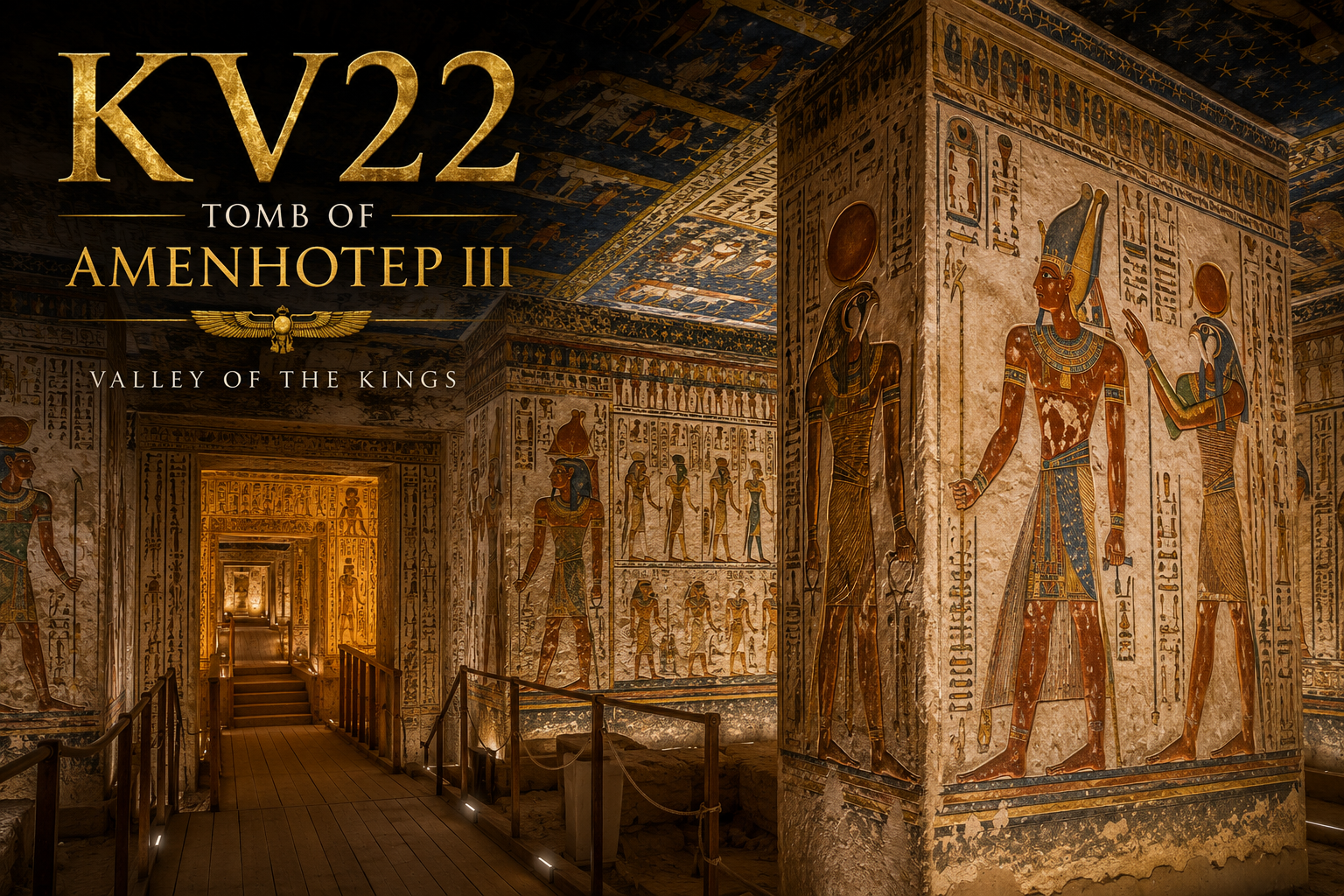
Tomb KV22, located in the secluded West Valley of the Valley of the Kings, was constructed as the royal burial place of Pharaoh Amenhotep III, one of the most powerful and prosperous rulers of Egypt’s Eighteenth Dynasty. Renowned for his extensive building projects, diplomatic achievements, and long reign, Amenhotep III presided over a golden age of ancient Egyptian civilization. His tomb reflects the grandeur of this era and is the largest royal tomb in the West Valley.
KV22 was likely begun during the reign of Amenhotep III’s father, Thutmose IV, before being completed and decorated for Amenhotep III himself. The tomb’s layout closely resembles that of KV43, the tomb of Thutmose IV, but on a much larger scale. Its extensive corridors, pillared chambers, subsidiary burial suites, and richly decorated burial chamber illustrate the continuing evolution of royal tomb architecture during the Eighteenth Dynasty.
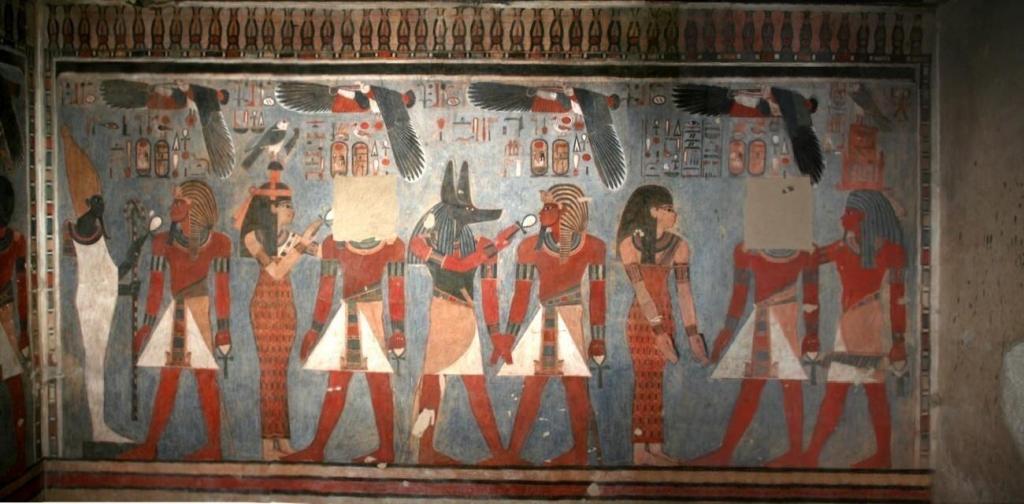
Although heavily damaged by flooding, ancient robberies, and later human activity, KV22 remains an important archaeological site. Excavations have revealed a wealth of artifacts associated with the king’s burial, while inscriptions and decorative scenes provide valuable insights into royal funerary beliefs. After the tomb was plundered in antiquity, the mummy of Amenhotep III was eventually removed and reburied in the royal cache of KV35 during the Third Intermediate Period, where it was rediscovered in modern times.
General Site Information
- Structure: KV 22
- Location: Valley of the Kings, West Valley, Thebes West Bank, Thebes
- Owner: Amenhotep III
- Other designations: 22 [Lepsius], a [Burton], Tombeau isolé de l’ouest [Description], W. 1 [Wilkinson], WV 22
- Site type: Tomb
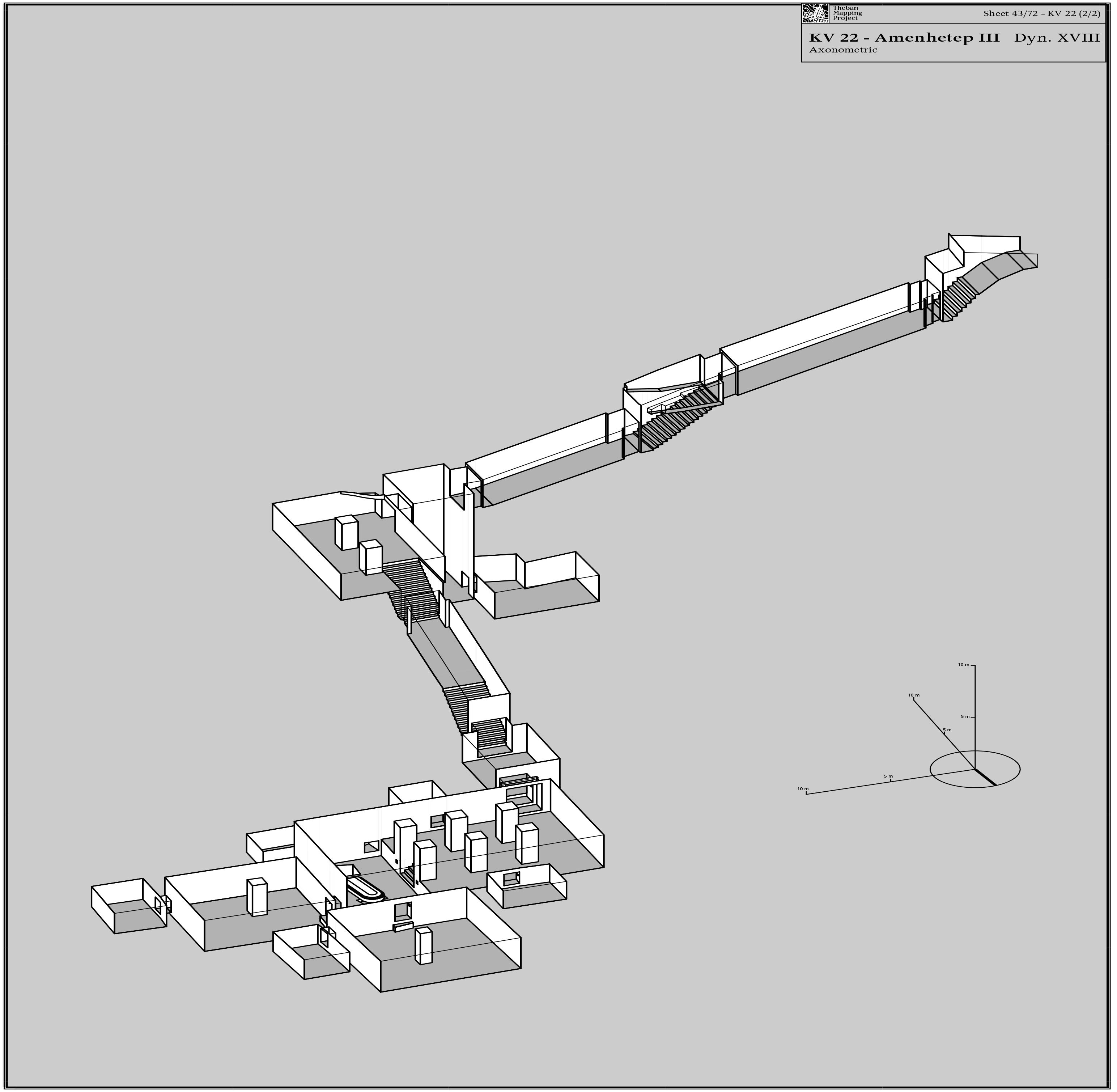
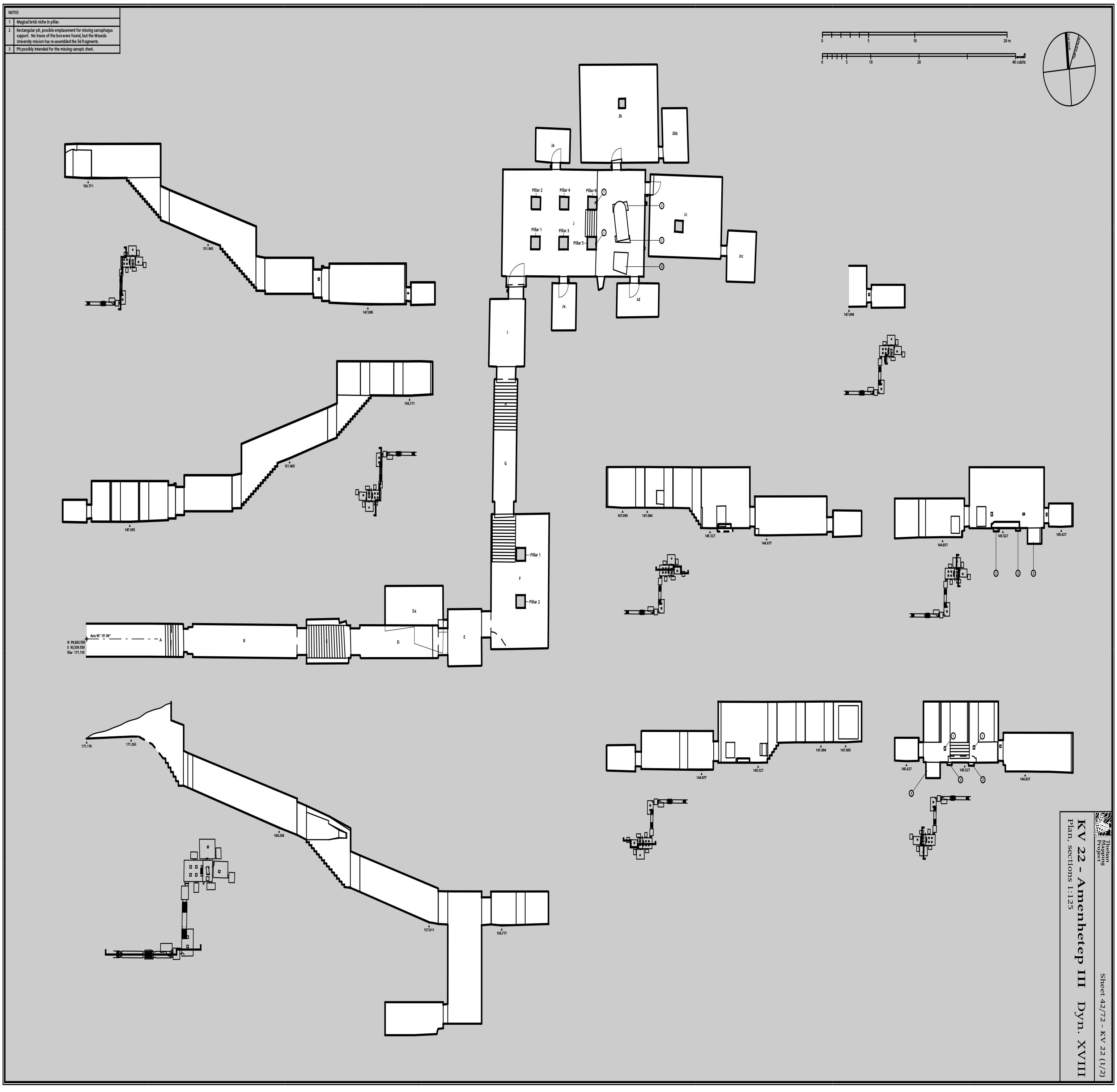
Description: KV 22 lies midway in the West Valley on an embayment on the east side. In plan, it is very similar to the tomb of Thutmose IV ( KV 43). It consists of two corridors (B, D), separated by a stairwell (C), leading to well chamber E with shaft and side chamber Ea, a pillared chamber (F) with side descent, a corridor (G), a stairwell (H), another chamber (I), and the burial chamber J. The burial chamber has several side chambers leading off it (Ja-Je). Side chambers Jb and Jc each have a side chamber (Jbb and Jcc). The tomb is decorated with the Imydwat (burial chamber J), and representations of the deceased with deities (well chamber E, chamber I, burial chamber J).
Noteworthy features: This tomb is the largest in the West Valley of the Kings. Two subsidiary burial suites, with a pillar and a side chamber, are located off burial chamber J. There is a pit for canopic equipment. The king represented with the royal ka is rather unique.
Axis in degrees: 95.85
Axis orientation: East
Site Location
- Latitude: 25.44 N
Longitude: 32.36 E
Elevation: 171.11 msl
North: 99,682.550
East: 93,539.550
JOG map reference: NG 36-10
Modern governorate: Qena (Qina)
Ancient nome: 4th Upper Egypt
Surveyed by TMP: Yes
Measurements
- Maximum height: 4.98 m
- Minimum width: 0.79 m
- Maximum width: 8.42 m
- Total length: 126.68 m
- Total area: 554.92 m²
- Total volume: 1485.88 m³
Additional Tomb Information
- Entrance location: Hillside
- Owner type: King
- Entrance type: Staircase
- Interior layout: Corridors and chambers
- Axis type: Bent
Decoration
- Grafitti
- Painting
Categories of Objects Recovered
- Accessories
- Architectural elements
- Carpenters’ and sculptors’ tools
- Furniture
- Human mummies
- Human remains
- Jewelry
- Lighting equipment
- Mammal remains
- Models
- Sculpture
- Tomb equipment
- Transport
- Vessels
- Warfare and hunting equipment
- Written documents
Site History
The tomb KV 22 was apparently initiated by Thutmose IV, as his name appears on the material in the foundation deposits. It was completed and decorated by Amenhotep III. It is possible that Tiyi and Sitamen were also to be buried here. The sarcophagus box was removed at some unknown time in antiquity, perhaps for reuse, although no trace of it has been found. The king’s mummy was moved to the cache in KV 35 during the reign of Smendes. There is evidence of intrusive burials, probably of the Third Intermediate Period, including fragments of a wooden coffin in the well.
Dating: This site was used during the following period(s):
New Kingdom, Dynasty 18, Amenhotep III
New Kingdom, Dynasty 18, Thutmose IV
Third Intermediate Period
History of Exploration
- Devilliers du Terrage, Réné Édouard (1799): Discovery (but tomb may actually have been known to William George Browne)
- Jollois, P. (1799): Discovery (but tomb may actually have been known to William George Browne)
- Napoleonic Expedition (1799): Epigraphy
- Napoleonic Expedition (1799): Mapping/planning
- Gordon, J. (1804): Visit
- Franco-Tuscan Expedition (1828-1829): Epigraphy
- L’Hôte, Nestor (1829): Visit
- Lepsius, Carl Richard (1844-1845): Epigraphy
- Loret, Victor (1898-1899): Epigraphy
- Davis, Theodore M. (1905-1914): Excavation
- Carter, Howard (1915): Excavation (discovery of five foundation deposits for the Earl of Carnarvon)
- Hornung, Erik (1959): Epigraphy
- Hornung, Erik (1959): Photography
- Piankoff, Alexandre (1959): Epigraphy
- Waseda University (1989-): Conservation
- Waseda University (1989-): Excavation
Conservation
Conservation history: The tomb was superficially cleared by Theodore Davis in 1905-1914. Howard Carter excavated more thoroughly in 1915. Over three seasons in 1989 and 1990, the tomb was re-cleared by Sakuji Yoshimura and Jiro Kondo of Japan’s Waseda University. Now, they are focusing on conserving and cleaning paintings on the walls and ceiling of the tomb.
Site condition: During the nineteenth century, unknown visitors to the site removed several paintings of faces from the walls and pillars, some of which are now in the Louvre. The paintings have been damaged by salt efflorescence. Cracks in the pillars have expanded.
