
KV5 is not simply another tomb in the Valley of the Kings. It is an enormous underground mausoleum created for the sons of Pharaoh Ramesses II, better known as Ramesses the Great.
With more than 120 known corridors and chambers, KV5 is the largest tomb yet identified in the Valley of the Kings. Its labyrinthine plan stretches hundreds of meters beneath the valley floor, with long corridors, pillared halls, side chambers, lower levels, and rooms that pass beneath other sections of the monument.
The tomb had been entered by nineteenth-century explorers, but they saw only a few debris-filled chambers and concluded that it was small and unimportant. Its true size was not recognized until the Theban Mapping Project, directed by Egyptologist Kent R. Weeks, began clearing the monument during the late twentieth century.
In 1995, the excavation team passed through a blocked doorway in the rear of a vast pillared chamber and entered a network of corridors and rooms that had remained inaccessible for thousands of years. The discovery transformed KV5 from a forgotten tomb into one of the most important archaeological sites in the Valley of the Kings.
- Structure: KV5
- Location: Valley of the Kings, East Valley, Thebes West Bank, Luxor
- Owner: Sons of Ramesses II
- Other Designations: 5 [Lepsius], 8 [Hay], Commencement d’excavation ou grotte bouchée [Description], M [Burton]
- Site Type: Royal family tomb
KV5 is located on the floor of the main wadi in the East Valley of the Kings, near the entrance to the royal necropolis.
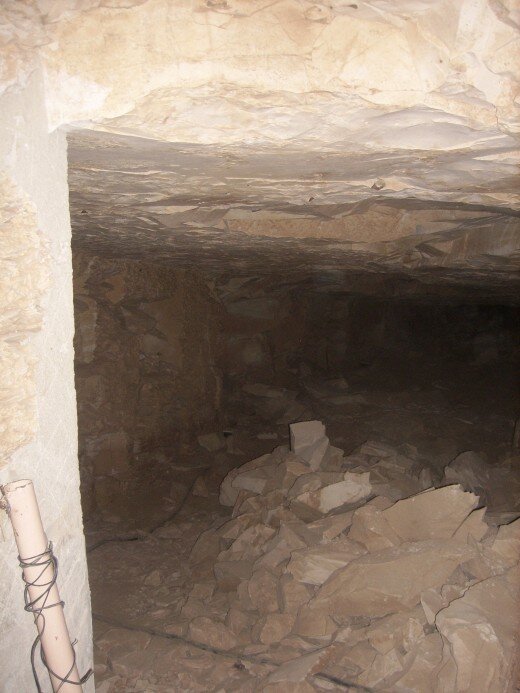
It stands almost directly opposite KV7, the tomb of Ramesses II. This placement may have been deliberate, symbolically linking the king’s burial place to the enormous mausoleum built for his sons.
Parts of KV5 extend beneath the modern road through the Valley. Other tombs lie above or near portions of the complex, including KV6, the tomb of Ramesses IX.
Its low position on the valley floor made KV5 particularly vulnerable to flash floods. Over the centuries, water carried mud, stones, and debris into the tomb, eventually filling many rooms almost to their ceilings.
Description
KV5 has one of the most unusual plans in the Valley of the Kings.
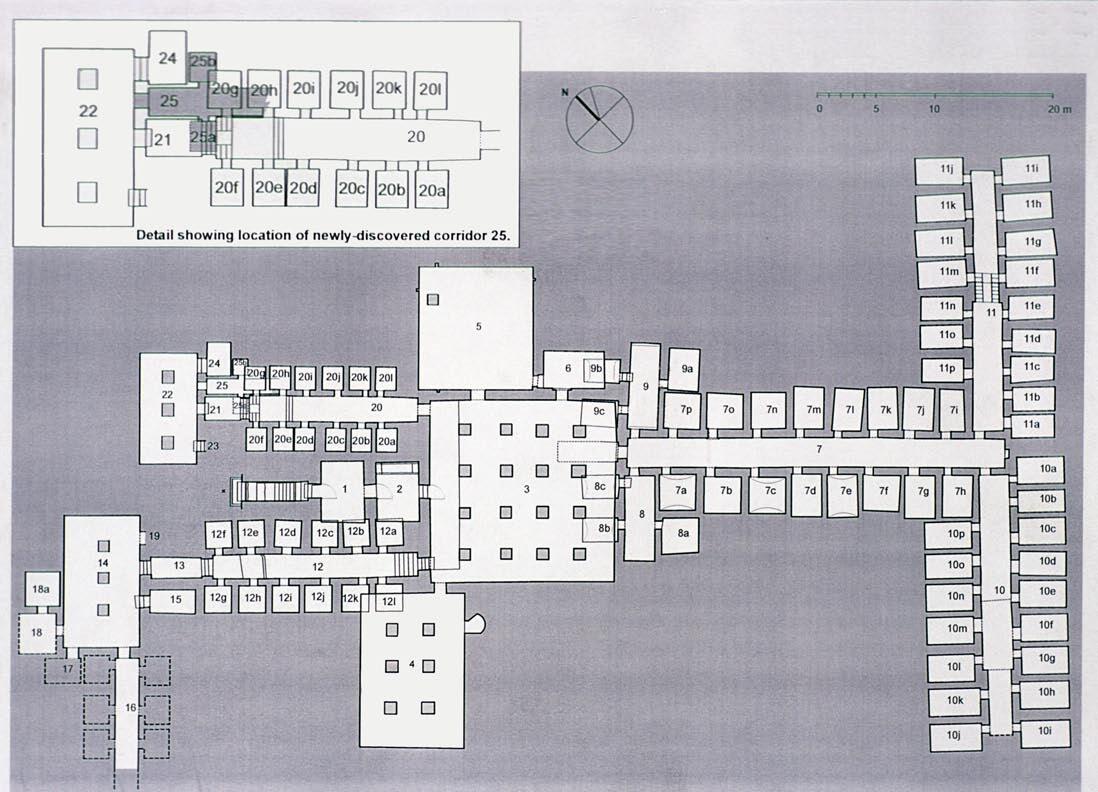
A staircase descends from the entrance into two initial chambers, followed by the enormous sixteen-pillared Chamber 3. After this hall, the tomb’s main axis changes direction and divides into a series of corridors lined with burial chambers.
Corridor 7 extends deeper into the hillside and contains sixteen side chambers. At its far end is a recess containing a carved figure of Osiris, a feature unique among the tombs of the Valley of the Kings.
Additional corridors branch in several directions. Two long passages extend northwest beneath the entrance and modern roadway, generally toward KV7. Other sections descend to lower levels or pass beneath chambers located closer to the surface.
The tomb’s bilateral symmetry suggests that portions may have been planned as matching groups of rooms. Some sections remain blocked, unstable, or incompletely investigated, so the full extent of the monument may still be unknown.
Was KV5 Originally an Eighteenth Dynasty Tomb?
KV5 may not have begun as a Ramesside monument.
The entrance, first two chambers, and part of Chamber 3 may belong to a smaller tomb constructed during the Eighteenth Dynasty. Ramesses II may have appropriated this earlier monument and expanded it dramatically to accommodate the burials of his sons.
If this interpretation is correct, KV5 developed through several distinct construction phases. What began as a relatively modest tomb was transformed into an unprecedented royal family mausoleum.
The changes in floor level, orientation, masonry, and chamber design provide evidence that the complex was enlarged repeatedly rather than excavated according to a single plan.
Chamber 3
Chamber 3 is one of the most impressive architectural features of KV5.
The enormous hall originally contained sixteen pillars, more than any other chamber in the Valley of the Kings. It served as the central point from which several major sections of the tomb could be reached.
The walls were decorated with scenes of Ramesses II, his sons, Egyptian deities, and episodes from the Opening of the Mouth ritual. This ceremony symbolically restored the senses of the deceased, allowing them to breathe, speak, eat, and receive offerings in the afterlife.
Chamber 3 has suffered severe structural damage. Floodwater weakened the surrounding rock, while pressure from the hillside caused pillars, walls, and sections of the ceiling to crack or collapse. Its instability has made excavation and conservation particularly difficult.
A Mausoleum for the Sons of Ramesses II
Ramesses II ruled Egypt for approximately 66 years and fathered a very large royal family. Many of his sons died before him, including several successive crown princes.
KV5 provided a collective burial place where these princes could be interred near their father. Its numerous chambers may have allowed each prince to receive an individual burial space within a shared royal monument.
Wall scenes depict more than twenty princes, while inscriptions, funerary equipment, and fragments of canopic vessels preserve the names of several sons. These discoveries established beyond reasonable doubt that KV5 was created as a family mausoleum.
At least four sons are securely associated with the tomb through inscriptions or burial equipment:
- Amun-her-khepeshef, Ramesses II’s eldest son and first crown prince
- Ramesses, the king’s second son and a later crown prince
- Sety, another son of Ramesses II
- Meryatum, a son of Ramesses II and Queen Nefertari who became High Priest of Ra at Heliopolis
Other princes may also have been buried in KV5, but extensive damage and the fragmentary condition of the evidence make individual identifications difficult.
Human Remains
Fragmentary human remains belonging to several individuals have been recovered from KV5.
These include bones and skull fragments from adult males, some of which may belong to the royal sons named in the tomb. However, the remains were scattered and disturbed by ancient robbery and repeated flooding.
Although attempts have been made to associate particular bones with specific princes, such identifications should be treated cautiously. Without secure inscriptions, archaeological context, or conclusive genetic evidence, it is difficult to determine which remains belonged to each son.
The surviving bones nevertheless confirm that KV5 was used for actual burials and was not merely a symbolic memorial.
Decoration
KV5 was once extensively decorated, although much of its artwork has been severely damaged.
Surviving decoration includes:
- Ramesses II accompanied by his sons
- Individual royal princes
- Egyptian gods and goddesses
- Scenes from the Opening of the Mouth ritual
- Funerary processions and offerings
- Hieroglyphic inscriptions naming royal sons
- A carved figure of Osiris in the recess at the end of Corridor 7
Decoration survives in Chambers 1 and 2, at Gate 3, within Chamber 3, along Corridor 7, in Chamber 8, near Gate 9, and in Corridor 12.
The surviving fragments demonstrate that KV5 was not originally the plain, undecorated monument imagined by its early explorers. Its walls once formed an extensive visual celebration of Ramesses II, his family, and the princes’ hoped-for transformation in the afterlife.
The Osiris Figure
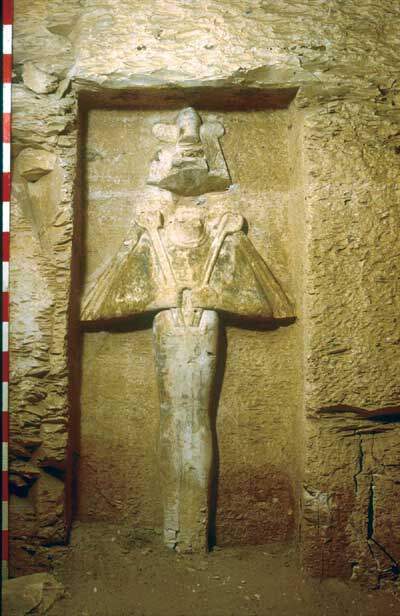
One of KV5’s most unusual features is the sculpted figure of Osiris located in a recess at the end of Corridor 7.
Osiris was the ruler of the underworld and the god most closely associated with resurrection. The deceased hoped to become united with him and share in his victory over death.
The placement of the figure at the end of a long corridor may have marked an important ritual destination within the tomb. It is the only known feature of its kind in the Valley of the Kings.
Objects Recovered
Thousands of fragments and artifacts have been recovered from the flood debris inside KV5.
Finds include:
- Human remains
- Canopic jar fragments
- Pottery vessels and sherds
- Faience beads
- Jewelry and decorative inlays
- Shabti figures and fragments
- Glass vessels
- Hieratic ostraca
- Funerary equipment
- Religious objects
- Animal bones
- Food containers and offering vessels
- Chariot and transport equipment
- Written documents and inscriptions
Canopic jars are especially important because they were used to contain the embalmed internal organs of the deceased. Fragments bearing the names of royal sons helped archaeologists identify several occupants of the tomb.
Discovery by James Burton
The entrance to KV5 remained visible during the early nineteenth century.
In 1825, English explorer James Burton became the first modern investigator known to have entered the tomb. His workmen cut narrow channels through debris filling the first chambers, allowing him to examine approximately six rooms.
Burton recorded the name of Ramesses II near the entrance and prepared a rough plan of the accessible section. In places where he could not enter, he used a stick to estimate the dimensions of blocked chambers.
Because he found no intact burial equipment and saw little surviving decoration, Burton concluded that the tomb was relatively insignificant. He abandoned the excavation without realizing that an enormous complex extended beyond the rooms he had explored.
Howard Carter
Howard Carter briefly investigated the entrance in 1902 while working in the Valley of the Kings.
Like Burton, Carter encountered chambers filled with hardened flood debris. He did not recognize the tomb’s true extent and concluded that it offered little archaeological promise.
The entrance was covered again, and the surrounding area was later used to dispose of excavation debris. KV5’s precise location eventually disappeared beneath rubble, a roadway, and modern activity near the entrance to the Valley.
Carter’s assessment was understandable given the conditions. The spectacular decorated corridors lay far beyond the small portion that early explorers could reach.
The Theban Mapping Project
The Theban Mapping Project was founded by Kent R. Weeks to create detailed maps and records of the monuments of the Theban Necropolis.
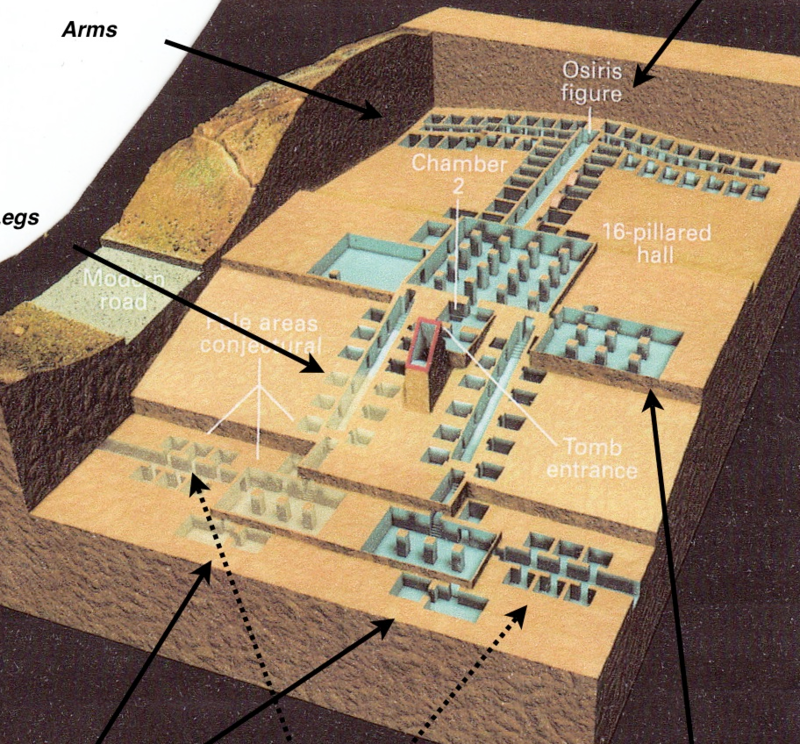
During the 1980s, plans were developed to widen the road near the entrance to the Valley of the Kings. Burton’s records indicated that KV5 lay beneath or beside the proposed construction area, raising concerns that the tomb could be damaged.
The project began investigating the site and rediscovered the entrance in 1989. At first, the team expected to document the small tomb described by Burton. Clearing the debris gradually revealed surviving painted reliefs, inscriptions, and objects naming sons of Ramesses II.
These discoveries showed that KV5 was far more important than anyone had suspected.
The 1995 Discovery
The decisive breakthrough came in 1995.
Because the enormous Chamber 3 was structurally unstable and filled with debris, the team concentrated on a doorway in its rear wall known as Gate 7. The opening was blocked to the ceiling with dense flood deposits.
After clearing the doorway, archaeologists crawled into a long corridor lined with side chambers. The passage formed part of a much larger network that had remained inaccessible for more than three thousand years.
The newly explored corridors revealed that KV5 extended deep into the hillside. By the end of that season, approximately 67 rooms had been identified.
News of the discovery spread around the world. A tomb once dismissed as small and unimportant had become the largest known monument in the Valley of the Kings.
Later Exploration
Further work revealed additional branches and levels.
In 1996, archaeologists found openings leading to two roughly parallel corridors, now designated Corridors 12 and 20. These passages descended beneath the road and extended toward KV7.
By 1997, more than 110 rooms and passages were known. Subsequent investigation increased that number to more than 120, while parts of the monument remained inaccessible or unexcavated.
The published tomb plan reveals a highly complex arrangement of corridors, side chambers, lower rooms, shafts, stairways, and partially explored spaces.
Chronological Overview
1825: James Burton
Burton entered KV5, cut channels through the debris, explored several chambers, and prepared the first known plan. He did not recognize the monument’s true scale.
1902: Howard Carter
Carter briefly cleared the entrance but considered the tomb unpromising. The doorway was covered again and its location was eventually forgotten.
1989: Rediscovery
The Theban Mapping Project relocated the entrance while investigating the area threatened by proposed roadwork.
1989–1994: Initial Clearing
The first chambers were cleared and recorded. Painted reliefs, inscriptions, and funerary objects revealed that the tomb belonged to the sons of Ramesses II.
1995: The Major Breakthrough
The team cleared Gate 7 and entered previously inaccessible corridors containing dozens of side chambers. KV5 was recognized as the largest tomb in the Valley of the Kings.
1996–1997: Additional Corridors
Parallel passages and additional burial chambers were identified beneath the roadway and deeper within the hillside.
Later Work
Documentation, excavation, engineering analysis, and conservation continued as more of the monument’s complicated plan was mapped.
Flood Damage
KV5 has suffered catastrophic damage from repeated flash floods.
Because the entrance lies close to the valley floor, floodwater rushed directly into the descending chambers. At least eleven major floods are believed to have affected the tomb.
The water carried stones, mud, sand, and debris deep into the monument. Over time, these deposits hardened into a dense mass that filled the chambers and exerted enormous pressure on the walls, pillars, and ceilings.
Flooding also damaged painted plaster and reliefs. In some rooms, decoration survives only as small fragments attached to weakened stone.
Modern Damage
Modern activity also contributed to the tomb’s deterioration.
For several decades, buses and other vehicles traveled or parked above portions of KV5. Their vibrations may have worsened existing cracks and structural weaknesses in the rock.
The roadway, tourist kiosks, utility installations, and other modern construction near the entrance complicated both excavation and preservation.
Once the tomb’s importance became clear, traffic was restricted, kiosks were moved, and protective measures were introduced around the entrance.
Conservation
KV5 remains one of the most challenging conservation projects in the Valley of the Kings.
The monument was excavated through poor and fractured rock, while centuries of flooding weakened its walls and pillars. Chamber 3 is especially fragile because of its enormous span and damaged supports.
Conservation work has included:
- Constructing flood barriers around the entrance
- Removing flood debris carefully
- Mapping cracks and geological faults
- Installing temporary structural supports
- Stabilizing weakened pillars and ceilings
- Recording surviving reliefs and inscriptions
- Monitoring movement within the surrounding rock
- Restricting traffic and development above the tomb
Much of KV5 remains closed because safe access requires extensive engineering and conservation work.
Noteworthy Features
KV5 is notable for several reasons:
- It is the largest known tomb in the Valley of the Kings.
- It contains more than 120 known corridors and chambers.
- It was created as a mausoleum for the sons of Ramesses II.
- It may incorporate an earlier Eighteenth Dynasty tomb.
- Chamber 3 originally contained sixteen pillars.
- The principal axis changes direction after Chamber 3.
- Some rooms and corridors lie beneath other parts of the tomb.
- Two major corridors extend beneath the entrance and roadway.
- A unique carved figure of Osiris stands in a recess at the end of Corridor 7.
- Its true extent was revealed by the Theban Mapping Project in 1995.
Site Information
- Axis in Degrees: 134.18
- Axis Orientation: Southeast
Location
- Latitude: 25.44 N
- Longitude: 32.36 E
- Elevation: 169.87 m above sea level
- North: 99,637.895
- East: 94,095.771
- Modern Governorate: Qena
- Ancient Nome: Fourth Upper Egyptian Nome
Measurements
- Maximum Height: 2.85 m
- Minimum Width: 0.61 m
- Maximum Width: 15.43 m
- Total Length: 443.2 m
- Total Area: 1,266.47 m²
- Total Volume: 2,154.82 m³
Additional Tomb Information
- Entrance Location: Valley floor
- Owner Type: Royal princes
- Entrance Type: Staircase
- Interior Layout: Corridors and chambers
- Axis Type: Complex, with changes in direction
- Decoration: Painting, raised relief, and graffiti
Categories of Objects Recovered
- Human remains
- Jewelry
- Animal remains
- Religious objects
- Funerary equipment
- Transport equipment
- Vessels
- Written documents
Dating
KV5 was constructed or used during the following periods:
- New Kingdom, Eighteenth Dynasty: Possible original entrance and early chambers
- New Kingdom, Nineteenth Dynasty: Enlargement and use under Ramesses II
There is no clear evidence that the tomb was deliberately reused for later burials after the reign of Ramesses II.
Site Condition
KV5 was robbed in antiquity and repeatedly filled by flood debris.
Its decorated walls, ceilings, and pillars have suffered extensive damage. Several areas are structurally unstable, while other passages remain blocked or only partially investigated.
Despite these challenges, KV5 continues to provide extraordinary evidence about the royal family of Ramesses II, the burial of Egyptian princes, and the engineering of large underground monuments.
Why KV5 Matters
KV5 transformed the modern understanding of the Valley of the Kings.
Before its excavation, Egyptologists knew that Ramesses II had fathered many sons, but the burial places of most of them remained uncertain. The discovery of inscriptions, canopic equipment, human remains, and numerous burial chambers demonstrated that the king had created an unprecedented family mausoleum near his own tomb.
KV5 is also important because its unusual design has no close parallel in the Valley. Rather than serving a single ruler, it grew into a complex burial network intended for multiple generations of royal sons.
The monument remains a reminder that even heavily damaged and previously dismissed sites can contain discoveries capable of changing the history of archaeology.
Interesting Facts About KV5
- KV5 is the largest known tomb in the Valley of the Kings.
- More than 120 corridors and chambers have been identified.
- It was constructed for the sons of Ramesses II.
- Its entrance lies almost opposite the king’s own tomb, KV7.
- James Burton entered KV5 in 1825 but saw only its first rooms.
- Howard Carter briefly investigated it in 1902.
- The Theban Mapping Project relocated the entrance in 1989.
- Its true size became clear in 1995.
- Chamber 3 originally contained sixteen pillars.
- The tomb contains a unique sculpted figure of Osiris.
- Floods filled many rooms with hardened debris.
- Several sons of Ramesses II have been identified through inscriptions and funerary equipment.
- Much of the monument remains inaccessible because of structural instability.