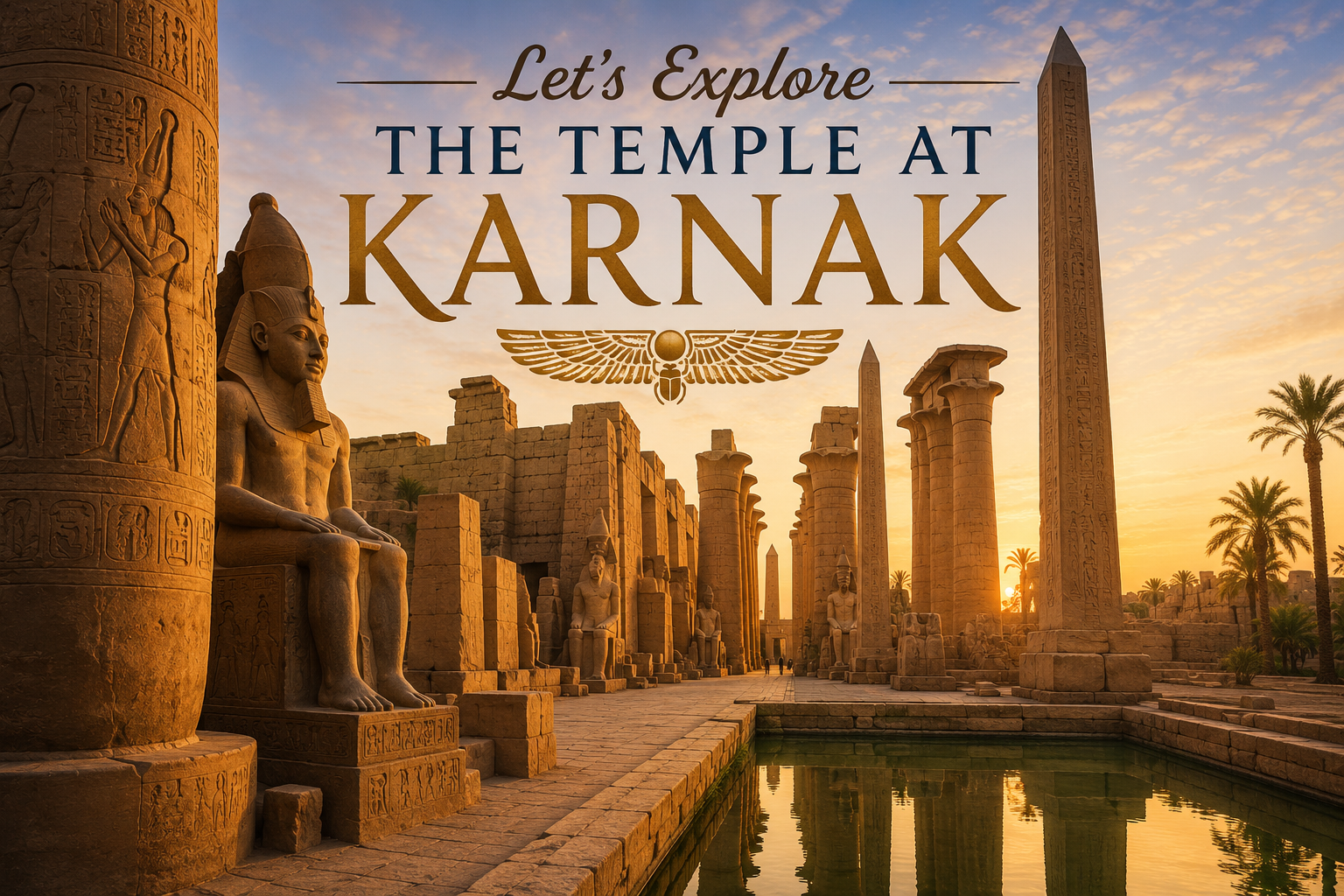
The ancient Egyptians may be best known for their pyramids, but these monumental tombs were only part of their extraordinary architectural legacy.
The Temple of Karnak, located near modern Luxor, was the largest religious complex ever built in the ancient world. Covering nearly 200 acres, Karnak is not a single temple but an enormous city of sanctuaries, chapels, pylons, obelisks, and sacred lakes, constructed and expanded over more than 2,000 years.
At the heart of the complex lies the Sacred Precinct of Amun-Ra, which alone covers approximately sixty-one acres. The Great Temple of Amun is so vast that some scholars have noted that the cathedrals of St. Peter’s in Rome, Milan Cathedral, and Notre-Dame in Paris could all fit within its enclosing walls.
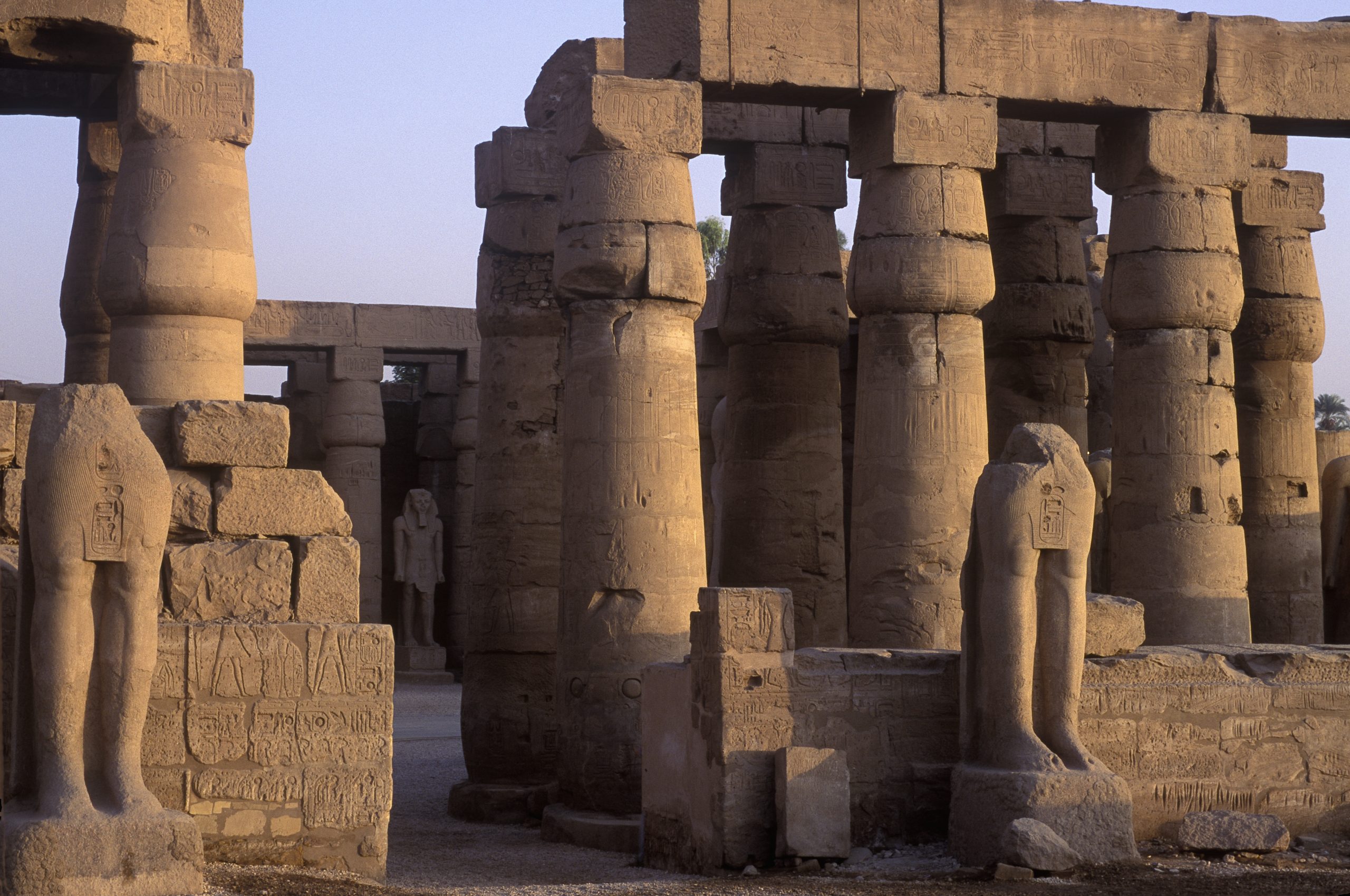
Construction at Karnak began during the Middle Kingdom (c. 2055-1650 BC), although most of the surviving structures date to the New Kingdom (c. 1550-1070 BC). Nearly every pharaoh of the New Kingdom sought to leave their mark on the site. Kings such as Senusret I, Hatshepsut, Thutmose III, Seti I, Ramesses II, and many others added monuments, statues, obelisks, and entire temples, transforming Karnak into the spiritual center of ancient Egypt.
One of Karnak’s most awe-inspiring features is the Great Hypostyle Hall. Covering approximately 54,000 square feet (5,000 square meters), it remains one of the largest halls ever constructed in any religious building. The hall contains 134 massive sandstone columns arranged in sixteen rows. The twelve central columns soar to nearly 70 feet (21 meters), and their capitals are shaped like blooming papyrus plants, symbolizing creation and renewal.


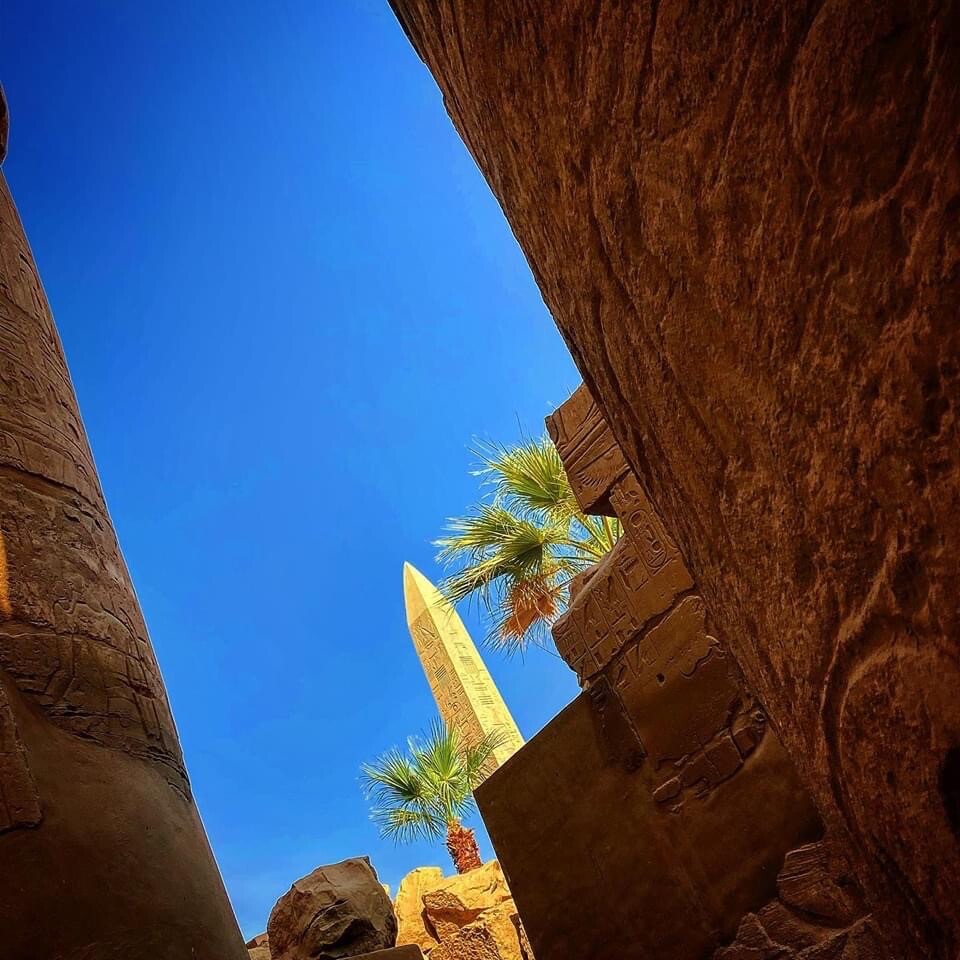

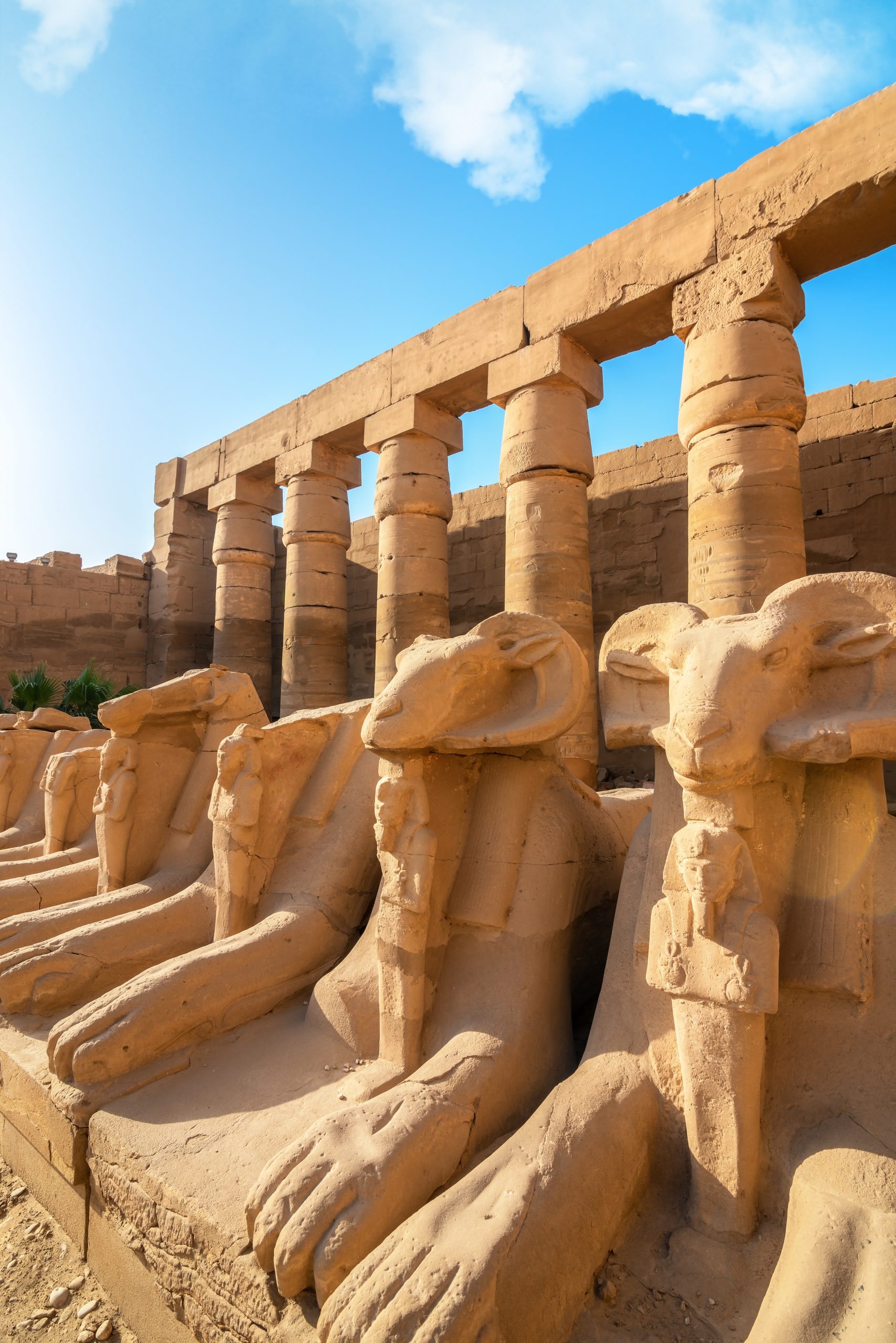
In addition to the main sanctuary, Karnak contains several smaller temples dedicated to other deities, including Mut, Khonsu, Ptah, and Osiris. The complex was linked to Luxor Temple by the famous Avenue of Sphinxes, a ceremonial road lined with hundreds of sphinx statues that stretched for nearly two miles.
Karnak also contains a vast Sacred Lake measuring approximately 423 by 252 feet (129 by 77 meters). Created during the reign of Thutmose III (c. 1479-1425 BC), it is the largest known sacred lake in ancient Egypt. Lined with stone and equipped with stairways descending into the water, the lake played an essential role in temple rituals. Priests used its waters for purification ceremonies, while sacred barques carrying the gods could be navigated across its surface during important religious festivals.
For over two millennia, Karnak stood as the religious heart of Egypt, a place where kings sought divine approval, priests performed daily rituals, and the gods themselves were believed to dwell. Even in ruins, Karnak remains one of the most impressive architectural achievements ever created by humanity.
