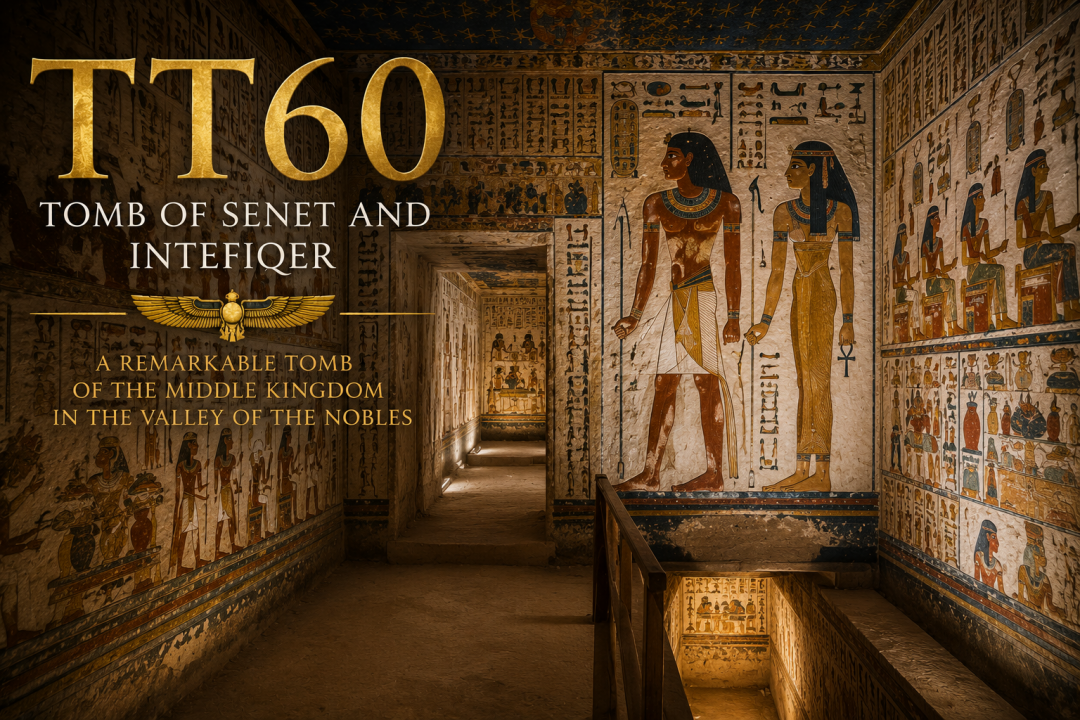
TT 60
Theban Tomb TT60, located in the necropolis of Sheikh Abd el-Qurna on the west bank of the Nile opposite modern Luxor, is one of the most important surviving tombs of Egypt’s Middle Kingdom. Situated within the famed Valley of the Nobles, the tomb belonged to Senet and the powerful official Intefiqer (also known as Antefoqer or Antefoker), who served as vizier and overseer of the city during the reigns of Amenemhat I and Senusret I of the Twelfth Dynasty.
TT60 is particularly significant because it is among the oldest decorated Theban tombs from the Middle Kingdom to survive in relatively good condition. Although Intefiqer himself was ultimately buried at Lisht near the pyramid complex of Amenemhat I, the tomb at Thebes provides valuable insight into the funerary traditions, art, and elite society of the early Middle Kingdom. The monument is also remarkable for its association with Senet, who was either Intefiqer’s mother or wife. Her prominence within the tomb makes TT60 one of the rare surviving funerary complexes dedicated to a woman from this period.
Rediscovered and thoroughly documented during the early twentieth century, TT60 has become an invaluable source of information for Egyptologists studying the development of private tomb architecture and decoration in ancient Thebes. Its well-preserved scenes and inscriptions continue to shed light on the lives of some of the highest-ranking officials of the Middle Kingdom.
- Structure: TT 60 (Not to be confused with KV 60)
- Location: Thebes
- Owner: Senet / Intefiqer
- Site type: Tomb
Theban Tomb TT60 is located in Sheikh Abd el-Qurna. The necropolis of Sheikh Abd el-Qurna is also known as the Valley of the Nobles. It’s part of the Theban Necropolis, on the west bank of the Nile, opposite to Luxor. This is the most frequently visited cemetery on the Theban west bank, with the largest concentration of private tombs.
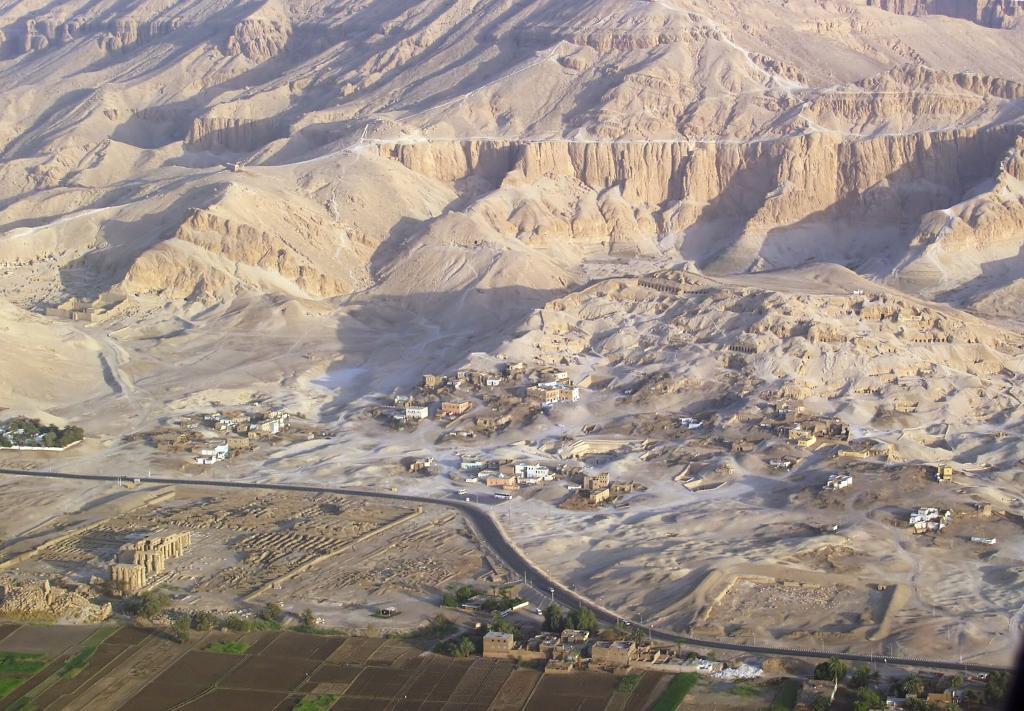
Valley of the Nobles (Luxor) – aerial view
In 1920, when Egyptologists Nina M. Davies and Norman de Garis Davies revealed Tomb TT60 to the world. It’s located on the west bank of the Nile and belongs to Senet and Intefiqer (Antefoqer), who was Governor of the city and Vizier of Senusret I in the 12th Dynasty.
The tomb served as the final resting place of a woman named Senet and as a memorial chapel for the high official Intefiqer (also known as Antefoqer, Antefoker, Antefiker, and Intefiker). Although closely associated with TT60, this was not Intefiqer’s actual burial place. He was ultimately buried in a mastaba at Lisht, near the pyramid complex of Amenemhat I.
Intefiqer served as Overseer of the City and Vizier under Amenemhat I and Senusret I during the early Twelfth Dynasty (c. 1985-1773 BCE). As one of the highest-ranking officials in Egypt, he oversaw many aspects of royal administration. He is also known from several rock inscriptions in Lower Nubia, which indicate that he participated in military expeditions to the region.
We know that Senet was the name of Intefiqer’s mother, but because it was a common name, it could have also been the name of one of his wives. So in this case, all we can say is that Senet was either the wife or mother of Intefiqer.
She was clearly important because she is one of the few funerary complexes known for a female of the Middle Kingdom, and the oldest Theban tomb decorated from this period to have survived in good condition.
His tomb’s entrance leads into a long corridor, which in turn leads into an inner chamber with a deep niche. From this room, a shaft goes down to the actual burial chamber.
The tomb is located at Luxor, on the west bank of the Nile, on the slope of the hill Sheikh Abd el-Qurna, in the area referred to as the upper enclosure. Situated close to the summit. Later, it became surrounded with tombs of the New Kingdom. TT60 is located slightly to the right and above of tomb TT83.
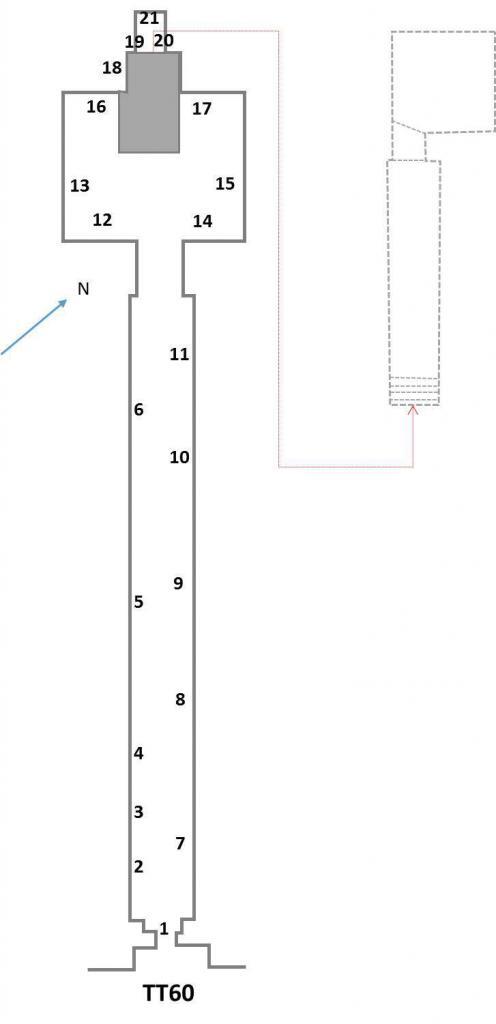
TT60 was originally discovered in the late 1800s but was neglected. It was necessary to wait until 1907 for its entry to be blocked by a metal door. Between 1907 and 1909, Weigall and Gardiner began to prepare their publication. In 1914, Davies resumed the work of Weigall, until the main edition in 1920
- Axis in degrees: 25.92
- Axis orientation: Northeast
Site Location
- Latitude: 25.44 N
- Longitude: 32.36 E
- Elevation: 188.43 msl
- North: 99,545.755
- East: 94,277.777
- JOG map reference: NG 36-10
- Modern governorate: Qena (Qina)
- Ancient nome: 4th Upper Egypt
Measurements
- Maximum height: 1.92 m
- Minimum width: 1 m
- Maximum width: 6.57 m
- Total length: 20.98 m
- Total area: 55.66 m²
- Total volume: 86.62 m³
TT60 is considered one of the earliest and best-preserved decorated private tombs in Thebes, dating to the Middle Kingdom. Because relatively few decorated tombs from this period survive in good condition, it provides Egyptologists with invaluable evidence for understanding the development of Theban funerary art.
TT60 is significant because it represents an early stage in the evolution of Theban rock-cut tombs. Its long corridor leading to an inner shrine and burial shaft foreshadows architectural features that would become common in later Middle Kingdom and New Kingdom private tombs.
The walls of TT60 are decorated with scenes depicting funerary rituals, offerings, agricultural activities, and daily life. Such scenes were intended to magically provide sustenance and ensure the continued existence of the deceased in the afterlife.
The artistic style found in TT60 illustrates the emergence of distinctive Middle Kingdom conventions that would influence Egyptian tomb decoration for centuries.
Interesting Facts
- TT60 is one of the oldest decorated Middle Kingdom tombs surviving at Thebes.
- The tomb belonged to the powerful vizier Intefiqer and a woman named Senet.
- Intefiqer was ultimately buried at Lisht, not in TT60.
- TT60 was extensively documented by Nina and Norman de Garis Davies in the early twentieth century.
- The tomb’s decoration has played a major role in the study of Middle Kingdom art and funerary practices.
