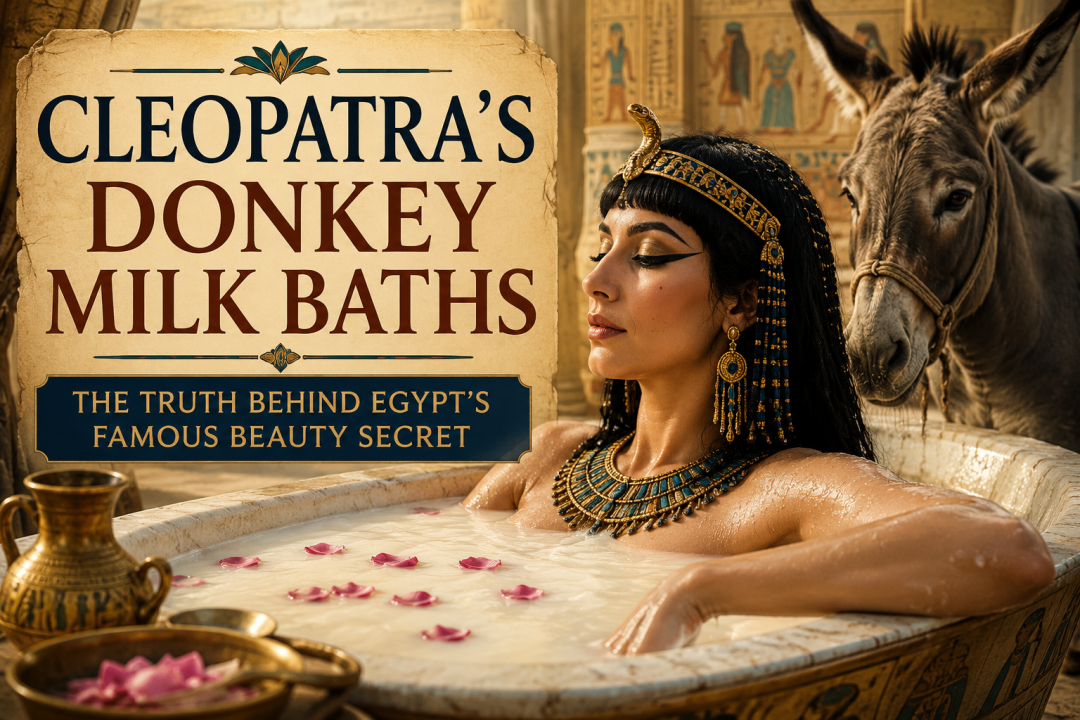
Cleopatra’s Donkey Milk Baths: The Truth Behind Egypt’s Famous Beauty Secret
The beauty industry is constantly evolving. Every year seems to bring a new miracle ingredient, from snail mucin creams to gold facials and collagen masks. Yet many modern skincare trends have surprisingly ancient origins. One of the most famous beauty legends of the ancient world claims that Queen Cleopatra VII of Egypt maintained her legendary beauty by bathing in donkey milk.
If true, Cleopatra’s beauty routine would certainly have been extravagant. According to later traditions, the queen bathed daily in fresh donkey milk and required the milk of as many as 700 donkeys for a single bath. While this claim is impossible to verify, it has become one of the most enduring stories associated with Egypt’s last pharaoh.
Did Cleopatra Really Bathe in Donkey Milk?
Although the story is widely repeated, there is no surviving contemporary Egyptian evidence that Cleopatra herself regularly bathed in donkey milk. Ancient writers who described Cleopatra focused primarily on her intelligence, political skill, charisma, and wealth rather than her cosmetic routines.
The legend likely developed centuries after Cleopatra’s death. However, milk baths were known in the ancient world, and milk was indeed used in various cosmetic preparations. It is therefore possible that Cleopatra, like many wealthy women of her time, used milk-based beauty treatments.
Whether fact or legend, the story reflects Cleopatra’s enduring reputation as one of history’s greatest beauty icons.
Why Would Donkey Milk Benefit the Skin?
Modern scientific research suggests that donkey milk does possess properties that could benefit the skin. Donkey milk contains:
- Vitamins A, D, and E
- Essential fatty acids
- Proteins and amino acids
- Antioxidants
- Minerals such as calcium and magnesium
These nutrients may help moisturize the skin and support its natural barrier.
Perhaps most importantly, fermented or sour milk contains lactic acid, a naturally occurring alpha hydroxy acid (AHA). Lactic acid gently exfoliates the skin by removing dead surface cells, much like many modern chemical peels and exfoliating products.
In this sense, the ancient practice of using milk in skincare may have had genuine benefits.
Donkey Milk in Modern Skincare
Donkey milk has not disappeared from the world of beauty. Today, it is still used as an ingredient in soaps, creams, masks, and moisturizers sold around the world. Some manufacturers claim that donkey milk products can improve hydration, reduce irritation, and promote smoother skin.
While modern dermatologists generally agree that donkey milk can be moisturizing, they also note that no single ingredient can stop the aging process. Cleopatra’s legendary beauty likely owed as much to royal luxury, nutrition, and careful grooming as to any single cosmetic treatment.
Beauty and Cosmetics in Ancient Egypt
Milk baths were only one part of ancient Egyptian beauty culture. Egyptians of all social classes took personal grooming seriously and used a wide range of cosmetics, perfumes, and skincare products.
Eye makeup was especially important. Egyptians applied black kohl around their eyes, not only for beauty but also because it may have helped reduce glare from the sun and offered some protection against eye infections. Green eye paint made from crushed malachite was also popular.
Perfumes and scented oils were highly prized. These fragrances were created from flowers, herbs, resins, and oils, and were used in both daily life and religious ceremonies.
Archaeologists have uncovered elaborate cosmetic jars, palettes, spoons, and applicators made from materials such as alabaster, ivory, basalt, and granite. Many of these objects are beautifully decorated and provide valuable insight into the importance of beauty and personal care in ancient Egypt.
Strange Egyptian Beauty Treatments
Ancient Egyptian beauty practices could sometimes seem unusual by modern standards. Some ancient medical and cosmetic texts mention ingredients such as animal fats, minerals, honey, and even crocodile dung in various preparations.
However, many Egyptian remedies contained ingredients that modern science recognizes as beneficial. Honey, for example, possesses antibacterial properties and is still used in some medical treatments today.
Cleopatra’s Enduring Beauty Legacy
Whether Cleopatra truly bathed in donkey milk or not, the legend continues to fascinate people more than two thousand years after her death. It reminds us that the desire for healthy, youthful skin is far from a modern obsession.
From milk baths to moisturizers, ancient Egyptians pioneered many beauty practices that continue to influence cosmetics and skincare today. Cleopatra’s famous milk baths, whether fact or legend, remain one of history’s most intriguing beauty stories.
Donkey milk contains several nutrients that may benefit skin health and hydration.
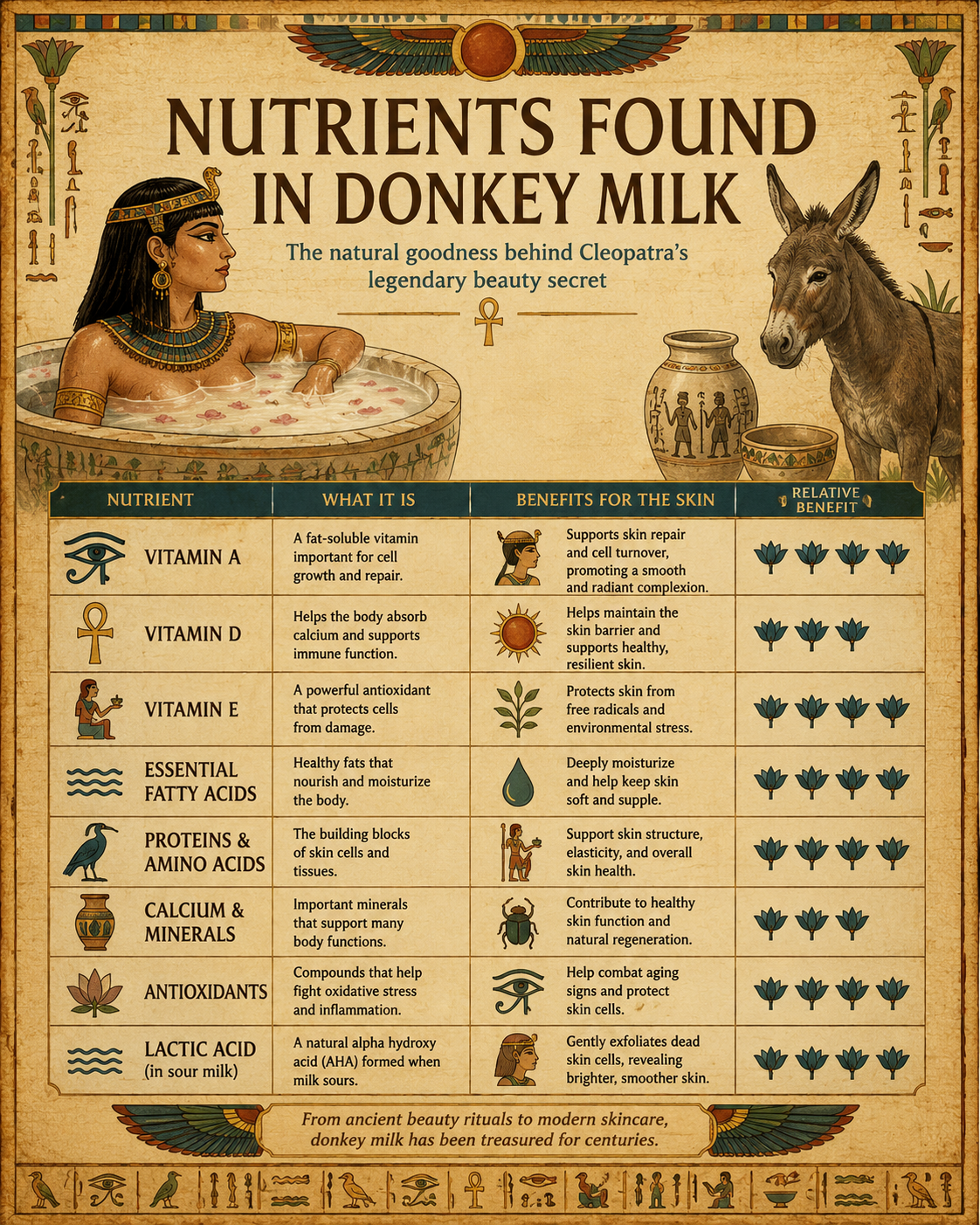
| Nutrient | Potential Skin Benefit |
|---|---|
| Vitamin A | Supports skin repair and cell turnover |
| Vitamin D | Helps maintain the skin barrier |
| Vitamin E | Acts as an antioxidant and protects against damage |
| Essential Fatty Acids | Moisturize and nourish the skin |
| Proteins & Amino Acids | Help support skin structure and elasticity |
| Calcium & Minerals | Contribute to healthy skin function |
| Antioxidants | Help combat oxidative stress |
| Lactic Acid | Gently exfoliates dead skin cells |
Frequently Asked Questions
Did Cleopatra really bathe in donkey milk?
There is no direct ancient Egyptian evidence proving that Cleopatra VII regularly bathed in donkey milk. The story comes from later traditions and has become one of the most famous legends associated with the Egyptian queen. While milk-based beauty treatments were known in the ancient world, historians cannot confirm whether Cleopatra herself used them.
Why was donkey milk used for skincare?
Donkey milk contains vitamins, minerals, proteins, and essential fatty acids that can help moisturize and nourish the skin. It also contains compounds that may soothe irritation and improve skin hydration. For these reasons, donkey milk is still used in some skincare products today.
How many donkeys were needed for Cleopatra’s milk baths?
According to legend, Cleopatra required the milk of approximately 700 donkeys for her daily baths. However, this figure comes from later accounts and cannot be verified by historical sources.
Is donkey milk used in skincare today?
Yes. Donkey milk is still used as an ingredient in a variety of modern skincare products, including soaps, creams, moisturizers, and face masks. Many people value it for its moisturizing properties.
What other beauty products did ancient Egyptians use?
Ancient Egyptians used a wide range of cosmetics and beauty products. These included kohl eyeliner, green eye paint made from malachite, perfumes made from flowers and oils, scented ointments, and skincare treatments containing ingredients such as honey, milk, and plant extracts.
Why were cosmetics so important in ancient Egypt?
Cosmetics were important in ancient Egypt for both practical and religious reasons. Makeup was used to enhance appearance, protect the skin and eyes from the harsh environment, and symbolize status, health, and spiritual protection.
Did ancient Egyptian makeup have health benefits?
Some ancient Egyptian cosmetics may have provided health benefits. Kohl, for example, may have helped reduce sun glare and offered some protection against eye infections, while ingredients such as honey possessed natural antibacterial properties.
Can you take a donkey milk bath today?
Yes. Donkey milk bath products are available commercially, although most modern products contain powdered or concentrated donkey milk rather than fresh milk. Due to the large quantity of milk required, full fresh milk baths are uncommon and expensive.