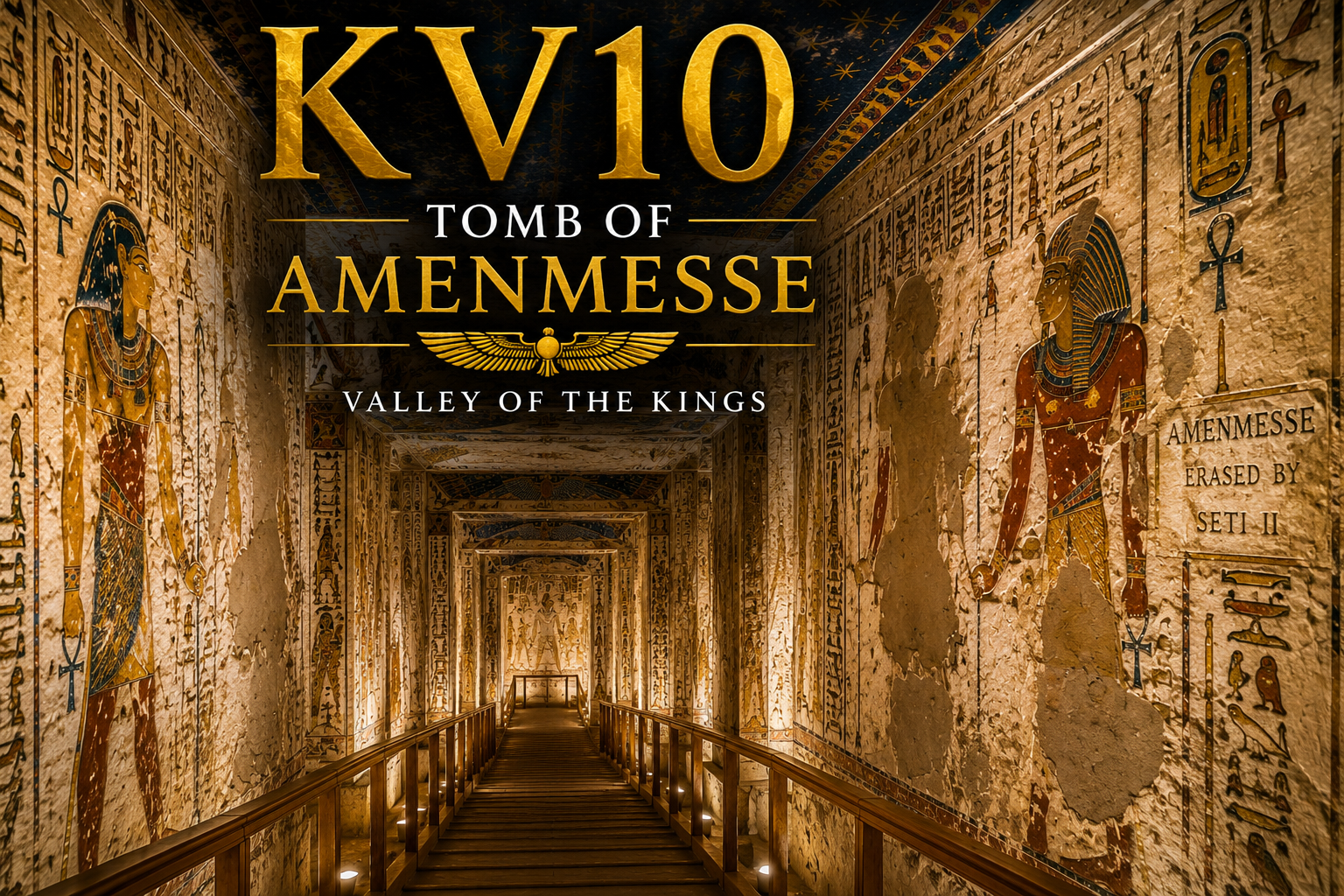
KV10 is the royal tomb of Pharaoh Amenmesse, one of the most mysterious rulers of Egypt’s Nineteenth Dynasty. His reign was brief and remains poorly understood, with scholars continuing to debate whether he ruled as a legitimate king, a rival claimant to the throne, or even a usurper during Seti II’s reign.
Located in the East Valley of the Valley of the Kings, KV10 differs from many other royal tombs in that it appears never to have been completed or used as originally intended. Much of its decoration was altered by later rulers, and the tomb suffered extensive damage from ancient flooding, tomb robbers, and subsequent reuse. Despite its incomplete state, KV10 provides valuable evidence for the political instability that marked the closing years of the Nineteenth Dynasty.
Today, the tomb offers fascinating insights into royal burial practices, ancient usurpation, and the turbulent succession struggles that followed the long reign of Ramesses II.
- Structure: KV10
- Location: Valley of the Kings, East Valley, Thebes West Bank, Luxor
- Owner: Amenmesse
- Other Designations: KV10
- Site Type: Royal Tomb
KV10 follows the traditional layout of a royal tomb from the late Nineteenth Dynasty. The entrance leads through a series of descending corridors and chambers before reaching the burial chamber. Several side rooms branch from the main axis and were intended to store funerary equipment and offerings for the afterlife.
Unlike many earlier royal tombs, however, KV10 was never fully completed. Several chambers remain unfinished, and portions of the decorative program were abandoned before completion.
The burial chamber itself is relatively modest compared to the grand tombs of Ramesses II or Seti I, reflecting either the short duration of Amenmesse’s reign or the political uncertainty surrounding his rule.
Decoration
Although much of the decoration has been damaged or replaced, surviving scenes demonstrate that KV10 originally followed the standard religious program used in royal tombs of the period.
Decorations include:
- Representations of Amenmesse before Egyptian deities
- Funerary rituals associated with the king’s rebirth
- Religious texts connected with the journey through the underworld
- Scenes later altered by Seti II after Amenmesse’s reign
Many of Amenmesse’s cartouches and royal images were erased or replaced after his death, most likely during the reign of Seti II. These alterations provide important evidence for the political conflict that surrounded Amenmesse’s reign.
Noteworthy Features
KV10 is notable for several reasons:
- It belonged to the enigmatic Pharaoh Amenmesse.
- Much of the tomb was left unfinished.
- Many decorations were later usurped or altered by Seti II.
- The monument illustrates the political instability of the late Nineteenth Dynasty.
- The tomb was later reused for non-royal burials during the Twentieth Dynasty.
Site History
Construction of KV10 likely began shortly after Amenmesse assumed the throne. Because his reign lasted only a few years, work on the tomb appears to have ended before completion.
Following Amenmesse’s death, Seti II regained control of Egypt and ordered many references to his rival removed. Much of KV10’s decoration was altered, with Amenmesse’s names and images either erased or replaced. These modifications make the tomb one of the clearest archaeological examples of royal usurpation in ancient Egypt.
Evidence suggests that KV10 was later reused during the Twentieth Dynasty for the burials of members of the royal family, including Takhat and Baketwerel, although the exact identities and relationships of these women remain subjects of scholarly debate.
Like many tombs in the Valley of the Kings, KV10 was robbed in antiquity. Flooding also carried mud and debris into the monument, damaging much of its decoration.
Dating
This site was used during the following periods:
- New Kingdom, Dynasty 19, reign of Amenmesse
- New Kingdom, Dynasty 19, reign of Seti II (modification of decoration)
- New Kingdom, Dynasty 20 (secondary burials)
- Graeco-Roman Period
Conservation History
Modern archaeological work has focused on documenting the remaining decoration, stabilizing damaged walls, and studying evidence for the tomb’s multiple phases of construction and reuse. Clearing flood debris has revealed important architectural features and inscriptions.
Site Condition
KV10 has suffered significant damage from flooding, ancient robbery, and later reuse. Many decorated surfaces have been lost, while others preserve only faint traces of their original painted scenes. Nevertheless, surviving inscriptions continue to provide important information about one of Egypt’s most enigmatic pharaohs.
Amenmesse: One of Egypt’s Most Mysterious Pharaohs
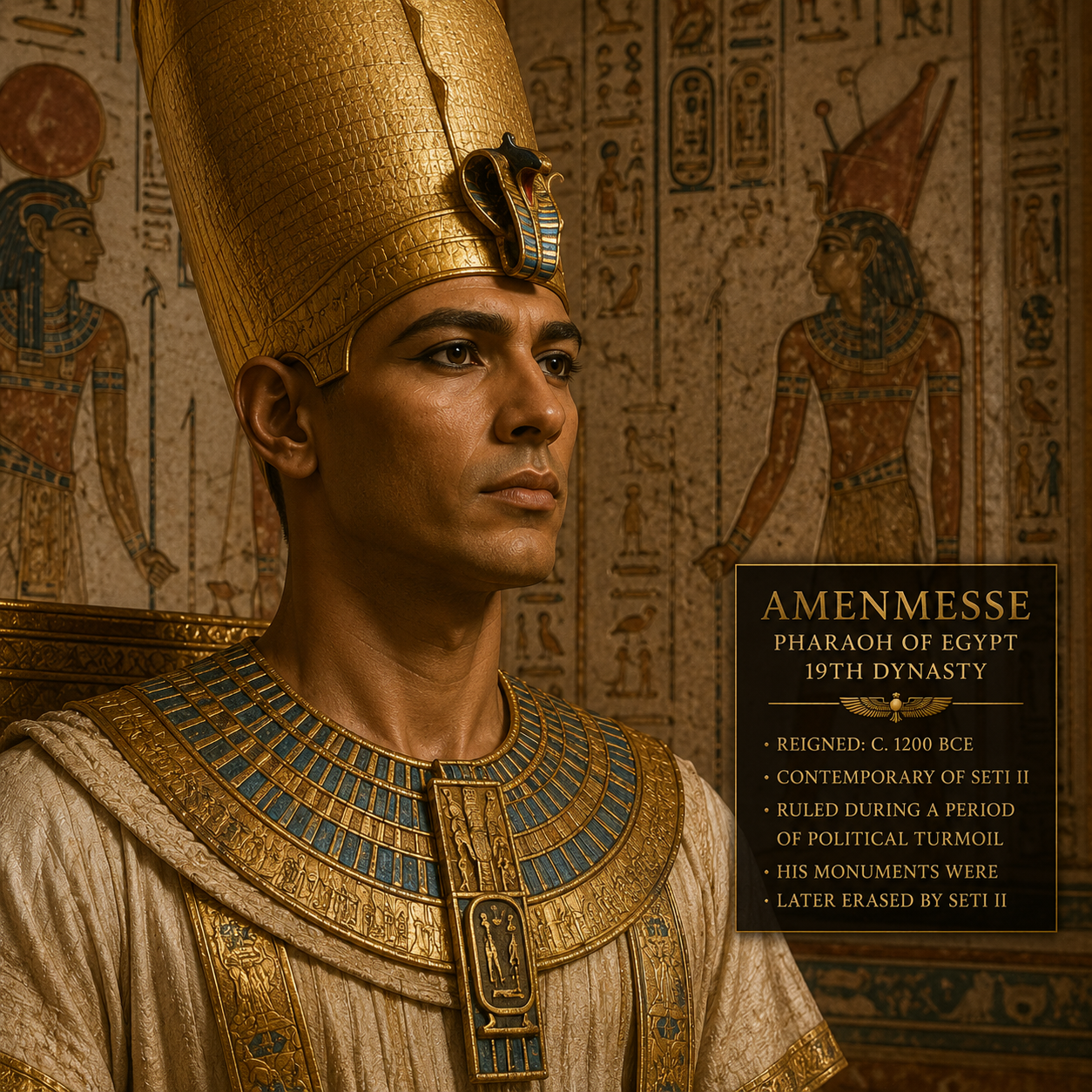
Very little is known with certainty about Amenmesse. Most Egyptologists believe he ruled for between three and four years during the late Nineteenth Dynasty, although the exact dates remain uncertain.
His relationship with Seti II continues to be debated. Some scholars believe Amenmesse temporarily seized power over Upper Egypt while Seti II ruled elsewhere. Others argue that he was a legitimate king whose reign was later erased from official history.
Because so much of his memory was deliberately destroyed, KV10 remains one of the most important sources for understanding this obscure period of Egyptian history.
Interesting Facts About KV10
- KV10 belonged to the mysterious Pharaoh Amenmesse.
- Much of the tomb was deliberately altered after his death.
- Seti II erased many of Amenmesse’s names and images from the walls.
- The tomb was later reused for royal women during the Twentieth Dynasty.
- KV10 provides some of the best archaeological evidence for political rivalry among Egypt’s pharaohs.
- Flooding caused extensive damage to the tomb over thousands of years.
- Amenmesse remains one of the least understood rulers of ancient Egypt.