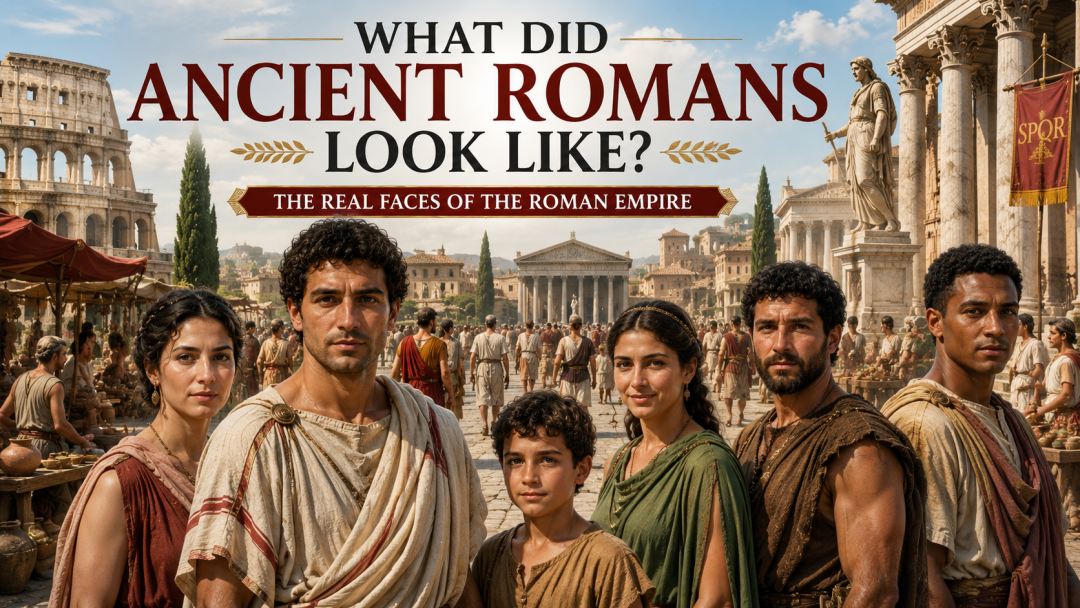
What Did Ancient Romans Look Like? Faces, Hair, Skin Color, and Modern DNA Evidence
The ancient Romans did not all look the same. Rome was huge, and as a result, the ancient Romans were made up of a variety of cultures.
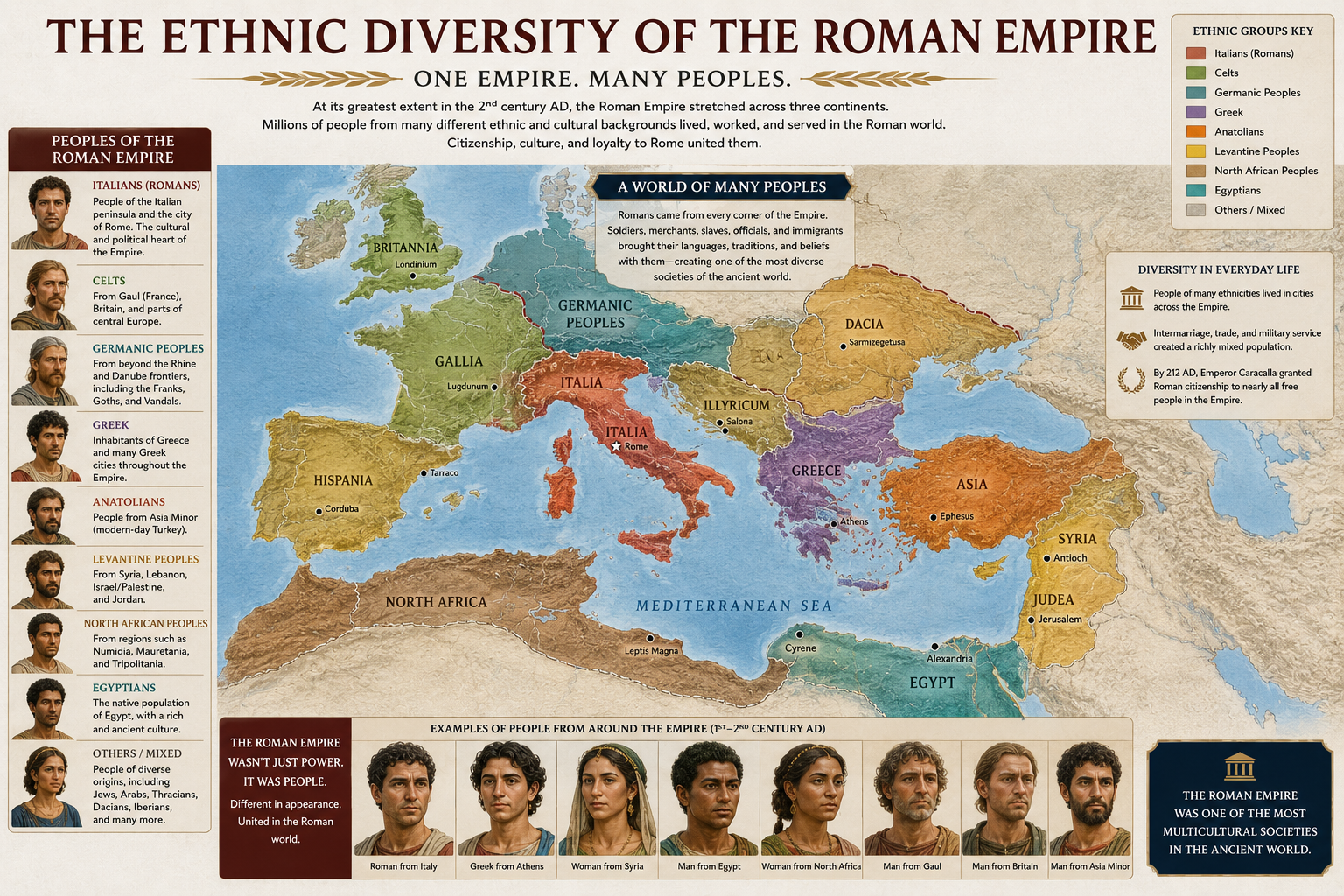
One of the biggest misconceptions about the Roman Empire is that there was a single “Roman look.” In reality, the Roman world stretched across Europe, North Africa, and the Middle East, encompassing hundreds of different cultures and millions of people.
A Roman citizen could have been born in Britain, Spain, Egypt, Syria, Gaul, Greece, North Africa, or Italy. As a result, ancient Romans displayed a wide range of physical appearances, much like the people living around the Mediterranean today.
So what did ancient Romans actually look like? Archaeology, ancient art, skeletal remains, DNA studies, and forensic facial reconstructions provide surprisingly detailed answers.
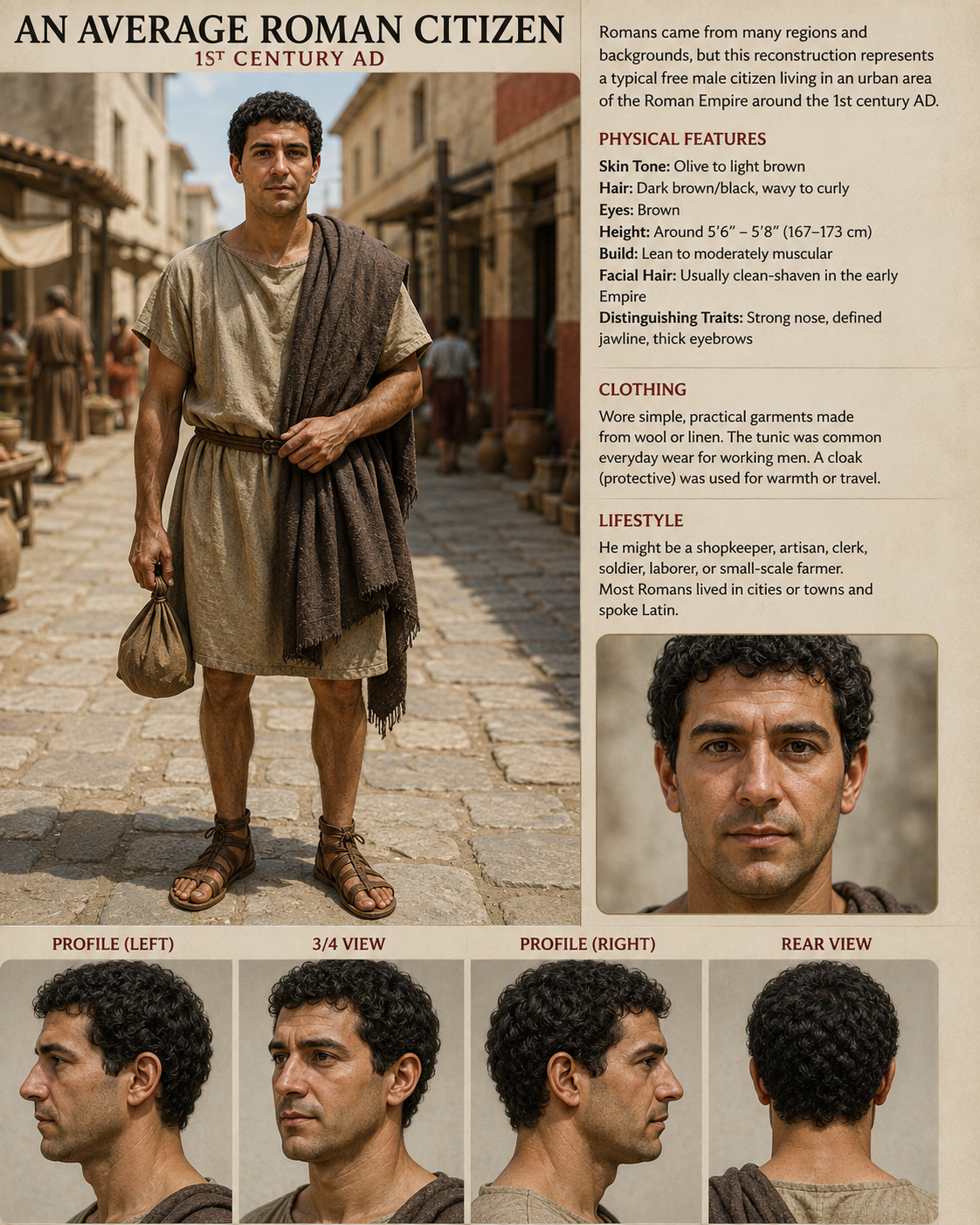
Most Romans living in Italy during the Republic and early Empire probably resembled modern Mediterranean populations. They commonly had:
- Olive to light brown skin tones
- Dark brown or black hair
- Brown eyes
- Medium height
- Straight or slightly wavy hair
- Strong noses and defined facial features
However, there was tremendous diversity across the empire. Citizens living in Britain looked different from those in Egypt or Syria, yet all could legally call themselves Romans.
Were Romans an Ethnic Group?
Not exactly. Originally, Romans were the inhabitants of the city of Rome in central Italy.
As Rome expanded, citizenship spread throughout the empire. By the second century AD, millions of people from different backgrounds had become Roman citizens.
In AD 212, Emperor Caracalla issued the Constitutio Antoniniana, granting Roman citizenship to nearly every free person in the empire.
By that point, being Roman referred more to citizenship, culture, language, and law than to ancestry alone.
The people of ancient Italy were themselves diverse. Long before Rome became an empire, the Italian peninsula was inhabited by:
- Latins
- Etruscans
- Sabines
- Samnites
- Greeks in southern Italy
- Celtic peoples in northern Italy
Centuries of migration and intermarriage created a population that already displayed considerable physical variation.
Most evidence suggests that many Italians shared features still common throughout the Mediterranean today:
- Brown eyes
- Dark hair
- Olive complexions
- Average height between about 5 feet 5 inches and 5 feet 7 inches (165 to 170 cm) for men
Lighter skin, blond hair, and blue eyes also existed but were less common in central Italy than farther north in Europe.
What Does Ancient DNA Tell Us?
Recent genetic studies have transformed our understanding of Roman populations.
DNA recovered from skeletons around Rome shows that the city’s population changed dramatically over time.
During the Republic, most inhabitants were of Italian ancestry.
As the empire expanded, Rome attracted migrants from every corner of the Mediterranean. By the Imperial period, many residents had ancestors from:
- Greece
- Anatolia (modern Turkey)
- Syria
- Lebanon
- Egypt
- North Africa
This diversity reflects Rome’s role as one of the largest and most cosmopolitan cities in the ancient world.

Did Roman Statues Show What People Really Looked Like?
Roman sculpture provides valuable clues, but it must be interpreted carefully. Portrait busts often display remarkably realistic features, including:
- Wrinkles
- Crooked noses
- Thin lips
- Scars
- Receding hairlines
This style, known as verism, emphasized realism and was especially popular during the Roman Republic. However, not every statue was an accurate portrait.
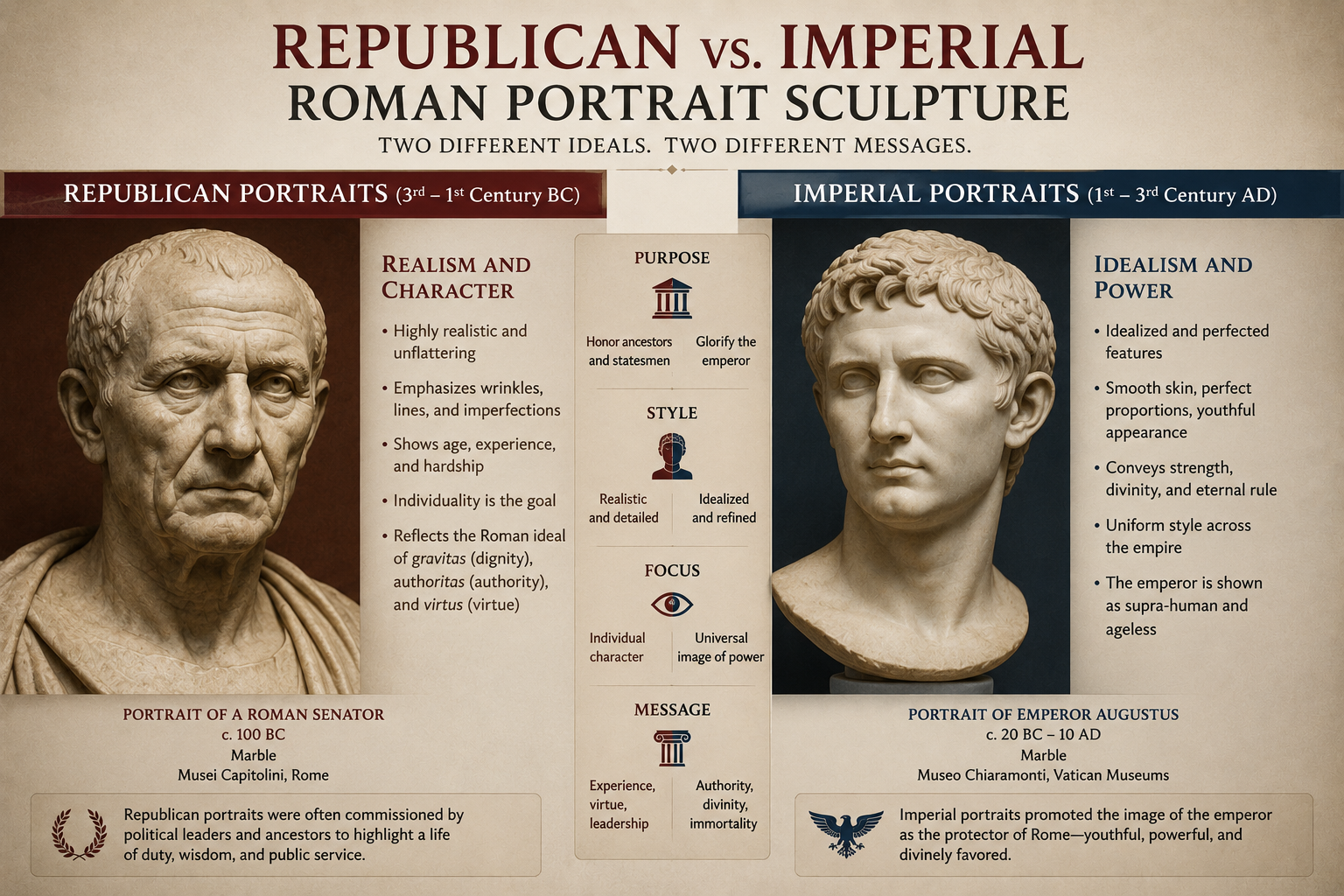
Republican Portraits
Republican politicians often wanted to appear older and wiser. Artists exaggerated wrinkles and age lines because they symbolized:
- Experience
- Wisdom
- Authority
- Moral character
Imperial Portraits
Imperial portraits were often idealized. The best example is Emperor Augustus.
Although Augustus ruled for more than 40 years, official portraits almost always depict him as a youthful, handsome man. As he aged, his statues did not. The image promoted the emperor’s eternal strength rather than his actual appearance.
What About Roman Paintings and Mosaics?
Roman frescoes and mosaics offer another valuable source of evidence. Unlike marble statues, these artworks preserve color.
They commonly depict people with:
- Brown eyes
- Dark brown hair
- Black hair
- Olive or tan complexions
Children, women, merchants, soldiers, and ordinary citizens appear alongside emperors and nobles, providing a broader picture of everyday Roman society.
The famous mummy portraits from Roman Egypt are especially realistic and show a remarkable variety of facial features across the empire.
What Hairstyles Did Ancient Romans Have?
Fashion often changed more than physical appearance. Roman men usually wore:
- Short hair
- Clean-shaven faces during the early Empire
- Beards became fashionable after Emperor Hadrian
Roman women created elaborate hairstyles featuring:
- Braids
- Curls
- Hairpins
- Decorative combs
- Gold jewelry
These hairstyles changed frequently and often reflected the latest trends set by the imperial family.
What Did Roman Soldiers Look Like?
Roman armies recruited men from across the empire. A legion stationed in Britain might include soldiers born in:
- Italy
- Spain
- Gaul
- Germany
- Syria
- North Africa
- the Balkans
Because of this, there was no single “Roman soldier” appearance. Military equipment created a more uniform appearance than ethnicity ever did.
Modern Facial Reconstructions
Advances in forensic anthropology have enabled scientists to reconstruct the faces of ancient Romans from skulls recovered at archaeological sites.
These reconstructions consistently show ordinary people with realistic features rather than the flawless faces seen in idealized sculptures.
They also reveal considerable diversity in facial structure, reflecting the multicultural nature of Roman society.
Did Ancient Romans Look Like Modern Italians?
In many cases, yes. Many physical traits seen in modern Italians, Greeks, and other Mediterranean populations were already common in Roman Italy more than 2,000 years ago.
However, modern populations have continued to mix through centuries of migration, trade, conquest, and cultural exchange. As a result, no modern group is an exact physical match for the people of ancient Rome.
Common Myths About Roman Appearance
Were all Romans white?
No. The Roman Empire included people from Europe, North Africa, and the Middle East. Skin tones ranged from very fair to very dark depending on ancestry and geographic origin.
Did all Romans have dark hair?
No. Dark hair was most common in Italy, but blond and red hair also existed naturally, particularly among people from northern provinces.
Did Romans all look like marble statues?
No. Many statues were idealized, especially those of emperors. Ordinary people displayed the same range of facial features seen in modern populations.
So, what did the ancient Romans look like? Ancient Romans looked far more diverse than many people imagine.
Most Romans living in Italy probably resembled modern Mediterranean populations, with dark hair, brown eyes, and olive complexions. Across the empire, however, Roman citizens came from dozens of different regions and displayed an enormous variety of physical characteristics.
Rather than belonging to a single ethnicity, the Romans were united by their citizenship, language, laws, military service, and shared culture. Their appearance reflected one of the most multicultural civilizations of the ancient world.