KV19: The Tomb of Prince Mentuherkhepshef
KV19 is the unfinished tomb of Prince Mentuherkhepshef, a son of Pharaoh Ramesses IX during Egypt’s Twentieth Dynasty. Unlike the grand royal tombs of the Valley of the Kings, KV19 was constructed for a member of the royal family rather than a reigning pharaoh. Although never completed or used for burial, it is renowned for its exceptionally well-preserved decoration, which provides rare insight into the funerary beliefs and status of Egypt’s royal princes.
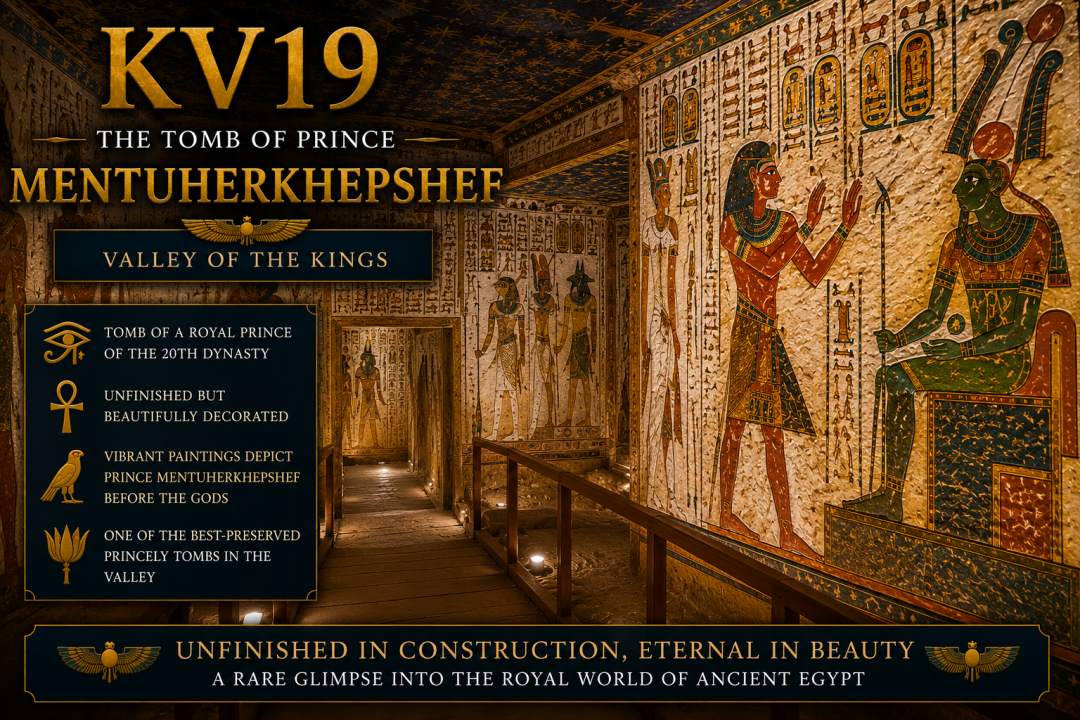
Located near the entrance to the Valley of the Kings, KV19 is one of only a handful of princely tombs within the royal necropolis. Its vivid wall paintings depict the young prince standing before numerous Egyptian deities, illustrating the rituals and divine protection believed necessary for the journey into the afterlife.
Today, KV19 remains one of the Valley’s most fascinating unfinished monuments, combining incomplete architecture with some of the finest surviving paintings from the late Twentieth Dynasty.
- Structure: KV19
- Location: Valley of the Kings, East Valley, Thebes West Bank, Luxor
- Owner: Prince Mentuherkhepshef, son of Ramesses IX (probably)
- Other Designations: KV19
- Site Type: Royal Prince’s Tomb
KV19 follows a relatively simple straight-axis plan. The entrance leads through a descending corridor into a series of unfinished chambers intended to form a complete burial suite.
Work on the monument ceased before the excavation was completed, leaving several planned rooms only partially cut into the limestone. Despite its unfinished architecture, the decorated portions display remarkable craftsmanship and artistic quality.
Unlike the sprawling tombs of Egypt’s pharaohs, KV19 was designed on a smaller scale appropriate for a royal prince while still incorporating many of the religious themes found in contemporary royal tombs.
Decoration
The greatest treasure of KV19 is its magnificent painted decoration.
The walls preserve brightly colored scenes showing Prince Mentuherkhepshef before a wide variety of Egyptian gods and goddesses, including:
- Ra-Horakhty
- Osiris
- Anubis
- Hathor
- Ptah
- Thoth
- Isis
- Horus
- Meretseger
- Numerous protective deities of the underworld
The paintings are notable for their vivid colors, elegant proportions, and exceptional preservation. Many Egyptologists consider them among the finest examples of late Ramesside tomb painting.
The inscriptions identify the prince by his many royal titles and emphasize his hoped-for transformation into an eternal companion of the gods.
KV19 is notable for several reasons:
- It was built for Prince Mentuherkhepshef, probably a son of Ramesses IX.
- It is one of the few princely tombs located within the Valley of the Kings.
- The monument was abandoned before completion.
- The wall paintings are among the best-preserved examples of Twentieth Dynasty art.
- It contains unusually extensive depictions of protective deities.
- The unfinished architecture reveals how royal tombs were excavated before completion.
Site History
Construction of KV19 began during the reign of Ramesses IX for Prince Mentuherkhepshef. For reasons that remain uncertain, work stopped before the monument could be completed.
Some Egyptologists believe the prince may have died unexpectedly or fallen from royal favor before the tomb was finished. Others suggest that changing burial practices or political circumstances during the late Twentieth Dynasty brought construction to an end.
Because the tomb was never completed, there is no convincing evidence that Mentuherkhepshef was ever buried here.
Unlike many royal tombs, KV19 suffered comparatively little flood damage. Its painted decoration survived remarkably well, although some areas have deteriorated due to natural weathering and centuries of visitor activity.
Who Was Mentuherkhepshef?
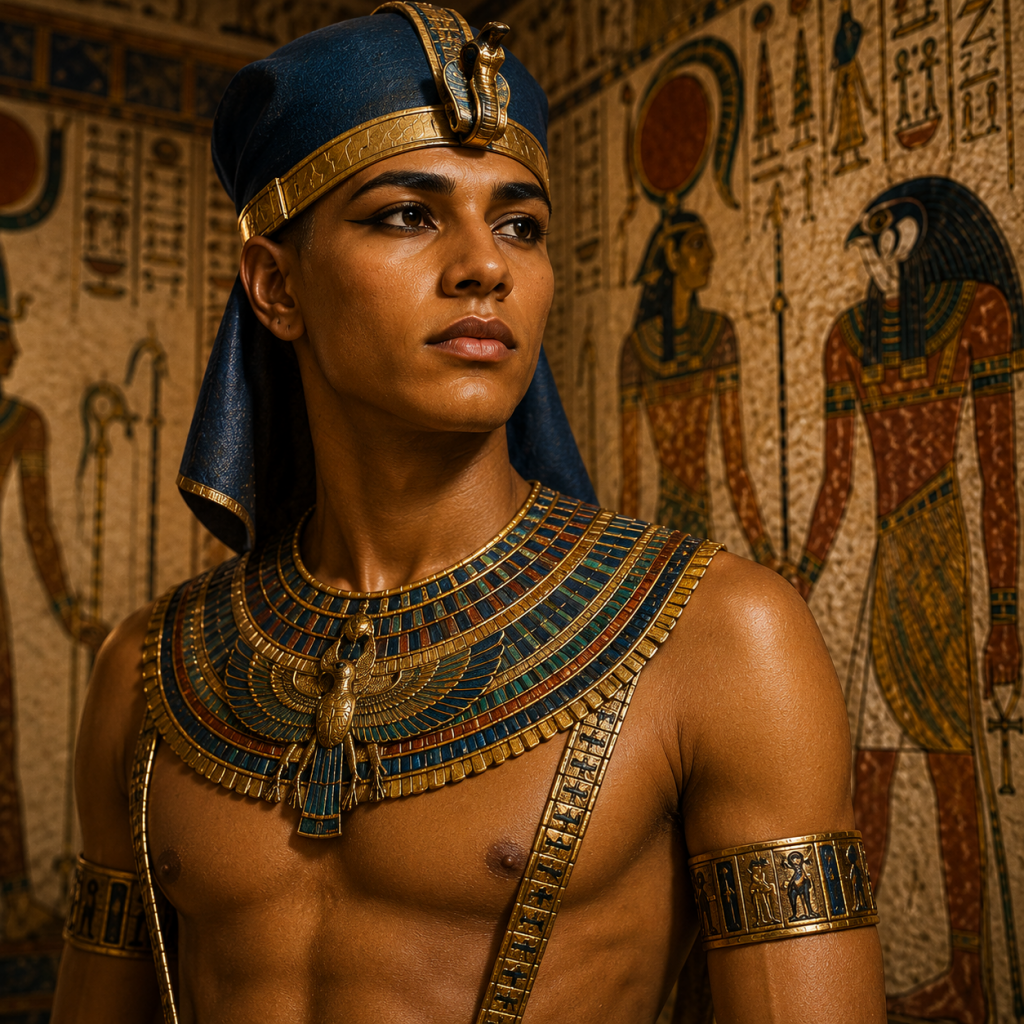
Several princes of the Ramesside Period bore the name Mentuherkhepshef, making it difficult to identify the owner of KV19 with complete certainty.
Most scholars attribute the tomb to a son of Ramesses IX because the inscriptions closely match the titles used by one of his known sons. Regardless of his exact identity, Mentuherkhepshef clearly held an important position within the royal family and was honored with a burial monument in the Valley of the Kings rather than in the nearby Valley of the Queens.
Dating
This site was used during the following period:
- New Kingdom, Dynasty 20, reign of Ramesses IX (probable)
Although construction began during this period, the tomb appears never to have been completed or occupied.
Conservation History
Modern conservation has concentrated on preserving the exceptionally fragile painted plaster, stabilizing cracks in the limestone, and documenting the tomb’s remarkable decorative program.
Cleaning campaigns have revealed vibrant colors that remained hidden beneath centuries of dust and soot.
Site Condition
KV19 is among the best-preserved princely tombs in the Valley of the Kings. Although the architecture remains unfinished, the surviving paintings retain much of their original brilliance, offering visitors one of the finest examples of Twentieth Dynasty funerary art.
Why KV19 Is Important
Although overshadowed by the magnificent royal tombs nearby, KV19 occupies a unique place in the history of the Valley of the Kings.
It demonstrates that members of Egypt’s royal family, not just reigning pharaohs, could be interred in the royal necropolis. At the same time, its unfinished chambers reveal the practical stages of tomb construction, while its superb paintings preserve the artistic traditions of the late New Kingdom at their finest.
Together, these qualities make KV19 one of the Valley’s most informative and visually rewarding monuments.
Interesting Facts About KV19
- KV19 was built for Prince Mentuherkhepshef, probably a son of Ramesses IX.
- It is one of the few princely tombs in the Valley of the Kings.
- The tomb was never completed or used for burial.
- Its wall paintings are among the finest examples of late Twentieth Dynasty art.
- The monument contains vivid depictions of numerous Egyptian gods and protective deities.
- Its unfinished architecture helps archaeologists understand how royal tombs were excavated.
- Despite never being completed, KV19 remains one of the best-preserved decorated tombs in the Valley.