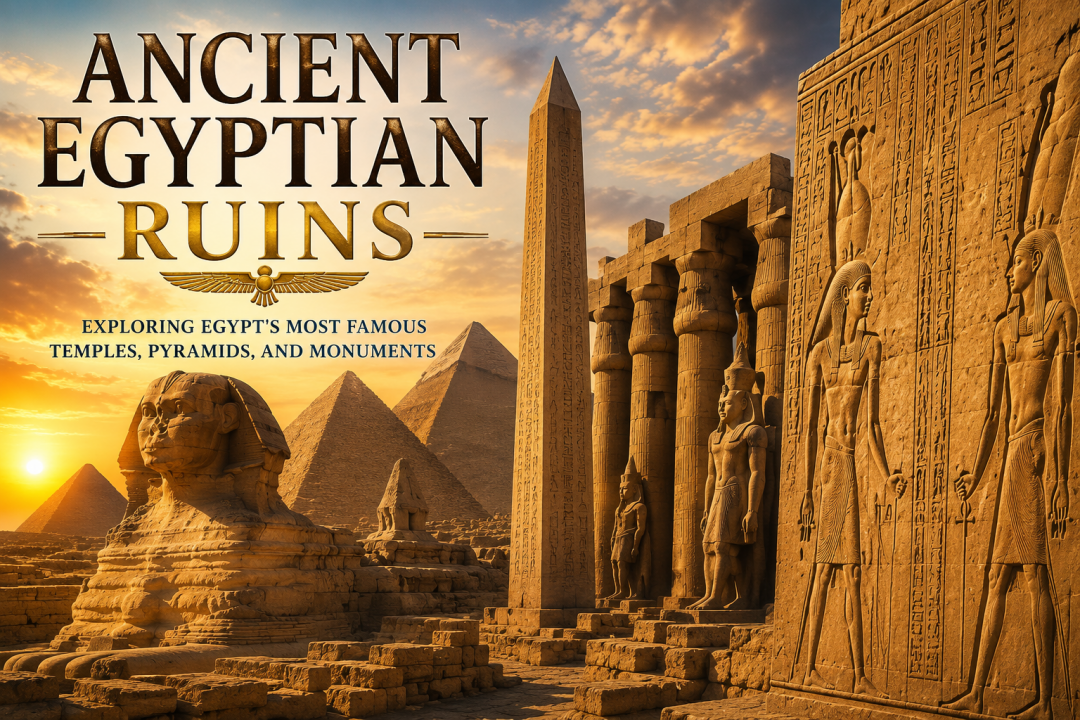
Ancient Egyptian Ruins: Exploring Egypt’s Most Famous Temples, Pyramids, and Monuments
For thousands of years, the civilization of ancient Egypt created some of the world’s most impressive monuments, temples, tombs, and statues. Although many of these structures are now ruins, they continue to fascinate archaeologists, historians, and travelers alike.
From towering pyramids rising above the desert sands to intricately carved temple walls covered in hieroglyphics, Egypt’s ancient ruins offer a remarkable glimpse into one of humanity’s greatest civilizations. While not everyone has the opportunity to travel to Egypt in person, these incredible sites allow us to imagine what life was like during the age of the pharaohs.
Below are some of the most famous ancient Egyptian ruins that can still be visited today.
The Great Sphinx of Giza
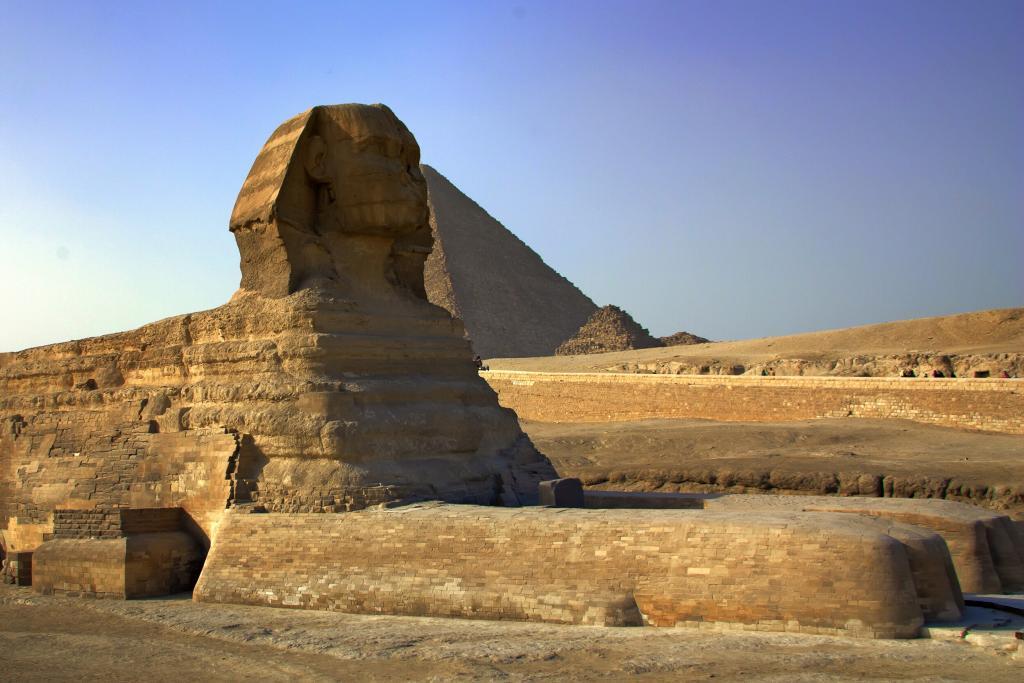
The Great Sphinx is one of the most recognizable monuments in the world. Located on the Giza Plateau near Cairo, the enormous limestone statue features the body of a lion and the head of a human, believed by many scholars to represent Pharaoh Khafre.
Constructed around 2500 BCE during the Old Kingdom, the Sphinx measures approximately 73 meters (240 feet) long and 20 meters (66 feet) high, making it the largest monolithic statue in the world.
The exact purpose of the Sphinx remains uncertain. Most historians believe it served as a guardian for the nearby royal pyramids and symbolized the pharaoh’s divine power and strength.
Interesting Facts About the Great Sphinx
- The Sphinx was buried beneath desert sand for centuries.
- Much of the monument has undergone restoration throughout history.
- Its missing nose remains one of archaeology’s greatest mysteries.
- Ancient Egyptians associated lions with royal authority and protection.
Luxor Temple
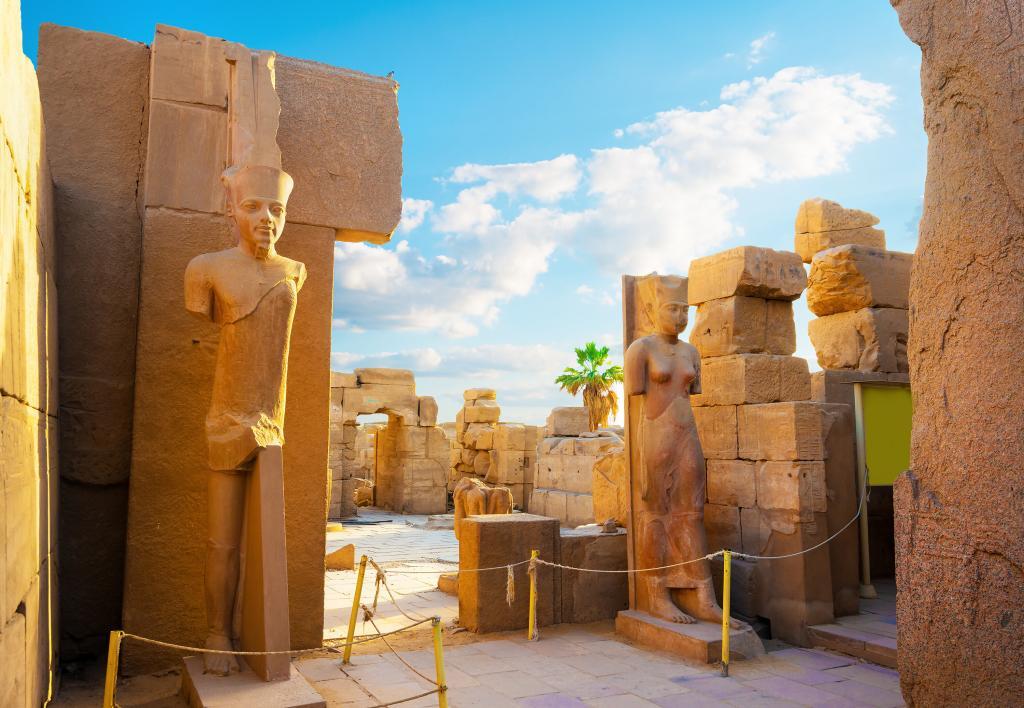
Luxor temple. The pylon with blue sky

Located on the east bank of the Nile River in modern Luxor, Luxor Temple was primarily constructed during the reign of Pharaoh Amenhotep III around 1400 BCE and later expanded by Ramesses II.
Unlike many Egyptian temples dedicated to specific gods, Luxor Temple focused on the divine kingship of the pharaoh. The temple played an important role in the annual Opet Festival, during which statues of the gods Amun, Mut, and Khonsu were transported from Karnak Temple to Luxor Temple.
Visitors today can still admire colossal statues, massive columns, obelisks, and beautifully preserved relief carvings.
Karnak Temple Complex
Just north of Luxor Temple lies the Temple of Karnak, the largest religious complex ever built.
Construction at Karnak began nearly 4,000 years ago and continued for over two millennia as successive pharaohs added new temples, chapels, pylons, and sanctuaries.
Dedicated primarily to the god Amun-Ra, Karnak covers more than 200 acres and contains numerous structures, including:
- The Great Hypostyle Hall with 134 giant columns.
- Sacred lakes used in religious rituals.
- Massive stone obelisks.
- Shrines dedicated to various gods and pharaohs.
The Great Hypostyle Hall remains one of the most awe-inspiring architectural achievements of the ancient world. Some columns rise over 21 meters (70 feet) high and are covered in detailed inscriptions and reliefs.
The Pyramids of Giza
No discussion of Egyptian ruins would be complete without mentioning the Pyramids of Giza.
Built during Egypt’s Fourth Dynasty around 2600-2500 BCE, the three principal pyramids were constructed as tombs for the pharaohs Khufu, Khafre, and Menkaure.
The Great Pyramid of Khufu originally stood at 146.6 meters (481 feet) tall and remained the tallest man-made structure on Earth for nearly 3,800 years.
The Giza pyramid complex includes:
- The Great Pyramid of Khufu.
- The Pyramid of Khafre.
- The Pyramid of Menkaure.
- Smaller queens’ pyramids.
- Mortuary temples.
- Causeways and cemeteries.
These monuments demonstrate the extraordinary engineering capabilities of ancient Egyptian builders.
Hieroglyphics Carved in Stone
One of the most fascinating features found throughout Egyptian ruins is hieroglyphic writing.
Ancient Egyptian hieroglyphs combined pictures, symbols, and phonetic signs to record religious beliefs, historical events, royal achievements, and daily life.
Temple walls, tombs, statues, and monuments throughout Egypt are covered with inscriptions similar to those shown in the photograph above. These carvings often depict pharaohs making offerings to the gods, participating in religious ceremonies, or commemorating military victories.
Because hieroglyphics were carved directly into stone, many inscriptions have survived for thousands of years. The decipherment of hieroglyphs following the discovery of the Rosetta Stone in 1799 revolutionized our understanding of ancient Egyptian civilization.
Why Egyptian Ruins Continue to Fascinate Us
Ancient Egyptian ruins provide a direct connection to a civilization that flourished for more than 3,000 years. Their monumental scale, artistic beauty, and enduring mysteries continue to inspire scholars and visitors from around the world.
Whether viewed in person or through photographs, these remarkable sites remind us of the ingenuity, religious devotion, and cultural achievements of ancient Egypt.