The Seven Hathors: Ancient Egypt’s Mysterious Goddesses of Fate, Birth, and Destiny
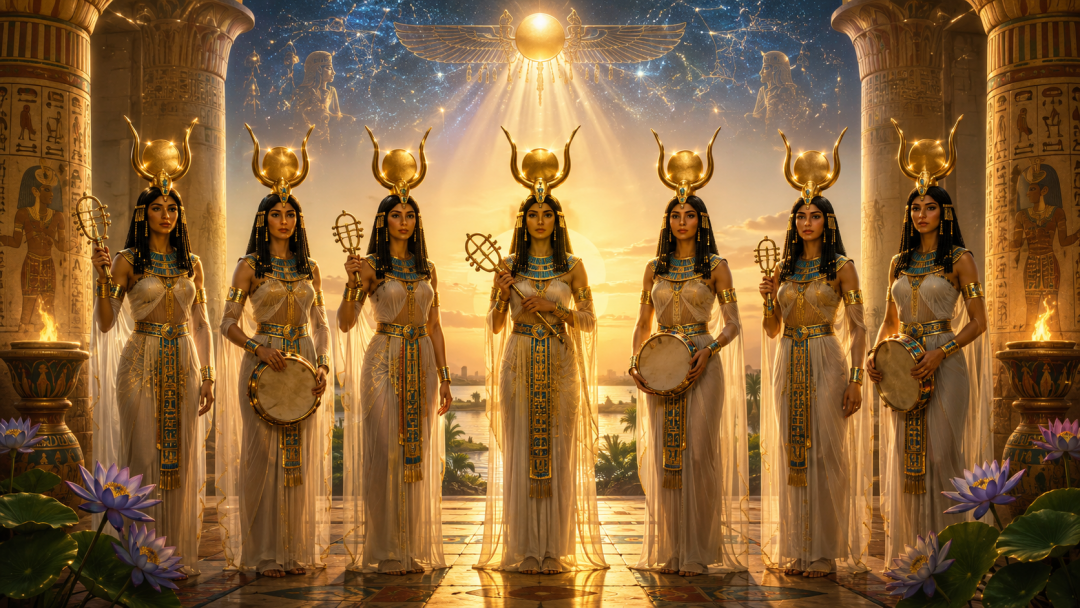
Among the many fascinating deities of Ancient Egypt, few are as mysterious as the Seven Hathors. Rather than being seven different goddesses, they were seven manifestations of the great goddess Hathor who appeared together to reveal the destiny of every newborn child.
The Seven Hathors occupied a unique place in Egyptian religion. They were present at birth, foretold a person’s future, protected mothers and infants, and sometimes even determined the manner of someone’s death. Their influence stretched from royal birth chambers to humble village homes, appearing in myths, magical spells, funerary texts, and temple inscriptions for nearly three thousand years.
Although they never enjoyed the same level of worship as Hathor herself, the Seven Hathors became one of the most enduring supernatural groups in Egyptian mythology.
Who Were the Seven Hathors?
The Seven Hathors were not separate goddesses with independent personalities.
Instead, they represented seven divine aspects of Hathor, each embodying her power over life, birth, music, motherhood, fate, and the afterlife.
To the Egyptians, important divine powers often appeared in multiples.
Examples include:
- The Seven Scorpions who accompanied Isis
- The Seven Arrows of Sekhmet
- The Seven Sacred Oils
- Groups of protective spirits in temple rituals
The number seven symbolized completeness, magical perfection, and divine power throughout Egyptian religion. Seven represented a full cycle or totality, making it an appropriate number for goddesses responsible for determining every aspect of human destiny.
Hathor's Many Roles
Understanding the Seven Hathors first requires understanding Hathor herself. Hathor was among Egypt’s oldest and most beloved deities. She served as:
- Goddess of love
- Beauty
- Motherhood
- Joy
- Music
- Dance
- Fertility
- The sky
- Foreign lands
- Turquoise mines
- The afterlife
She welcomed the righteous dead into paradise, nourished the king with divine milk, protected women during childbirth, and embodied maternal care throughout Egyptian civilization.
The Seven Hathors concentrated one specific aspect of Hathor’s immense power: the ability to know and announce destiny.
What Did the Seven Hathors Do?
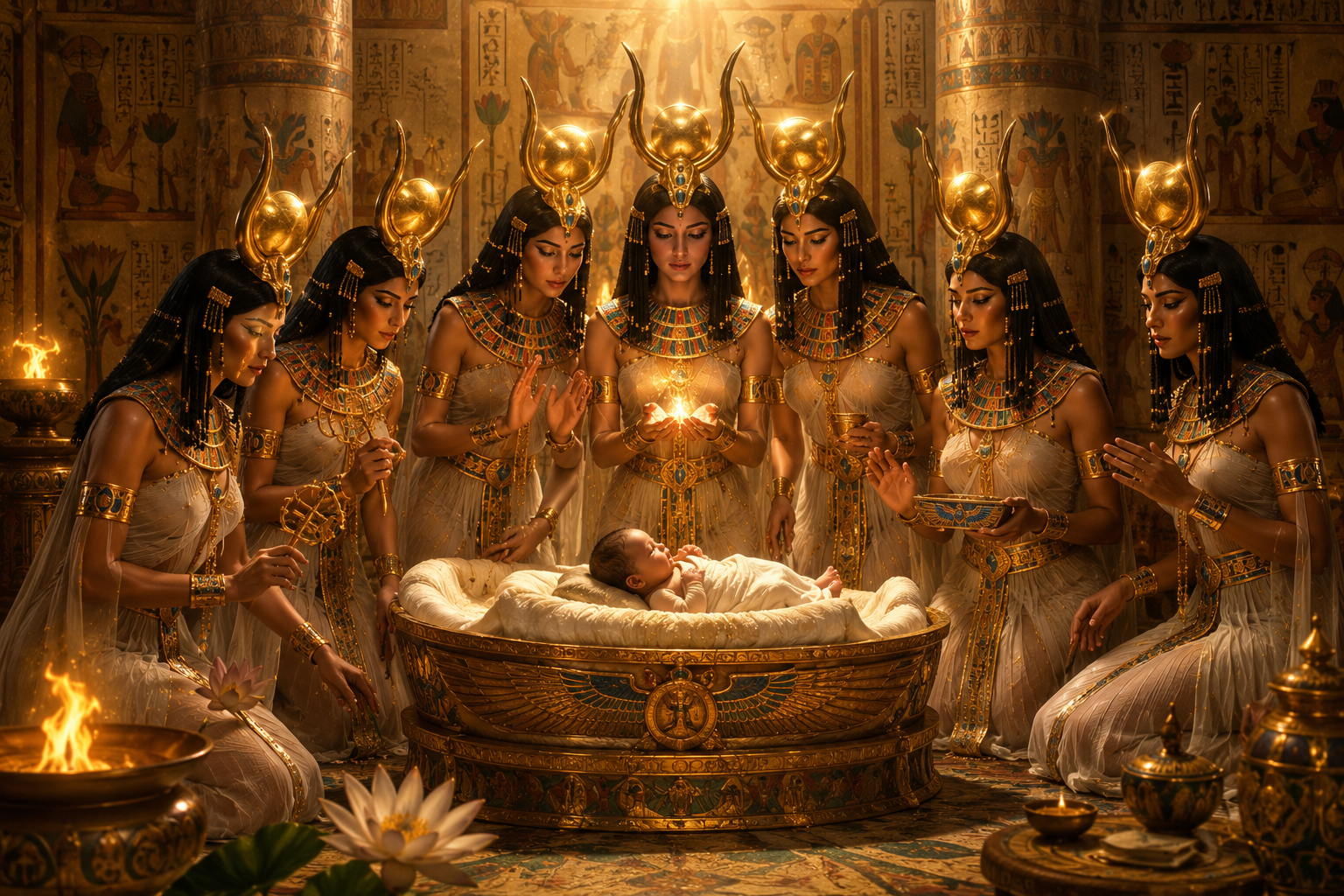
Their principal duty was to visit every child immediately after birth. Once a baby entered the world, the Seven Hathors appeared and announced that person’s destiny.
This included:
- Their future fortune
- Major events in life
- Social status
- Prosperity
- Marriage
- Longevity
- The manner of death
Unlike later ideas of fate, the Egyptians did not always view these predictions as absolutely fixed. Magical rituals, devotion to the gods, wisdom, and divine intervention could sometimes alter or delay destiny.
Nevertheless, the words of the Seven Hathors carried enormous authority.
Goddesses of Childbirth
Because they attended every birth, the Seven Hathors became closely connected with childbirth. Women often invoked Hathor during pregnancy, believing she would:
- Ease labor
- Protect mother and infant
- Ensure successful delivery
- Bless the child with health
Their role resembles that of later European fairy godmothers, who visit newborn children and bestow gifts or pronounce destinies.
Many scholars believe that stories like Sleeping Beauty, in which magical women appear after a princess’s birth to predict her future, preserve echoes of this ancient tradition.
The Seven Hathors and Fate
The Egyptians believed every person possessed a destiny established by divine forces. The Seven Hathors acted as divine announcers rather than creators of fate itself.
Several other concepts worked alongside them:
- Shai, the god of destiny
- Renenutet, goddess of fortune and nourishment
- Meskhenet, goddess of the birth brick who assigned a person’s character
- Ma’at, who governed cosmic order
Together, these deities formed a sophisticated understanding of fate that balanced divine order with human conduct.
The Seven Hathors in Egyptian Literature
The Seven Hathors appear in several famous Egyptian tales, which is how we first learned of them.
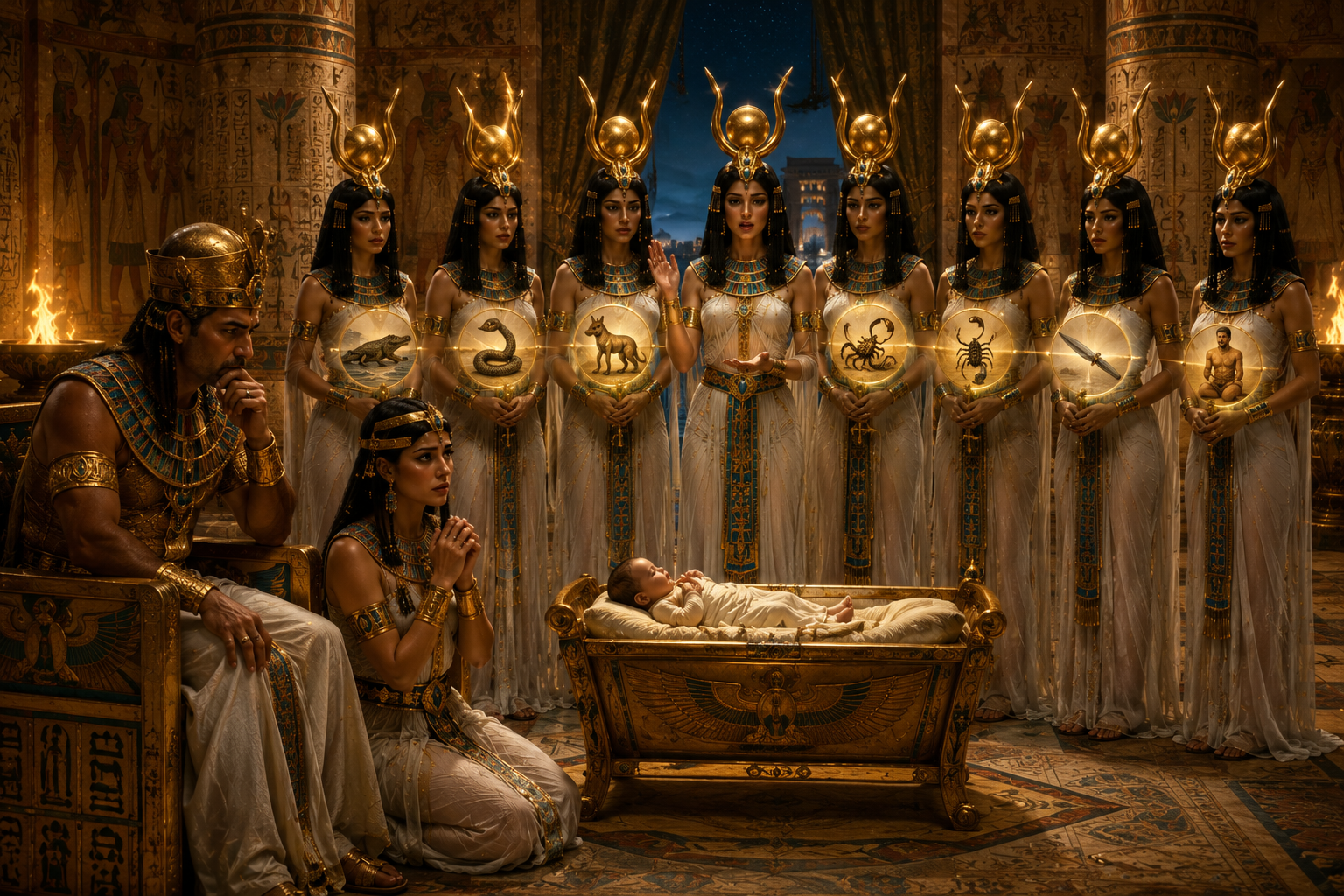
Their most famous appearance comes in the Tale of the Doomed Prince, one of Ancient Egypt’s greatest surviving fairy tales.
A king desperately wished for a son.
When the child was finally born, the Seven Hathors visited him and declared: “He shall die by a crocodile, or a snake, or a dog.”
Terrified, the king attempted to prevent the prophecy. He raised the prince inside an isolated palace far from danger.
However, as in many later stories involving prophecy, every attempt to avoid fate ultimately brought the predicted dangers closer. The prince eventually encountered all three threats.
Unfortunately, the ending of the surviving papyrus is damaged, leaving scholars uncertain whether the prince escaped his fate or fulfilled it. The story demonstrates how central the Seven Hathors had become in Egyptian ideas about destiny.
The Seven Hathors also appear in the famous tale of The Two Brothers.
After the miraculous birth of the beautiful woman created for Bata, the Seven Hathors examined the child and declared that she would die by the sword.
Their prophecy eventually unfolds through betrayal, political intrigue, and tragedy.
Again, the Seven Hathors function as divine heralds of unavoidable destiny.
Names of the Seven Hathors
Unlike many Egyptian gods, the Seven Hathors did not always possess fixed names. Different texts preserve different lists.
One common list includes:
- Lady of the Universe
- Sky Storm
- She Who Presides Over Silence
- Red-Hair
- Bright Red
- Your Name Prevails Over the West
- Dark One
Other inscriptions identify them by the cities where they were worshipped, including:
- Heliopolis
- Thebes
- Cusae
- Akhmim
- Gebelein
This variation suggests local temples adapted the Seven Hathors to their own religious traditions while preserving their overall function.
Their Appearance
The Seven Hathors usually appear as:
- Seven identical women
- Seven beautifully dressed females
- Seven women carrying tambourines or sistrums
- Seven women wearing Hathor’s cow-horn crown
- Seven women in elaborate linen dresses
Sometimes they appear simply as seven cows.
This symbolism connected them directly with Hathor’s sacred cow imagery, emphasizing nourishment, motherhood, and divine abundance.
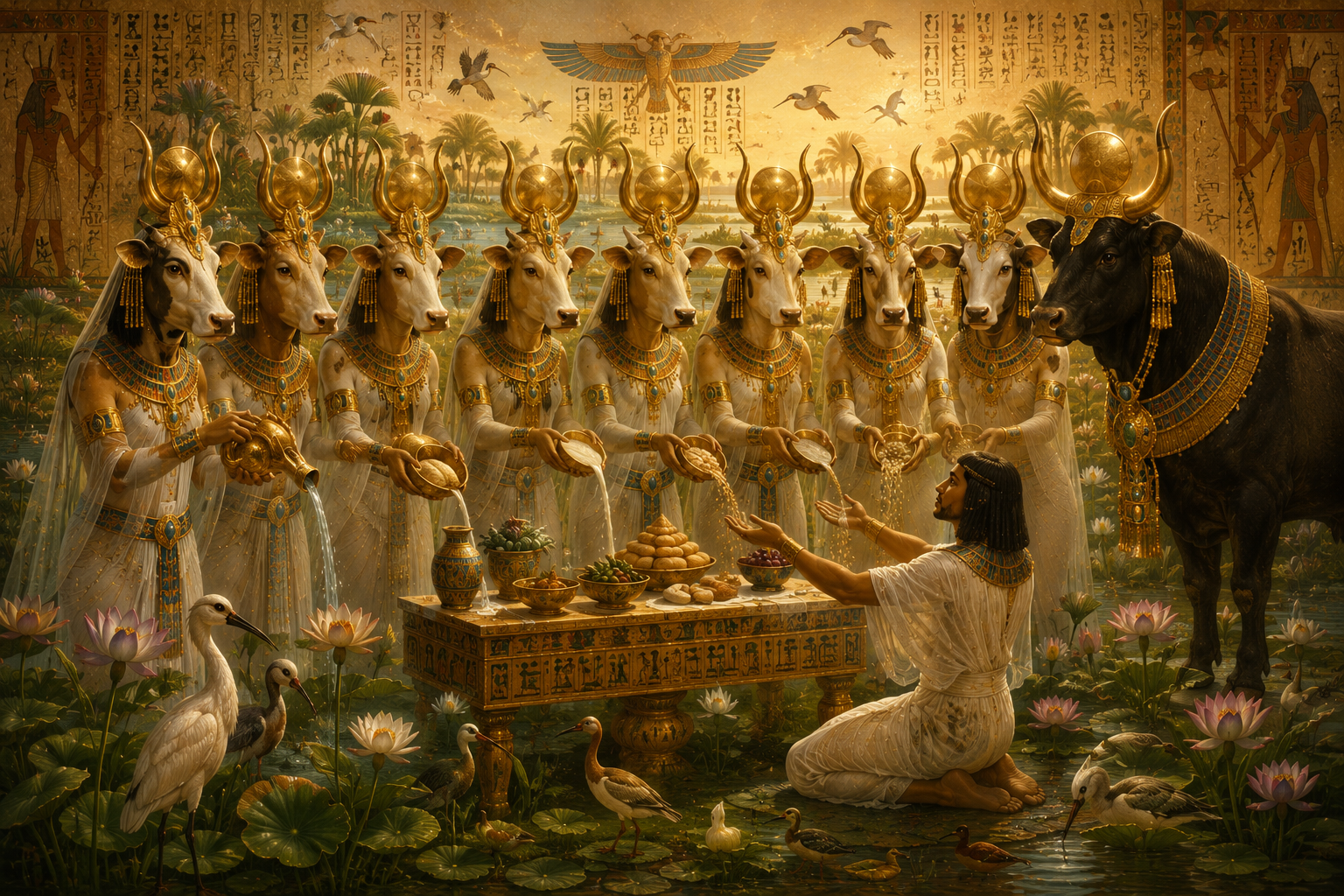
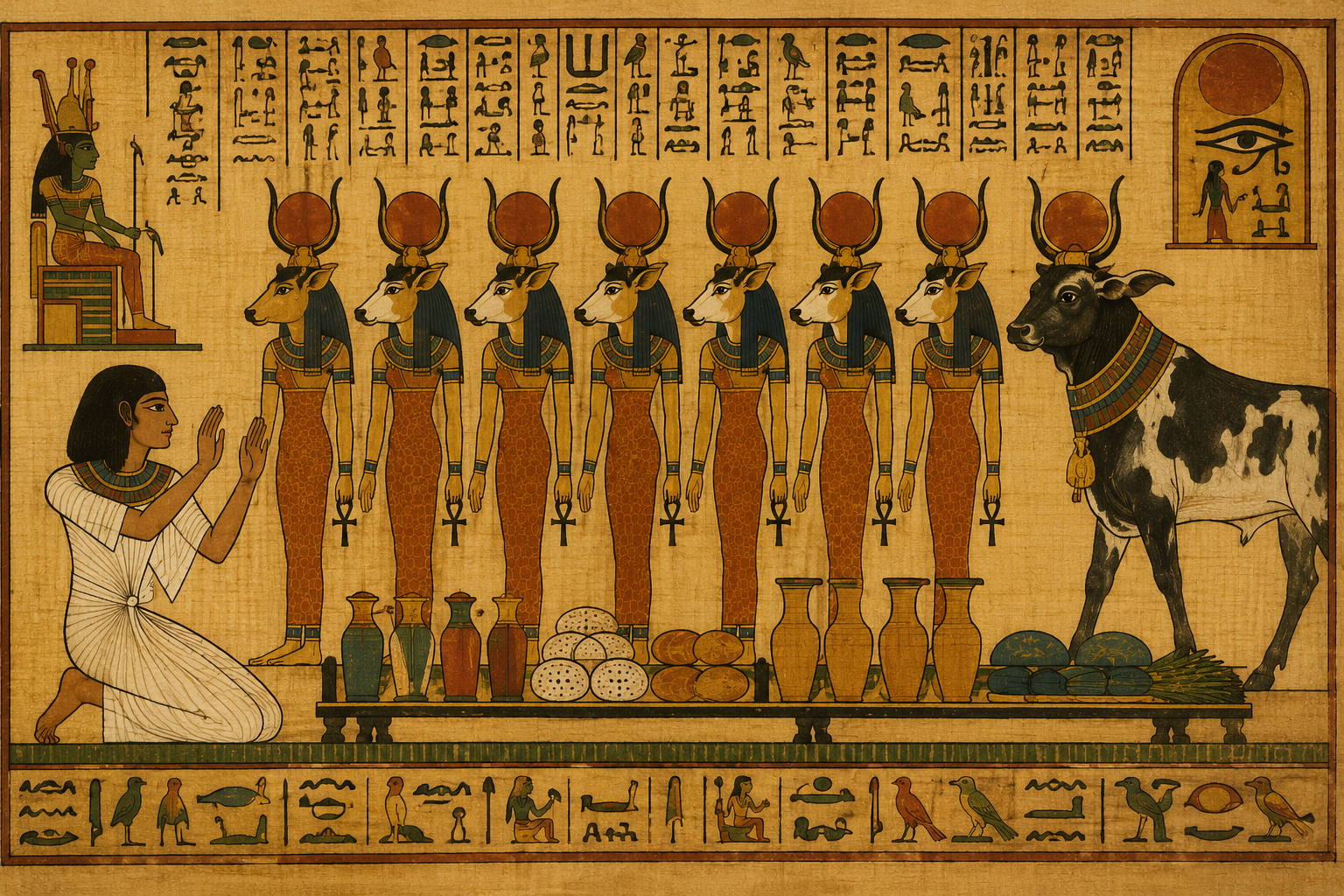
In funerary texts, the Seven Hathors often appear alongside one sacred bull, creating a group of eight divine cattle who nourish and protect the deceased in the afterlife.
The Seven Heavenly Cows
One of the most intriguing forms of the Seven Hathors depicts them as celestial cows. These divine cattle supplied food for the dead and guided souls through the next world.
Each cow represented abundance, eternal nourishment, and divine protection. The accompanying bull has been interpreted as:
- Ra
- Osiris
- The heavenly bull
- A fertility symbol
The exact identity varies among texts.
The Seven Hathors in the Book of the Dead
The Seven Hathors appear in several funerary compositions, especially the Book of the Dead.
In these texts they:
- Provide nourishment
- Offer bread and beer
- Protect the deceased
- Reveal divine knowledge
- Assist the soul’s successful journey into eternity
Some vignettes show the deceased standing before seven cows and one bull while receiving offerings that guarantee eternal life.
This imagery became particularly popular during the New Kingdom.
Magic and Household Religion
The Seven Hathors were not limited to royal temples. Evidence suggests ordinary Egyptians also sought their protection.
Amulets, magical spells, and birth rituals frequently invoked Hathor’s assistance.
Women likely prayed to the Seven Hathors during:
- Pregnancy
- Labor
- Infancy
- Naming ceremonies
Although direct evidence is limited, magical texts imply they were believed to watch over the earliest stages of life.
Music and Celebration
Like Hathor herself, the Seven Hathors retained strong associations with music.
They frequently carried:
- Sistrums
- Menats
- Tambourines
Music was believed to repel dangerous spirits during childbirth while inviting divine blessings. Temple festivals honoring Hathor featured music, dancing, singing, and joyful celebration, reinforcing her identity as the goddess of happiness and renewal.
Relationship with Other Birth Deities
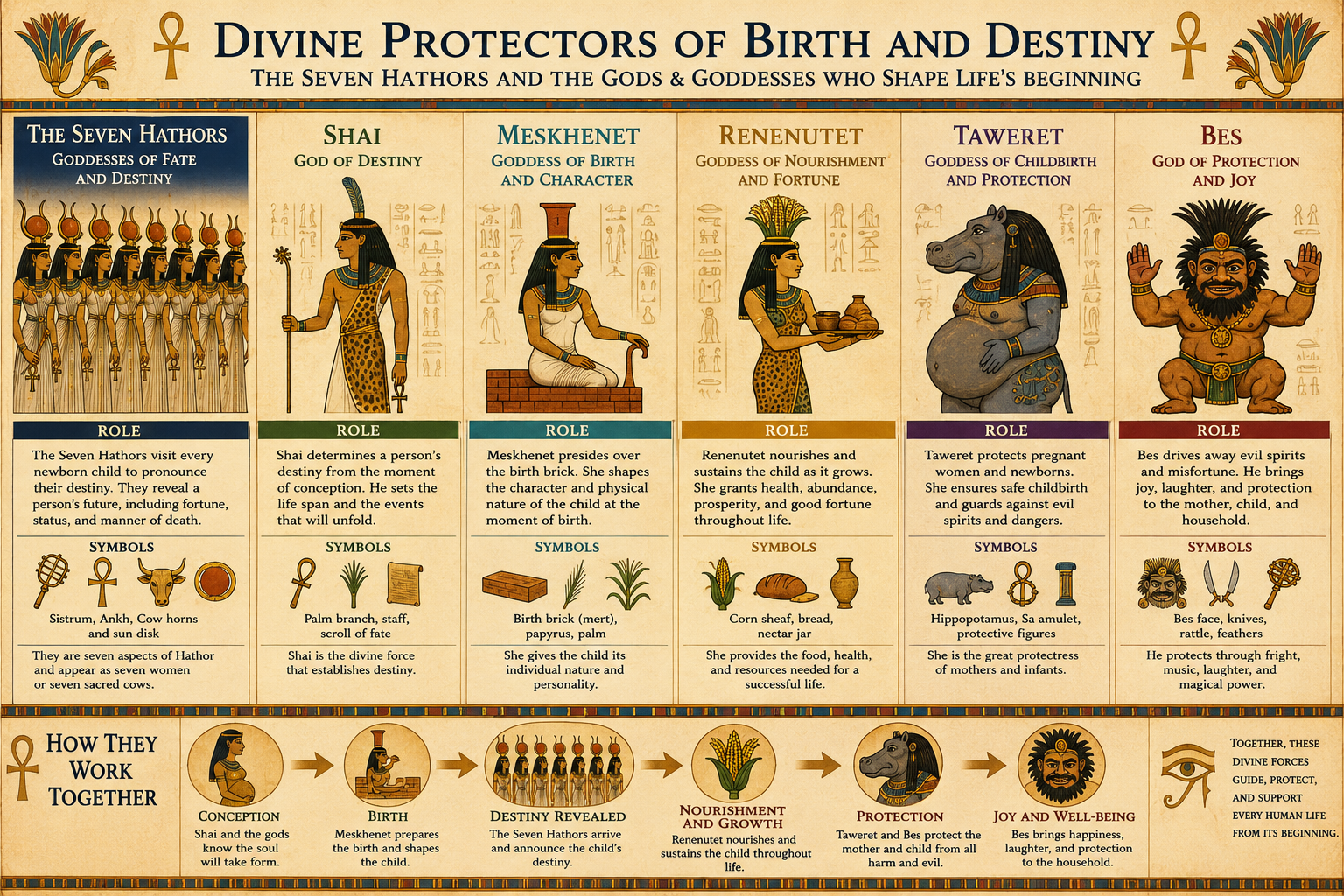
The Seven Hathors formed part of a larger group of deities connected with childbirth.
Meskhenet
Meskhenet presided over the birth bricks upon which Egyptian women gave birth. She granted character and destiny at birth.
Taweret
The hippopotamus goddess protected pregnant women and newborn children from evil spirits.
Bes
Bes frightened away demons that threatened mothers and infants.
Renenutet
She granted nourishment, fortune, and prosperity throughout life.
Together, these gods and goddesses created an elaborate network of divine protection surrounding every Egyptian birth.
Symbolism of the Number Seven
The number seven carried exceptional magical significance. It represented:
- Completion
- Totality
- Divine perfection
- Protection
- Cosmic balance
Egyptian magical spells often repeated words seven times or invoked seven divine beings.
The Seven Hathors embodied this symbolic completeness by representing Hathor’s power operating in every direction and every aspect of human life.
Did Egyptians Fear the Seven Hathors?
Not exactly. Although they sometimes foretold tragic deaths, they were not viewed as malevolent beings. Instead, they represented impartial divine truth.
Their prophecies reflected the established order of the universe rather than personal judgment. Egyptians respected them much as they respected Ma’at: as guardians of cosmic order whose pronouncements deserved acceptance.
Archaeological Evidence
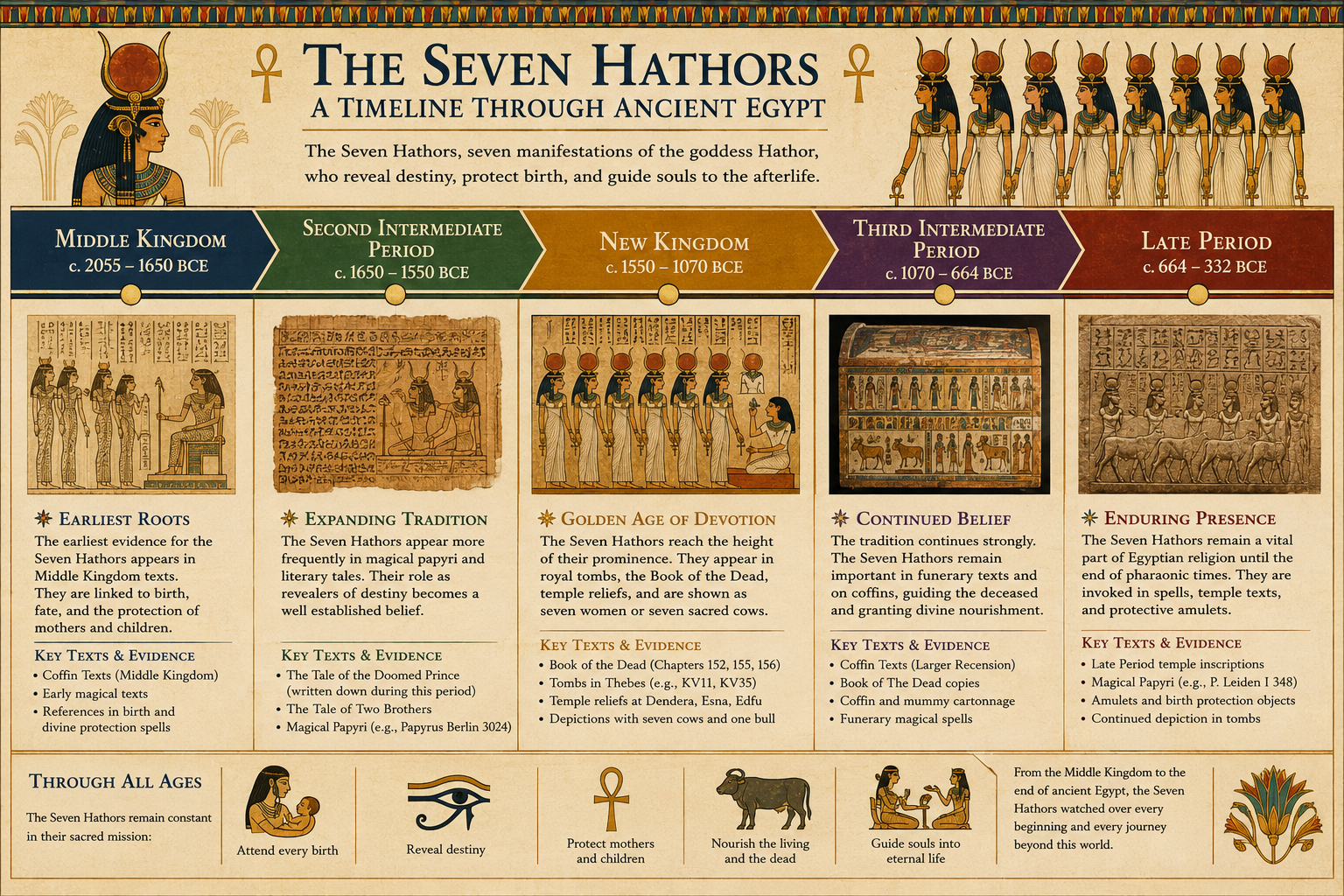
The Seven Hathors appear throughout Egyptian history in:
- Tomb paintings
- Coffins
- Temple reliefs
- Magical papyri
- Funerary papyri
- Ostraca
- Amulets
Important examples come from:
- New Kingdom royal tombs
- The Book of the Dead papyri
- Tombs at Deir el-Medina
- Coffins of the Third Intermediate Period
- Temple inscriptions from the Late Period
Their iconography remained remarkably consistent for over a thousand years.
Greek Comparisons
Modern readers often compare the Seven Hathors to:
- The Greek Moirai (Three Fates)
- The Roman Parcae
- Norse Norns
- Fairy godmothers in European folklore
The comparison is useful but imperfect.
Unlike the Greek Fates, the Seven Hathors usually announced destiny rather than literally spinning and cutting the thread of life.
They were closer to divine prophetesses than absolute controllers of fate.
Although Egyptian religion disappeared after the rise of Christianity, the image of supernatural women visiting newborn children survived across cultures.
Many folklorists believe the Seven Hathors influenced later Mediterranean and European traditions involving:
- Fairy godmothers
- Birth fairies
- Women who pronounce blessings at birth
- Prophetic female spirits
Whether through direct transmission or shared cultural themes, their influence appears remarkably enduring.
Frequently Asked Questions
Were the Seven Hathors separate goddesses?
No. They were seven manifestations or aspects of Hathor acting together, particularly in matters of birth, fate, and destiny.
Did they decide a person’s fate?
Most Egyptian texts present them as announcing or revealing destiny rather than creating it. Other deities, especially Shai and Meskhenet, also played important roles in determining a person’s life path.
Why were there seven Hathors?
The number seven symbolized magical completeness and divine perfection in Ancient Egypt. Seven manifestations emphasized the fullness of Hathor’s protective and prophetic power.
What animals represented the Seven Hathors?
They commonly appeared as seven women or as seven sacred cows. In funerary scenes they are often accompanied by a sacred bull that symbolizes divine fertility, kingship, or the solar god depending on the context.
Are the Seven Hathors mentioned in the Book of the Dead?
Yes. They appear in funerary texts where they nourish, protect, and assist the deceased in reaching eternal life.
The Seven Hathors reveal how deeply the ancient Egyptians believed that the divine was present at every stage of life, from a child’s first breath to a soul’s journey into eternity. As prophetic manifestations of one of Egypt’s most beloved goddesses, they united motherhood, music, protection, nourishment, and destiny into a single powerful concept.
Whether foretelling the fate of a newborn prince, safeguarding a woman in childbirth, or welcoming the righteous dead with eternal sustenance, the Seven Hathors stood at the threshold between the human and divine worlds. Their enduring presence in myths, magical texts, funerary literature, and temple art demonstrates that they were far more than minor figures. They were essential guardians of life’s greatest transitions, reminding the ancient Egyptians that every birth, every life, and every death unfolded within the ordered design of the gods.
Share this:
- Share on Facebook (Opens in new window) Facebook
- Share on Pinterest (Opens in new window) Pinterest
- Share on X (Opens in new window) X
- Share on Telegram (Opens in new window) Telegram
- Share on WhatsApp (Opens in new window) WhatsApp
- Share on Reddit (Opens in new window) Reddit
- Share on LinkedIn (Opens in new window) LinkedIn
- Share on Tumblr (Opens in new window) Tumblr
- Print (Opens in new window) Print
