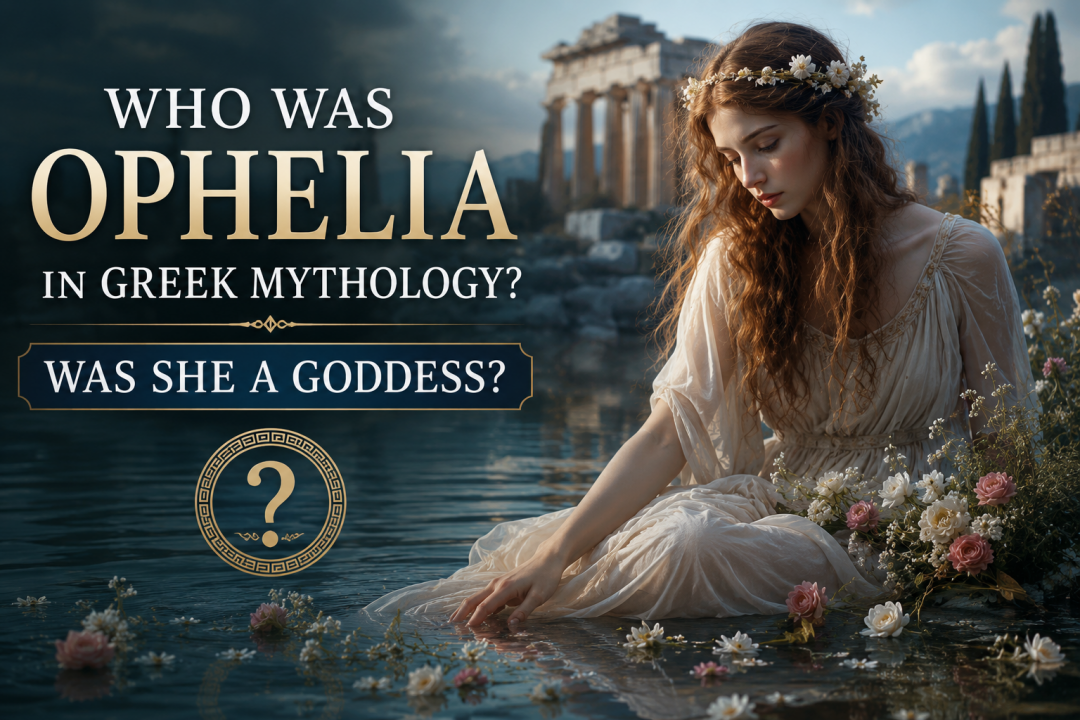
Who Was Ophelia in Greek Mythology? Was She A Goddess?
Many people wonder, “Who was Ophelia in Greek mythology?” or ask whether Ophelia was an ancient Greek goddess. The short answer is simple: Ophelia was not a goddess in Greek mythology, nor does she appear in surviving ancient Greek myths.
Despite numerous claims circulating online that describe Ophelia as a goddess of water, sorrow, or rivers, there is no evidence in ancient Greek texts, inscriptions, or religious traditions of such a deity. Instead, the name Ophelia is primarily associated with later European literature.
Was Ophelia a Greek Goddess?
No, Ophelia was not a Greek goddess.
Ancient Greek religion included many well-known deities connected with water, such as Poseidon, the sea god, and various river gods known as the Potamoi. The Greeks also worshipped water nymphs called Naiads, who were believed to inhabit springs, rivers, and fountains.
However, no surviving ancient source mentions a goddess named Ophelia among the Olympian gods, Titans, nymphs, or other divine beings.
Modern internet stories often describe Ophelia as:
- Goddess of water
- Goddess of sorrow
- Spirit of sacred rivers
- Oracle priestess associated with Delphi
These descriptions do not appear in ancient Greek mythology and are considered modern inventions rather than authentic myths.
The Origins of the Name Ophelia
The name Ophelia most likely originated during the Renaissance rather than in ancient Greece.
The Italian poet Jacopo Sannazaro first used the name in his pastoral work Arcadia, written in the late fifteenth century. Scholars believe Sannazaro derived the name from the Greek word ophelos, meaning “help” or “benefit.”
Because the name has Greek linguistic roots, some people mistakenly assume that Ophelia was a figure from Greek mythology.
Ophelia in Shakespeare’s Hamlet
The most famous Ophelia appears in William Shakespeare’s tragedy Hamlet, written around 1600.
In the play, Ophelia is a noblewoman of Denmark and the daughter of Polonius, an advisor to King Claudius. She falls in love with Prince Hamlet, but the tragic events of the play ultimately lead to her emotional collapse.
Ophelia’s death by drowning has become one of the most memorable scenes in literature. Artists throughout history have frequently portrayed her floating among flowers in the water, reinforcing her association with rivers and sorrow.
Because of these artistic depictions, some later writers and internet sources incorrectly transformed Ophelia into a mythical water goddess.
Is Ophelia Connected to Delphi?
Some modern legends describe Ophelia as a priestess who lived near Delphi and received prophecies from a sacred serpent.
There is no evidence from ancient Greek sources supporting this story. Ancient Delphi was indeed home to the famous Oracle of Apollo, where the Pythia delivered prophecies, but no historical or mythological records mention a priestess named Ophelia.
These stories appear to be later folklore or modern reinterpretations rather than authentic Greek mythology.
Why Do People Think Ophelia Was a Goddess?
Several factors have contributed to the misconception:
1. The Name Has Greek Origins
Although the name itself comes from Greek, this does not mean the character belonged to Greek mythology.
2. Shakespeare’s Ophelia Drowned
Her famous death in water led many artists and writers to associate her with rivers, lakes, and melancholy.
3. Modern Mythology Websites
Some modern websites and social media posts have created fictional backstories describing Ophelia as a goddess or river spirit, despite lacking historical evidence.
4. Confusion with Greek Water Deities
Ancient Greece featured numerous water spirits and nymphs. Some people may have confused these genuine mythological figures with the literary character Ophelia.
Real Greek Goddesses Associated with Water
Although Ophelia was not a Greek goddess, ancient Greek mythology included several deities connected to water:
- Amphitrite: Queen of the sea and wife of Poseidon.
- Tethys: A Titan goddess associated with fresh water.
- The Naiads: Freshwater nymphs who inhabited springs, rivers, and fountains.
- Oceanids: Sea and freshwater nymphs born from Oceanus and Tethys.
These figures were genuinely worshipped in the ancient Greek world.
So, who was Ophelia in Greek mythology? The answer is that there was no ancient Greek goddess or mythological figure named Ophelia. The name originated in Renaissance literature and later became famous through Shakespeare’s Hamlet.
While modern stories sometimes portray Ophelia as a goddess of water, sorrow, or rivers, these traditions are not part of authentic ancient Greek mythology.
Share this:
- Share on Facebook (Opens in new window) Facebook
- Share on Pinterest (Opens in new window) Pinterest
- Share on X (Opens in new window) X
- Share on Telegram (Opens in new window) Telegram
- Share on WhatsApp (Opens in new window) WhatsApp
- Share on Reddit (Opens in new window) Reddit
- Share on LinkedIn (Opens in new window) LinkedIn
- Share on Tumblr (Opens in new window) Tumblr
- Print (Opens in new window) Print