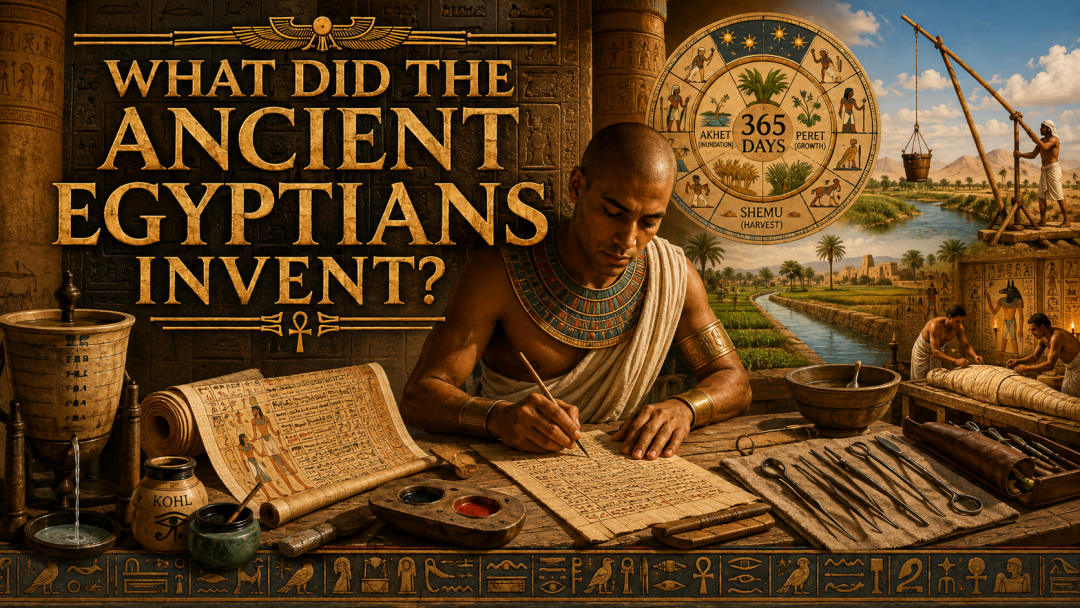
What Did The Ancient Egyptians Invent?
Ancient Egypt gave the world some of history’s most remarkable technological, scientific, and cultural innovations. So, what did the ancient Egyptians actually invent?
The answer includes papyrus sheets, sophisticated carbon inks, one of the world’s earliest writing systems, a 365-day civil calendar, water clocks, advanced medical procedures, cosmetic formulas, irrigation technology, monumental stone architecture, and highly developed methods of mummification.
However, there is an important distinction.
Not everything commonly called an “Egyptian invention” was necessarily invented nowhere else first. Ancient civilizations often developed similar technologies independently, and archaeological discoveries can change what historians consider the “earliest known” example.
Egypt’s achievement was not that Egyptians invented everything.
It was that, more than 5,000 years ago, they created an extraordinarily sophisticated society in which writing, mathematics, medicine, engineering, astronomy, agriculture, manufacturing, and administration developed together.
Here are 15 of ancient Egypt’s most impressive inventions and innovations.
1. Papyrus: Ancient Egypt’s Paper-Like Writing Material
One of the most important Egyptian innovations was papyrus. Papyrus was made from the Cyperus papyrus plant, which once grew abundantly along the Nile.
Workers cut the plant’s inner pith into strips, arranged them in overlapping layers, pressed them together, dried the resulting sheet, and smoothed its surface.
The result was a durable writing material that could be rolled into scrolls.
Papyrus was not technically paper in the modern sense. Modern paper is manufactured from fibers that are pulped and reformed into sheets.
Papyrus was made by pressing strips of plant material together. For that reason, it is more accurate to call papyrus one of the world’s earliest paper-like writing materials.
Thousands of Egyptian papyri survive today, containing everything from religious texts and medical treatments to legal documents, letters, mathematical exercises, stories, tax records, and calendars. The British Museum alone holds thousands of ancient Egyptian papyrus objects.
Papyrus eventually became one of the most important writing materials throughout the ancient Mediterranean.
2. Black and Red Writing Ink
Papyrus would have been considerably less useful without another important Egyptian technology: ink.
Ancient Egyptian scribes commonly wrote with carbon-based black ink. The black pigment was generally produced from carbonaceous materials such as soot or lampblack and mixed with a binder so that it adhered to the writing surface.
Red pigments were also frequently used. Black normally formed the main text, while red could highlight headings, instructions, dates, warnings, names, or important passages.
Scientific examination of ancient papyri confirms that black and red were among the most common colors used by Egyptian scribes. The Brooklyn Museum notes that the black ink on Egyptian papyri is typically carbon black.
An Egyptian scribe’s palette often had separate spaces for black and red pigment. In other words, the basic concept of using different ink colors to organize information existed thousands of years before modern highlighters and word processors.
3. Hieroglyphic Writing
Ancient Egypt developed one of humanity’s earliest writing systems. The earliest Egyptian writing appeared during the late fourth millennium BCE, around the same broad period that writing emerged in Mesopotamia.
For this reason, historians should be cautious about simply saying either civilization “invented writing first.”
The University of Chicago’s Institute for the Study of Ancient Cultures notes that writing appears to have developed at roughly the same time in Egypt and Mesopotamia and that several civilizations later developed writing independently. Egyptian writing developed into several major scripts.
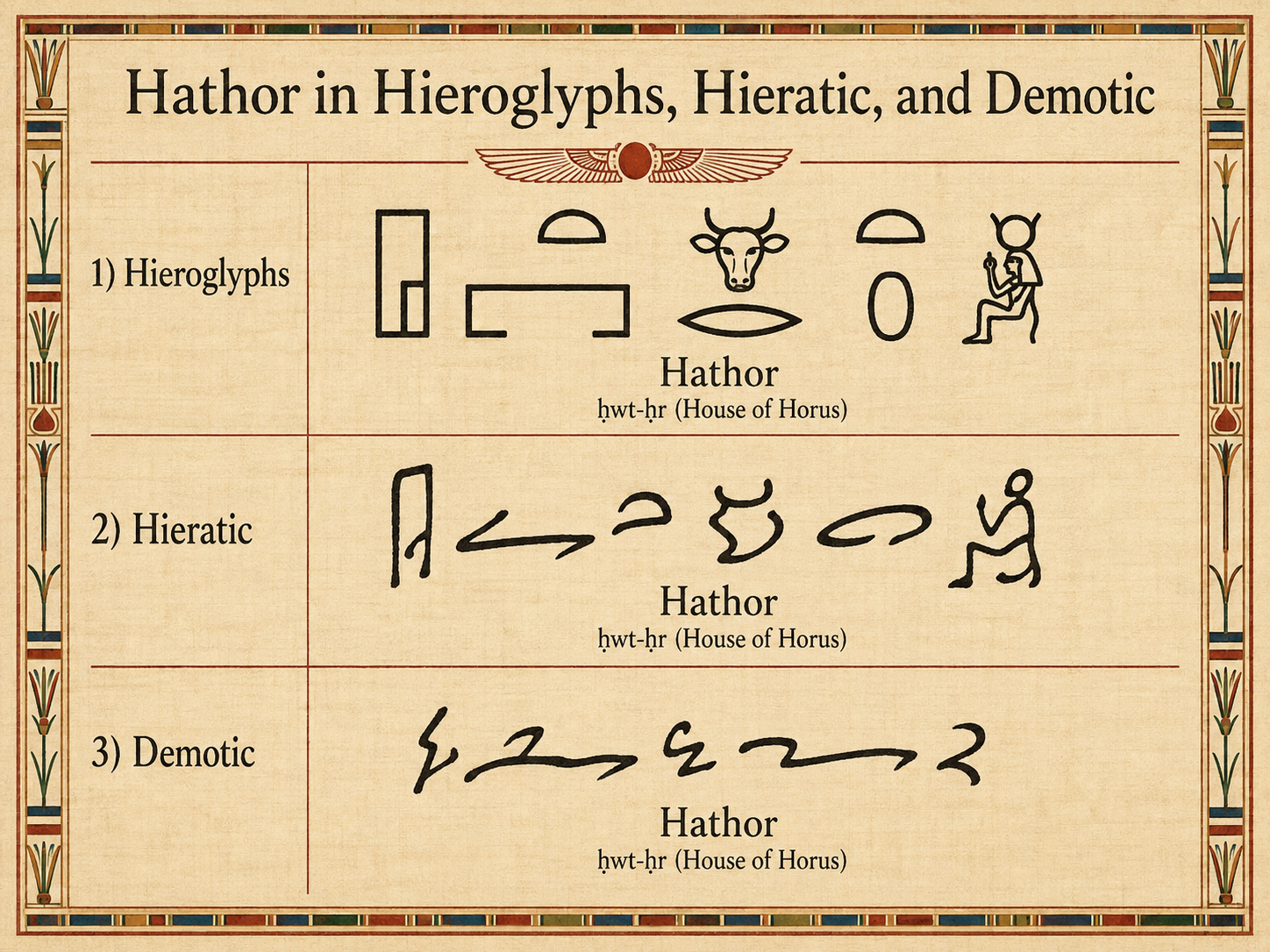 Hieroglyphs
Hieroglyphs were the formal pictorial signs famously carved onto:
- Temples
- Tombs
- Statues
- Stelae
- Coffins
- Monumental inscriptions
Hieratic
Hieratic was a faster cursive script used extensively for writing with ink on papyrus and other surfaces. Scholarly research describes hieratic as developing through the rapid writing of hieroglyphic signs with a brush or reed pen.
Demotic
A still more cursive script called Demotic developed much later. Together, these systems allowed Egyptians to record government administration, literature, medicine, religion, mathematics, private letters, business transactions, and history. Writing was one of the technologies that made the Egyptian state possible.
4. The 365-Day Egyptian Calendar
Ancient Egyptians developed one of history’s most influential calendars. Their civil year contained 365 days. It was divided into:
- 12 months
- 30 days per month
- 5 additional days at the end of the year
The year was also divided into three seasons closely associated with the Nile and agricultural cycle.
Akhet
The season associated with inundation.
Peret
The growing or emergence season.
Shemu
The harvest season.
The British Museum’s surviving ancient Egyptian calendar material confirms a system of 12 months of 30 days arranged within three seasons. The Egyptian civil calendar did not originally include the extra quarter-day that produces our leap-year system, so it slowly shifted relative to the solar year. Nevertheless, creating a regular 365-day administrative calendar was a remarkable achievement.
5. Water Clocks
How do you tell time at night when there is no sunlight? The Egyptians developed an ingenious answer: water clocks. A water clock, or clepsydra, could measure the passage of time through the controlled movement of water.
One Egyptian example associated with the reign of Amenhotep III dates to the second millennium BCE. A vessel was marked internally with calibrated lines. As water slowly escaped through a small opening, the changing water level indicated the passing hours.
This was particularly useful for temple priests who needed to perform ceremonies at particular times during the night. Egyptians also used shadows and solar observations to divide daylight into measurable portions. The combination of solar and water-based timekeeping represents an important early step toward the clocks we depend on today.
6. Medical Diagnosis and Treatment
Ancient Egyptian medicine was remarkably organized. Medical manuscripts show that Egyptian practitioners did more than simply recite magical spells. They examined patients, diagnosed conditions, estimated outcomes, prescribed treatments, dressed wounds, and documented medical cases.
The UCL Digital Egypt project describes Egyptian healing texts as containing three distinct approaches:
- Diagnosis and prognosis
- Prescription
- Incantation
This combination reflects the Egyptian understanding of health, in which practical medicine and religion often existed side by side. The Edwin Smith Papyrus is particularly extraordinary. It describes traumatic injuries involving the head, neck, shoulders, chest, and other parts of the body.
The Metropolitan Museum of Art calls it one of the world’s oldest scientific documents and notes that it approaches wound treatment through both practical and magical means.
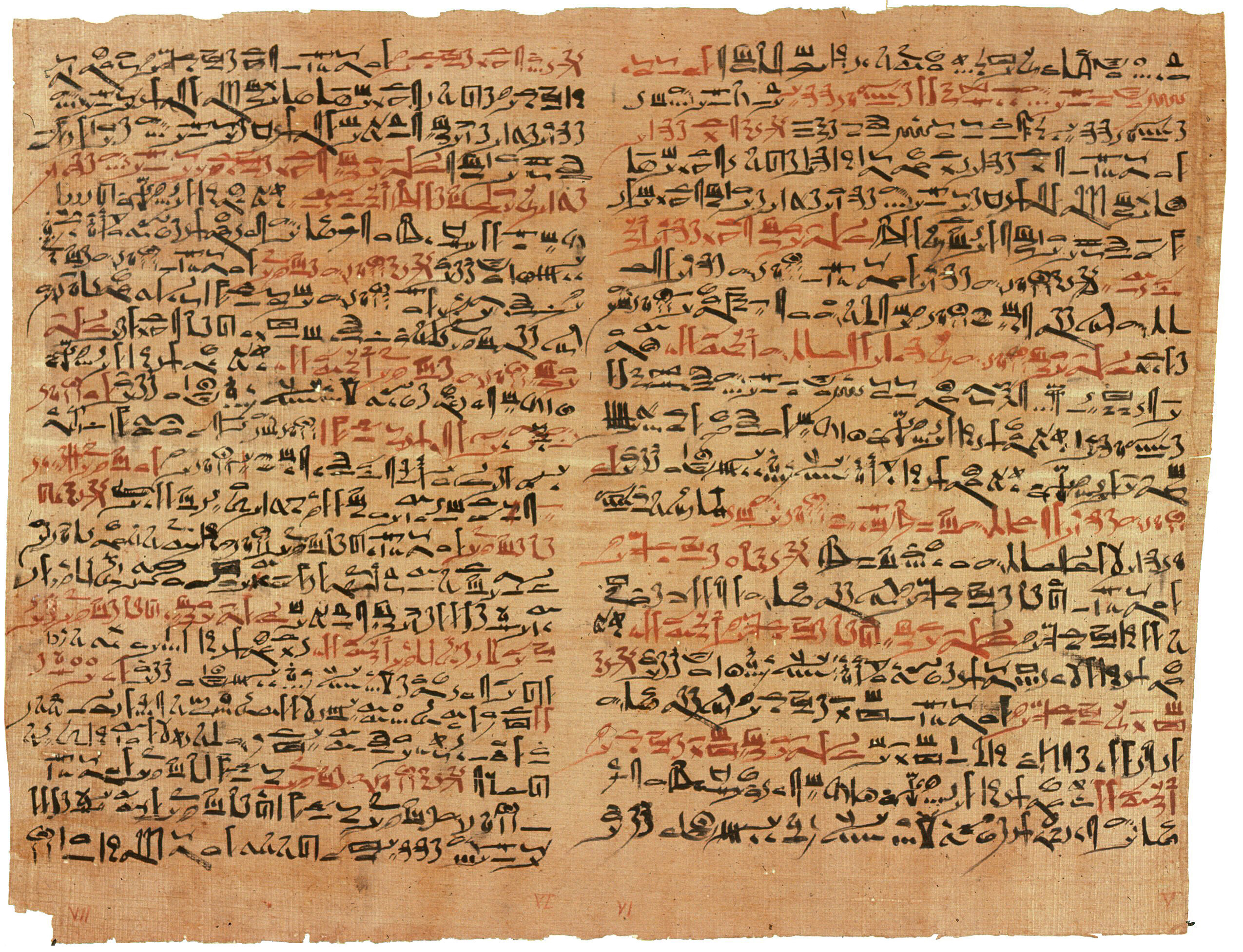
The Edwin Smith Papyrus
7. Early Surgical Techniques
Ancient Egyptian medical texts describe procedures that look surprisingly familiar. Doctors could:
- Examine wounds
- Apply bandages
- Stitch certain injuries
- Use splints
- Treat fractures
- Cauterize wounds
- Apply medicinal preparations
- Monitor a patient’s condition
The Edwin Smith Papyrus is especially important because its cases are often organized systematically. A practitioner examines the patient, identifies symptoms, gives a diagnosis, estimates whether treatment is possible, and then recommends a procedure.
That does not mean Egyptians invented every form of surgery. Humans practiced procedures such as trepanation long before dynastic Egypt.
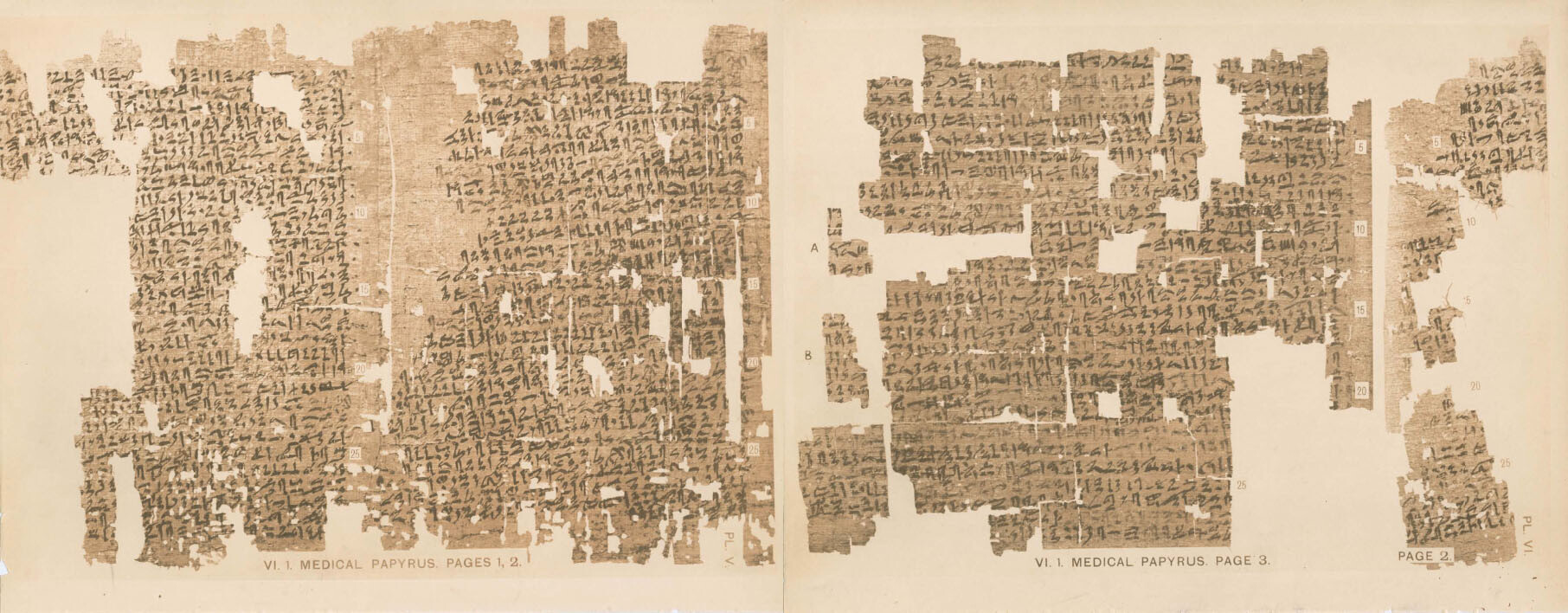
But ancient Egypt produced some of the earliest surviving detailed medical documentation in the world. The Kahun Gynaecological Papyrus, for example, is an important Middle Kingdom manuscript devoted to women’s health.
8. Cosmetics and Kohl Eyeliner
Ancient Egyptians turned cosmetics into both an art and a technology. Men and women used eye makeup. The most recognizable was kohl, applied around the eyes to create the elongated appearance that remains instantly associated with Egyptian art.
Black eye paint could contain galena, while green eye paint commonly involved malachite. Cosmetics served several purposes:
- Beauty
- Social presentation
- Religious symbolism
- Protection
- Eye care
The British Museum notes that Egyptian black and green kohl powders possessed antibacterial properties in addition to their cosmetic use.
Cosmetic containers, palettes, applicators, mirrors, razors, and other grooming objects are frequently found in Egyptian archaeological contexts.
Ancient Egypt did not invent the human desire to decorate the body, but Egyptians developed one of antiquity’s most sophisticated cosmetic cultures.
9. Wigs
Wigs were an important part of ancient Egyptian fashion and personal grooming. They could be made from human hair and other fibers and arranged into elaborate styles involving:
- Braids
- Curls
- Layers
- Beads
- Extensions
- Decorative bands
Wigs were worn for practical, social, ceremonial, and aesthetic reasons.
Some Egyptians kept their natural hair short or shaved their heads, which could help with cleanliness in a hot climate. Elaborate wigs could then be worn for formal occasions.
Priests were particularly associated with shaving body hair as part of ritual purity. Surviving wigs demonstrate that Egyptian hairdressers possessed considerable technical skill.
While wigs existed in other ancient societies as well, Egypt provides some of the earliest and most spectacular surviving examples.
10. Mummification
Few Egyptian technologies are more famous than mummification. Egyptians believed that preservation of the body played an important role in the deceased person’s continued existence after death.
Their techniques changed dramatically across more than 3,000 years of Egyptian history. Early burials sometimes became naturally preserved when bodies were placed directly into dry desert sand.
Over time, embalmers developed increasingly sophisticated artificial techniques. A typical high-quality mummification during later periods could involve:
- Removing certain internal organs
- Treating the body with natron
- Drying the remains
- Applying oils and resins
- Packing the body
- Wrapping it in layers of linen
- Adding amulets
- Placing the mummy inside coffins
Not every Egyptian received the same treatment. Mummification varied according to period, wealth, status, and local custom.
Egyptians were also not the only ancient people to preserve their dead. What makes Egypt exceptional is the scale, duration, religious importance, and technical sophistication of its embalming tradition.
11. Irrigation Systems
Egyptian civilization depended on the Nile. The river’s annual inundation deposited fertile sediment across agricultural land, but successful farming still required people to manage water carefully.
Egyptians developed systems involving:
- Irrigation canals
- Basins
- Dikes
- Ditches
- Reservoir-like storage areas
- Water-control structures
These systems allowed farmers to direct and retain floodwater and expand the amount of usable agricultural land.
Irrigation itself was not uniquely Egyptian. Mesopotamian communities also constructed sophisticated irrigation systems at an early date.
Egypt’s achievement was adapting water-management technology to the unique rhythm and geography of the Nile Valley.
Without that system, the enormous food surpluses needed to support cities, temples, craftsmen, officials, soldiers, and monument builders would have been far more difficult to produce.
12. The Shaduf
One particularly recognizable Egyptian agricultural device was the shaduf. A shaduf consists of a long pivoting pole. A bucket is attached to one end and a counterweight to the other.
A farmer lowers the bucket into a river or canal, fills it with water, and then uses the counterweight to lift the heavy bucket with far less effort. The water can then be poured onto higher ground or into irrigation channels.
The principle is remarkably simple: Leverage reduces the amount of human force required to lift water.
Shaduf-like devices continued to be used in Egypt for thousands of years and can still be found in traditional agriculture.
However, the shaduf appears clearly in Egypt during the New Kingdom rather than at the very beginning of Egyptian civilization, and similar lifting technologies also existed elsewhere.
13. Advanced Plowing and Agricultural Tools
The original article describes the ox-drawn plow as an Egyptian invention. That claim should be softened. Early plows appeared across the ancient Near East, and assigning a single inventor to the technology is difficult.
Egyptians nevertheless adopted and refined animal-drawn plowing very early. Tomb paintings show teams of cattle pulling wooden plows while farmers guide them through fields.
Egyptians also used agricultural tools such as:
- Sickles
- Hoes
- Winnowing implements
- Grain-storage containers
- Grinding stones
Agricultural technology mattered because virtually everything else in Egyptian society depended on a reliable food surplus.
The pyramids could not be built without farmers first producing enough grain to feed thousands of workers.
14. Monumental Stone Architecture
Ancient Egyptians did not invent buildings, but they transformed what could be accomplished with stone. The great breakthrough is particularly visible during the Old Kingdom.
The Step Pyramid complex of King Djoser at Saqqara, built during the Third Dynasty, represents a decisive moment in monumental stone construction. Earlier Egyptian buildings were often constructed largely from mud brick, reeds, and wood.
At Saqqara, builders translated architectural forms previously created in perishable materials into limestone on an enormous scale.
The Old Kingdom subsequently produced:
- The Step Pyramid
- The pyramids at Meidum and Dahshur
- The Great Pyramid of Giza
- Monumental temples
- Causeways
- Mastabas
- Enormous stone statues
The Metropolitan Museum describes the Old Kingdom as a period when many fundamental Egyptian artistic and monumental forms developed into patterns that would influence the rest of pharaonic history.
The Egyptians became masters of quarrying, transporting, shaping, positioning, and finishing enormous quantities of stone.
15. Large-Scale Administrative Record Keeping
One of ancient Egypt’s least glamorous inventions may also have been one of its most important: bureaucracy. Egyptian government relied heavily on scribes.
Officials recorded:
- Taxes
- Land
- Grain
- Livestock
- Labor
- Temple property
- Military supplies
- Government correspondence
- Legal disputes
- Census-like information
Writing, papyrus, ink, mathematics, and centralized administration reinforced one another. A government controlling a long, narrow country stretching hundreds of miles along the Nile needed reliable methods for storing and transmitting information.
Egypt became remarkably skilled at doing this. The invention of writing itself appeared in Egypt during the same broad late-fourth-millennium period as the earliest Mesopotamian writing.
Once developed, Egyptian scribal culture became one of the foundations of the state.
Did Ancient Egyptians Invent Paper?
Not exactly. Ancient Egyptians invented papyrus sheets, one of the earliest lightweight and portable writing materials. True paper is generally associated with a different manufacturing technique in which plant fibers are pulped, suspended, and formed into sheets.
Papyrus was constructed from overlapping strips of plant pith.
Calling papyrus “ancient Egyptian paper” is understandable for casual discussion, but historically the more precise term is paper-like writing material.
That does not diminish its importance. Papyrus became one of the dominant writing materials of the ancient Mediterranean world.
Did Ancient Egyptians Invent Ink?
Egyptians were among the world’s earliest sophisticated users and producers of ink.
Black carbon ink appears extensively on ancient Egyptian papyri, while red pigment was used to distinguish particular sections of text. Scientific examination confirms extensive use of carbon-based black ink on Egyptian documents.
Other ancient civilizations also developed inks.
It is therefore safer to say that Egyptians developed some of the world’s earliest known writing inks rather than claiming a single Egyptian inventor.
Did Ancient Egyptians Invent Writing?
Egypt developed writing independently extremely early. But Egypt cannot confidently be given exclusive credit for inventing writing.
Writing emerged in both Egypt and Mesopotamia during the late fourth millennium BCE. Scholars generally regard writing as having been independently invented multiple times in human history.
Egyptian hieroglyphs were nevertheless one of humanity’s earliest fully developed writing traditions.
Did Ancient Egyptians Invent Toothpaste?
This popular claim requires caution. Ancient Egyptian medical texts contain many preparations for the mouth, teeth, gums, and breath, and Egyptians clearly cared about dental health.
However, widely repeated internet claims about a definitive ancient Egyptian toothpaste made from ox hooves, ashes, eggshells, and pumice are more difficult to establish securely than many popular articles imply.
A famous recipe frequently described as “ancient Egyptian toothpaste” actually comes from a much later Egyptian text from the Roman or late antique period.
It is therefore safer to write that Egyptians used early dental powders and oral treatments, rather than declaring that they unquestionably invented modern toothpaste.
Did Ancient Egyptians Invent Breath Mints?
This is another claim that appears frequently in popular lists but should not be treated as established history. Egyptians used aromatic ingredients such as:
- Frankincense
- Myrrh
- Honey
- Herbs
- Spices
They also created medicinal and aromatic preparations. But calling these products “breath mints” makes an ancient preparation sound much more like a modern commercial candy than the evidence warrants.
Did Ancient Egyptians Invent Door Locks?
Ancient Egypt is frequently associated with early wooden pin-tumbler locks. These operated through a remarkably clever principle.
Pins inside the lock prevented a bolt from sliding. A specially shaped wooden key lifted the pins, allowing the bolt to move. That basic idea eventually became enormously influential in lock design.
However, the origins of early locking technology involve the wider ancient Near East, and archaeologists should be cautious about attributing the concept of a lock to one civilization alone.
Egyptians certainly used sophisticated wooden locking mechanisms thousands of years ago.
Did Ancient Egyptians Invent the Police?
No, not in the modern sense. Ancient Egypt developed organized systems of law enforcement, guards, officials, and security personnel.
During the New Kingdom, the Medjay became particularly associated with policing and security.
They guarded:
- Royal property
- Tombs
- Desert routes
- Important buildings
- Workers
- Valuable goods
But organized enforcement existed in other early states as well. It is more accurate to say that Egypt developed one of the ancient world’s organized law-enforcement systems, not that Egyptians invented the concept of police.
What Was Ancient Egypt’s Greatest Invention?
There is no obvious winner. Papyrus revolutionized the storage and movement of written information. Writing made centralized administration possible.
The 365-day calendar organized government, agriculture, and religious life. Egyptian medicine preserved some of humanity’s earliest systematic medical observations.
Irrigation helped support one of history’s longest-lasting civilizations. But perhaps Egypt’s greatest achievement was not a single object.
It was the way Egyptians combined writing, mathematics, engineering, agriculture, medicine, astronomy, manufacturing, administration, and architecture into one highly organized civilization.
What Did Egyptians Invent That We Still Use Today?
Some ancient Egyptian technologies have direct or conceptual descendants that remain familiar today.
These include:
- Ink
- Calendars
- Locks
- Cosmetics
- Wigs
- Irrigation
- Ploughing
- Medical diagnosis
- Surgical suturing
- Timekeeping
- Written administration
Modern versions are obviously far more advanced.
A smartphone calendar is not the same thing as an Egyptian civil calendar, and modern surgical medicine bears little resemblance to treatment in 1500 BCE.
Still, the underlying problems are familiar.
- How do we record information?
- How do we measure a year?
- How do we tell time?
- How do we secure a door?
- How do we move water?
- How do we treat an injury?
Ancient Egyptians were confronting those same problems thousands of years ago.
What Did Ancient Egyptians Not Invent?
Popular internet lists sometimes credit Egyptians with almost every major technology of antiquity. That’s misleading.
Ancient Egyptians didn’t invent everything associated with ancient civilization. Technologies and discoveries often developed through interaction among Egypt, Mesopotamia, the Levant, Nubia, the Mediterranean, and later Greece and Rome.
Some ideas also developed independently in distant civilizations. Even writing cannot be assigned exclusively to Egypt. Evidence indicates that writing emerged in Egypt and Mesopotamia at roughly the same time, while other independent writing traditions later appeared elsewhere.
Historical accuracy makes Egypt’s achievements more impressive, not less. They do not need exaggerated claims.
Why Were Ancient Egyptians So Innovative?
Egypt possessed several advantages that encouraged technological development. The Nile provided:
- Water
- Fertile farmland
- Fish
- Transportation
- Papyrus
- Communication between settlements
Agricultural surpluses supported specialists who did not have to spend all their time producing food. Those specialists included:
- Scribes
- Priests
- Architects
- Doctors
- Craftsmen
- Metalworkers
- Stoneworkers
- Administrators
A centralized government could also organize enormous quantities of labor and resources. Over thousands of years, knowledge accumulated.
Egyptian civilization did not suddenly appear fully formed. Earlier traditions developed into the characteristic institutions, monuments, artistic systems, and technologies associated with pharaonic Egypt. The Metropolitan Museum emphasizes this gradual development, particularly during the transformative Old Kingdom.
Ancient Egyptian Inventions at a Glance
| Invention or innovation | Why it mattered |
|---|---|
| Papyrus | Portable writing surface |
| Ink | Made extensive writing possible |
| Hieroglyphic writing | Recorded language and information |
| 365-day calendar | Organized the year |
| Water clocks | Measured time at night |
| Medical diagnosis | Systematic treatment of injury and illness |
| Surgical techniques | Treatment of wounds and fractures |
| Cosmetics | Beauty, ritual and eye protection |
| Wigs | Grooming, fashion and status |
| Mummification | Preservation of the dead |
| Irrigation | Controlled agricultural water |
| Shaduf | Made lifting water easier |
| Animal-drawn ploughing | Increased farming efficiency |
| Monumental stonework | Enabled enormous, durable structures |
| Bureaucratic records | Helped administer the Egyptian state |
Ancient Egyptians did not invent every technology that popular culture attributes to them. They did something more interesting.
They became one of the earliest societies to combine sophisticated writing, medicine, engineering, agriculture, astronomy, art, architecture, manufacturing, and government on an enormous scale.
Some technologies, such as writing, developed independently in other early civilizations as well. Others, including papyrus, became particularly characteristic of Egypt.
Their 365-day calendar divided the year with remarkable regularity. Their medical writings include some of humanity’s oldest surviving systematic discussions of injuries and treatment. Their scribes filled papyrus scrolls with texts that can still be read thousands of years later.
And their architects built stone monuments that remain standing more than 4,000 years later. Ancient Egypt’s real accomplishment was not inventing everything first.
It was building a civilization capable of turning ideas into technologies that could be recorded, taught, improved, and passed from one generation to the next.
Frequently Asked Questions
What are 10 things ancient Egyptians invented?
Ten major Egyptian inventions or innovations include papyrus, carbon ink, hieroglyphic writing, the 365-day civil calendar, water clocks, advanced medical documentation, surgical techniques, cosmetics, irrigation systems, and sophisticated mummification.
Did Egyptians invent paper?
Egyptians invented papyrus, an early paper-like writing material. It was made from strips of the papyrus plant rather than pulped fibers like modern paper.
Did ancient Egyptians invent writing?
Egypt developed one of the world’s earliest writing systems. Writing appeared in Egypt and Mesopotamia at approximately the same broad period in the late fourth millennium BCE.
Did ancient Egyptians invent the calendar?
Egyptians developed an influential civil calendar consisting of 365 days, with 12 months of 30 days plus five additional days.
Did ancient Egyptians invent medicine?
They did not invent the act of treating illness, which is far older than civilization. However, Egypt produced some of the world’s oldest surviving systematic medical texts. The Edwin Smith Papyrus is regarded as one of the world’s oldest scientific documents.
Did ancient Egyptians invent surgery?
Surgical procedures existed before dynastic Egypt, but Egyptian medical documents contain some of the earliest detailed surviving discussions of treating wounds, fractures, and traumatic injuries.
Did Egyptians invent makeup?
Humans used pigments before Egyptian civilization, so Egypt did not invent cosmetics in an absolute sense. Egyptians did, however, develop an exceptionally sophisticated cosmetic tradition involving kohl, malachite, oils, perfumes, and specialized containers.
Did ancient Egyptians invent toothpaste?
Egyptians used early dental and oral preparations, but the popular claim that they definitively invented toothpaste is less certain than commonly stated.
Did Egyptians invent door locks?
Ancient Egyptians used sophisticated wooden pin-based locks, although early locking technologies also developed elsewhere in the ancient Near East.
Did ancient Egyptians invent police?
Egypt developed organized law enforcement and security forces, but it would be inaccurate to claim that Egyptians alone invented policing.
What was the most important Egyptian invention?
Papyrus, writing, the calendar, irrigation, and medicine are all strong candidates. Papyrus may have had the widest impact because it helped make written information portable and easily stored.
What ancient Egyptian inventions do we still use?
Modern descendants of Egyptian technologies include calendars, ink, locks, cosmetics, irrigation systems, written medical records, timekeeping devices, and administrative record keeping.
