How Did The Greek Gods Zeus And Poseidon Die?
One of the most common questions people ask about Greek mythology is, “How did Zeus die?” or “How did Poseidon die?” Surprisingly, according to traditional Greek mythology, neither Zeus nor Poseidon ever died.
The ancient Greeks believed that the Olympian gods were immortal beings. Unlike humans, they did not grow old, suffer from disease, or die naturally. As a result, there are no ancient myths describing the deaths of Zeus, Poseidon, Hera, Athena, or the other Olympian gods.
Are Greek Gods Immortal?
Yes. The gods of Greek mythology were considered immortal.
The Greek word often translated as “god” (theos) implied a divine being that existed forever. The Olympian gods consumed ambrosia and nectar, divine food and drink that helped preserve their immortality.
Although the gods could be wounded, imprisoned, or temporarily overpowered, they could not be permanently destroyed.
For example, in Homer’s Iliad, several gods are injured during battle. The war god Ares is wounded by the hero Diomedes with the assistance of Athena, yet he quickly recovers and remains an immortal deity.
Because of this immortality, ancient Greek myths contain no account of Zeus or Poseidon dying.
Who Were Zeus and Poseidon?
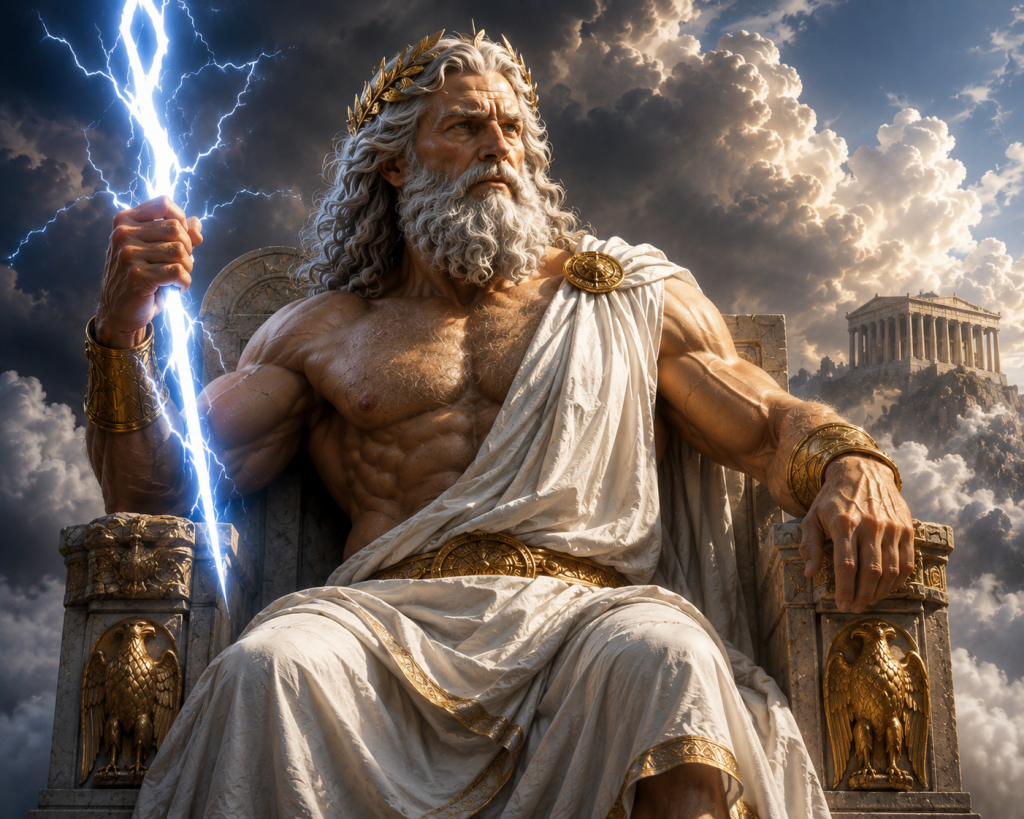
Zeus and Poseidon were brothers and two of the most powerful gods in Greek mythology.
They were the sons of the Titans Cronus (Kronos) and Rhea. According to myth, Cronus swallowed each of his children at birth because he feared a prophecy that one of them would overthrow him.
Rhea eventually saved her youngest son, Zeus, by hiding him on the island of Crete. When Zeus reached adulthood, he forced Cronus to release his siblings and led a great war against the Titans known as the Titanomachy.
After defeating the Titans, Zeus and his brothers divided the cosmos among themselves:
- Zeus became ruler of the sky and king of the gods.
- Poseidon became lord of the seas.
- Hades became ruler of the Underworld.
Together, the three brothers established the reign of the Olympian gods.
Did Zeus and Poseidon Ever Fight Each Other?
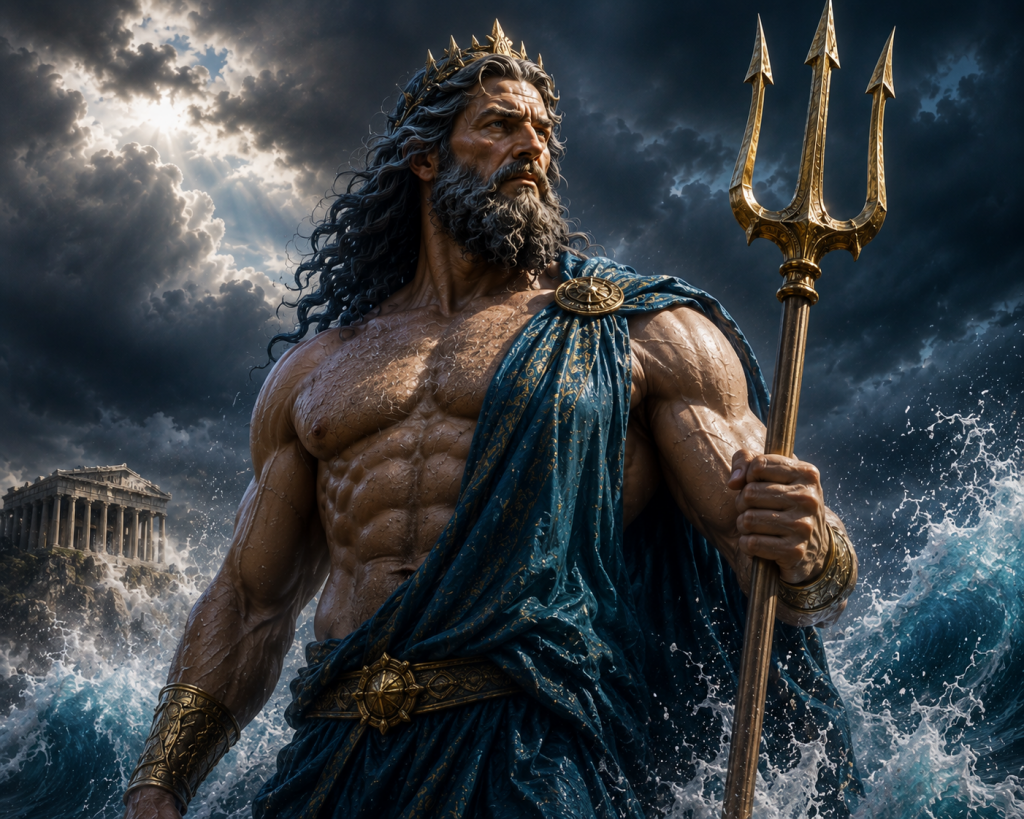
Ancient myths do not describe a direct battle between Zeus and Poseidon in which one attempted to kill the other.
However, Poseidon did occasionally challenge Zeus’s authority.
One famous myth tells of a conspiracy against Zeus involving Hera, Poseidon, and Athena. The gods attempted to bind Zeus and overthrow him, but the sea goddess Thetis summoned the hundred-handed giant Briareus, who freed Zeus and restored his power.
Zeus eventually regained control and punished those involved in the rebellion.
In another myth, Zeus punished Poseidon and Apollo by forcing them to serve the Trojan king Laomedon for a year. During this period, Poseidon helped build the legendary walls of Troy.
Despite these disagreements, there is no myth in which Zeus kills Poseidon, or Poseidon kills Zeus.
Was Poseidon More Powerful Than Zeus?
Some modern fans debate whether Poseidon was stronger than Zeus, but Greek mythology consistently portrays Zeus as the supreme ruler of the Olympians.
Zeus possessed the thunderbolt, one of the most powerful weapons in mythology, forged by the Cyclopes during the Titanomachy. He defeated the Titans, overthrew his father Cronus, and later overcame terrifying enemies such as Typhon, one of the deadliest monsters in Greek myth.
Although Poseidon was immensely powerful and ruled the oceans, ancient Greek literature almost always places Zeus above the other gods in authority and power.
Can a Greek God Die?
In traditional Greek mythology, gods do not die in the same way humans do.
Some myths describe gods being temporarily defeated, wounded, or imprisoned. For example:
- The giant twins Otus and Ephialtes once captured Ares and imprisoned him in a bronze jar for thirteen months.
- Hephaestus was thrown from Mount Olympus but survived.
- Dionysus was dismembered in some later Orphic traditions but was subsequently restored.
These stories demonstrate that divine beings could suffer, but they did not cease to exist permanently.
Did the Ancient Greeks Believe the Gods Could Disappear?
Over time, belief in the Olympian gods declined as Christianity spread throughout the Roman Empire.
Some later writers suggested that gods might fade if they were no longer worshipped. One famous story recorded by the Greek historian Plutarch tells of sailors hearing a mysterious voice proclaiming, “The great god Pan is dead.”
Many Christian writers later interpreted this as symbolic of the decline of pagan religion. However, this idea was not part of mainstream ancient Greek mythology.
Traditional Greek religion maintained that the gods were eternal beings.
Are Zeus and Poseidon Still Alive Today?
According to Greek mythology, Zeus and Poseidon remain immortal and therefore still exist.
Today, most people view Zeus and Poseidon as mythological figures rather than literal beings. However, there are still modern practitioners of Hellenism, a contemporary revival of ancient Greek religion, who worship the Olympian gods.
Followers of Hellenism continue to honor deities such as Zeus, Poseidon, Athena, and Apollo through prayer, offerings, and religious festivals.
According to traditional Greek mythology, Zeus and Poseidon never died and cannot die. As immortal Olympian gods, they exist eternally and are not subject to aging or natural death.
Although myths describe conflicts, injuries, and rebellions among the gods, no ancient source records the death of Zeus or Poseidon. In Greek mythology, the king of the gods and the ruler of the seas remains immortal forever.
